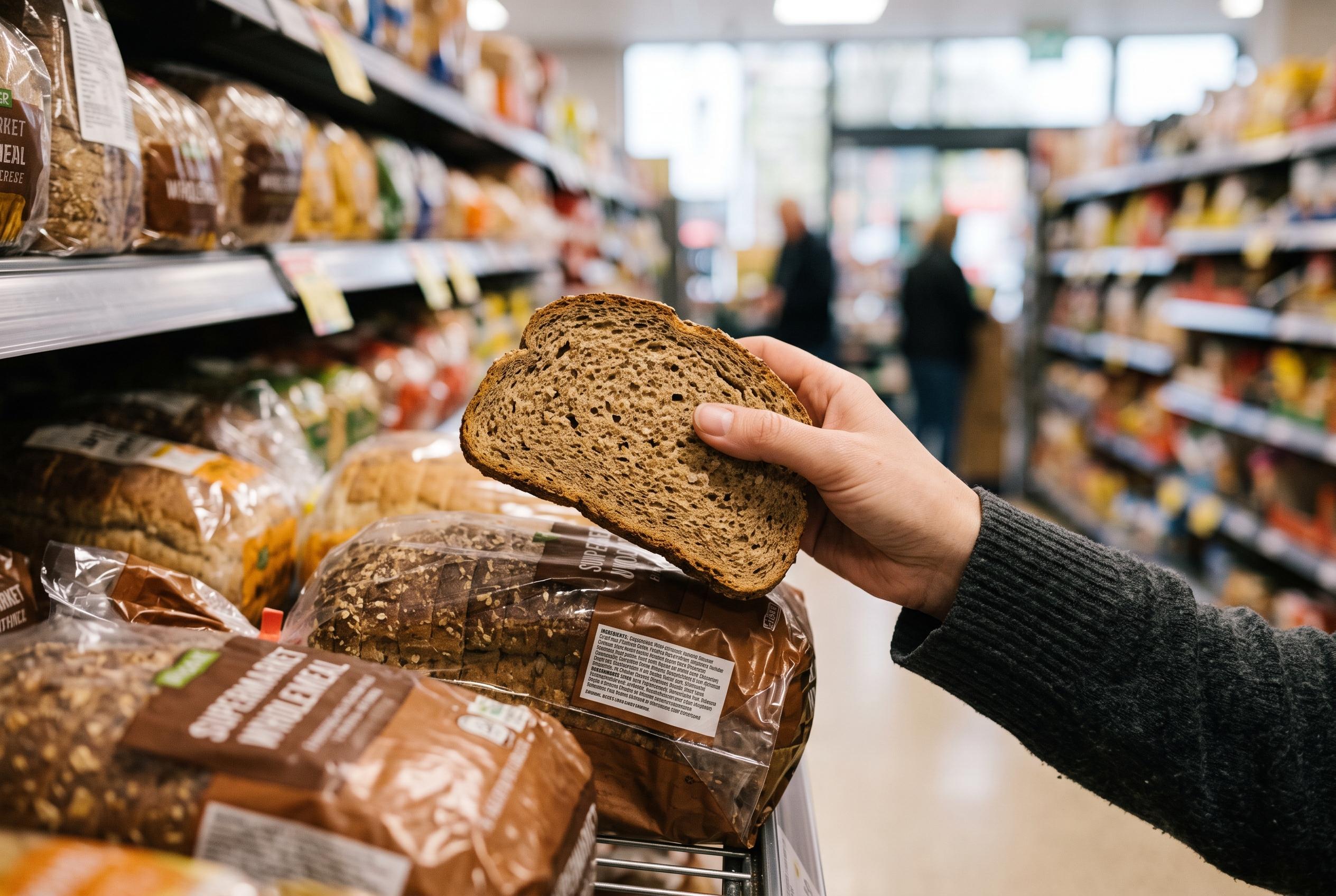

Many brown loaves in supermarkets disguise refined ingredients with colouring agents, highlighting the importance of reading ingredient labels to choose genuinely nutritious wholewheat bread.
Many supermarket loaves that look wholesome are not what they seem. According to The Korea Times, some brown breads owe their colour and soft texture to added ingredients rather than to whole grain flour, while true wholewheat bread is usually lighter in colour, firmer in texture and less sweet.
The key difference is what the loaf is made from. Wholewheat bread uses the entire wheat kernel, including the bran, germ and endosperm, which is why it tends to contain more fibre and more naturally occurring nutrients. By contrast, bread labelled simply as brown bread may still rely heavily on refined flour, with colouring agents such as caramel used to create a darker appearance, as Livestrong and other nutrition guides have noted.
That distinction matters because fibre plays an important role in digestion and satiety, helping people feel fuller for longer. The Korea Times also reported that wholewheat bread typically has a lower glycaemic impact than white bread, meaning it can cause a slower rise in blood sugar when eaten in the same carbohydrate portion. Scientific studies comparing bread varieties have likewise found measurable differences in texture, mineral content and calorie profile between wholemeal and more processed breads.
Nutrition advisers say shoppers should not rely on marketing language printed on the front of the pack. Instead, they recommend checking the ingredient list first and looking for “100% whole wheat” or an equivalent whole grain claim near the top. They also advise choosing loaves with at least three grams of fibre per slice, limiting added sugar and keeping sodium to around 140 milligrams per slice or less. The broader point, according to consumer guidance from Bon Appetit and other food specialists, is that the nutrition label tells a more reliable story than the packaging.
Disclaimer: This content is for informational purposes only and is not intended to be a substitute for professional medical judgment, advice, diagnosis, or treatment.