

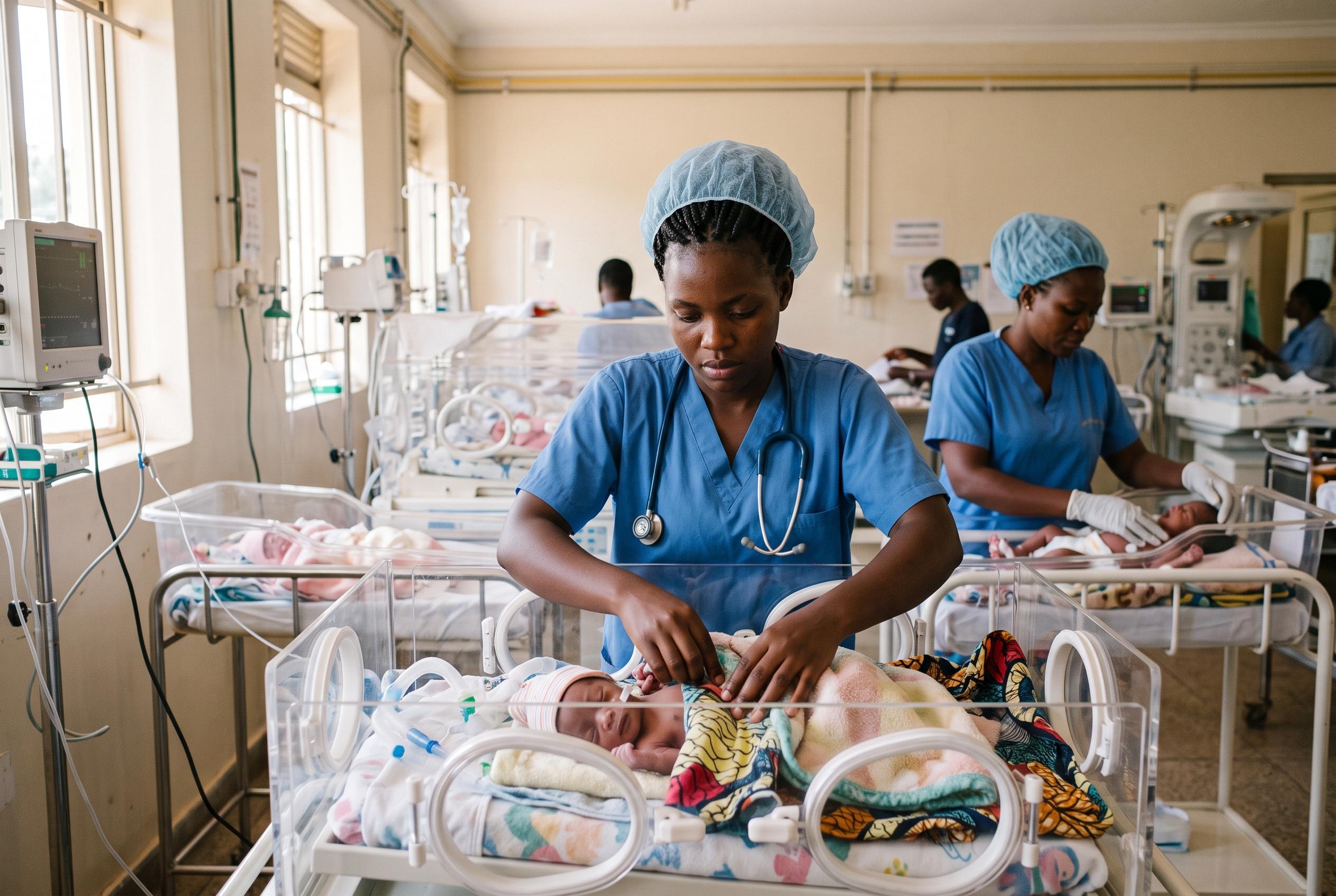

A prospective study at three Ugandan referral hospitals found that 70.3% of newborns born to women with diabetes experienced at least one serious complication in their first seven days.
A multicentre prospective cohort study from Uganda has found a heavy burden of early neonatal complications among women with diabetes cared for at three regional referral hospitals, with just over seven in 10 newborns experiencing at least one adverse outcome in the first days of life.
Researchers followed 145 mother–newborn pairs at Jinja, Hoima and Lira regional referral hospitals and reported a cumulative incidence of 70.3% for a composite outcome that included macrosomia, a low 5-minute Apgar score, neonatal hypoglycaemia, respiratory distress and death within seven days of birth. Macrosomia was the most common individual complication, affecting 37.9% of newborns, followed by a low Apgar score in 35.2%, neonatal hypoglycaemia in 26.2%, respiratory distress in 21.4% and early neonatal death in 14.5%. Neonatal unit admission, which the investigators analysed separately because it reflects service use as well as illness, occurred in 27.6% of infants.
The findings fit with what is known about diabetes in pregnancy. Maternal glucose crosses the placenta, drives fetal insulin production and can trigger excessive growth as well as problems with neonatal adaptation after birth. The Ugandan study’s pattern of complications also mirrors wider evidence that babies born to mothers with diabetes are at increased risk of macrosomia, low Apgar scores, hypoglycaemia, respiratory distress and perinatal death. Similar high-burden results have been reported elsewhere in Africa, although the incidence varies widely depending on diabetes type, diagnostic criteria, treatment and the level of care provided.
The study adds to a still limited body of African evidence. Earlier work in Uganda and other settings has shown that hyperglycaemia in pregnancy is linked to caesarean delivery, large-for-gestational-age birth and neonatal-unit admission, while research from Ethiopia and South Africa has also found higher rates of composite adverse neonatal outcomes among pregnancies complicated by gestational diabetes. Global estimates continue to show that diabetes in pregnancy is common, with prevalence shaped by obesity, age, screening practice and the glucose thresholds used to define disease.
The investigators also looked for maternal and obstetric factors linked to the composite neonatal outcome. After adjustment, self-reported exercise status was the only variable that remained associated, with women who said they did not exercise showing a lower observed risk than those who reported exercising. The authors urged caution, however, noting that exercise was measured only as a yes-or-no variable, without information on intensity, duration or timing, and that the result may reflect misclassification, reverse causation or residual confounding rather than a true protective effect of inactivity.
Body mass index, rural residence and the number of antenatal-care contacts were not clearly associated with the composite outcome after adjustment. The researchers said the lack of strong associations may reflect the modest sample size, the high overall event rate and the absence of key clinical data such as serial glucose measurements, glycated haemoglobin, treatment adherence, gestational age at delivery and congenital anomalies. They stressed that the results should be read as exploratory rather than causal.
Even so, the study points to an urgent clinical need. The authors argued that women with diabetes who deliver at referral hospitals should be managed with careful birth planning, early neonatal glucose checks, readiness for respiratory support and close postnatal observation. They also said the findings reinforce the importance of identifying and treating maternal hyperglycaemia early, because trials in other settings have shown that better glucose control can reduce some adverse pregnancy outcomes, even if neonatal complications are not eliminated altogether.
Disclaimer: This content is for informational purposes only and is not intended to be a substitute for professional medical judgment, advice, diagnosis, or treatment.



