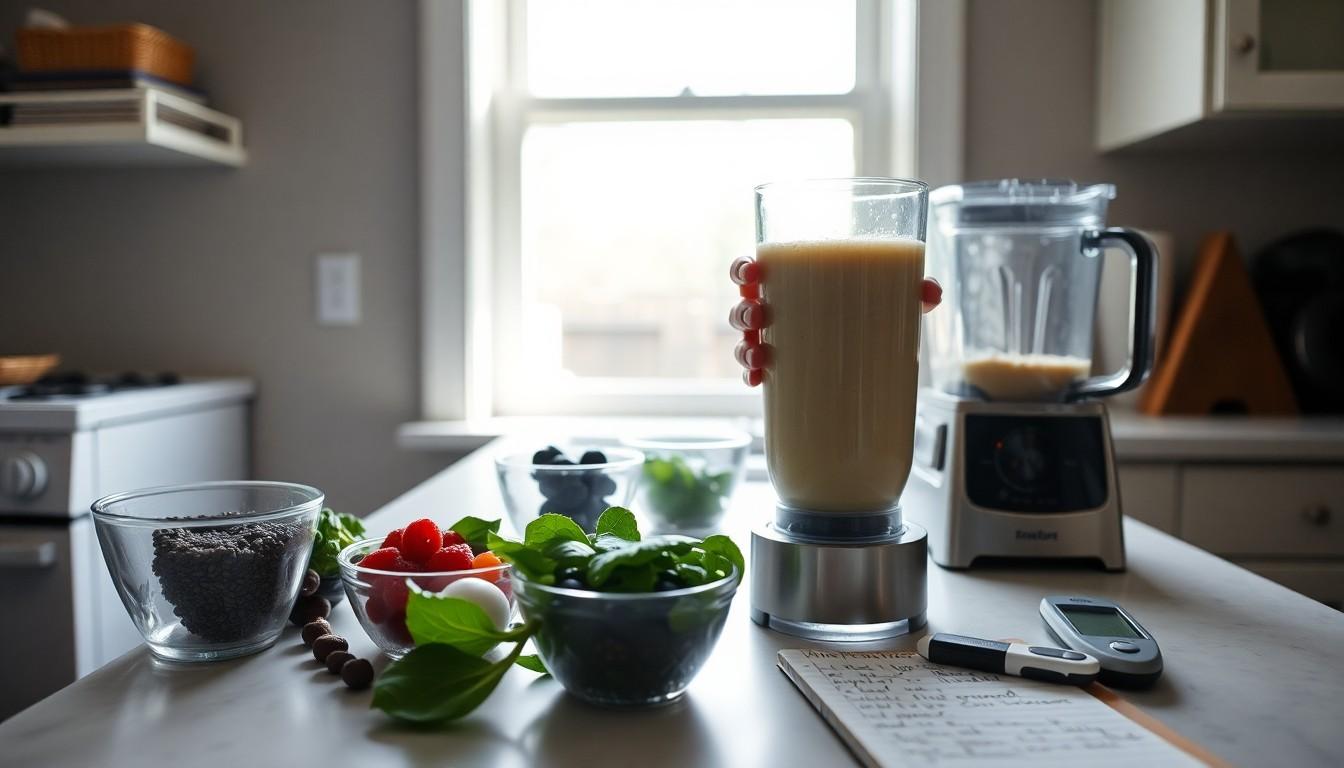

A new examination of blended beverages reveals that the health impact of smoothies depends heavily on their ingredients and how they affect blood sugar levels, urging diabetics to choose smarter combinations over convenient options.
For people living with diabetes or prediabetes, a cold blended drink can look harmless enough, but its effect on blood glucose depends heavily on what is in the glass. A milkshake packed with ice cream and added sugar is an obvious risk, yet a fruit smoothie is not automatically a safer choice. The real issue is how quickly the body can absorb the sugars once fruit has been broken down, and how little satiety a drink often provides compared with whole food.
Research published in the American Journal of Clinical Nutrition has long shown that the physical form of food matters. When fruit is consumed whole, its fibre structure slows digestion and helps moderate the rise in blood sugar. Once that structure is altered by blending or pureeing, the stomach tends to empty more quickly, and sugars reach the bloodstream faster. That makes a smoothie very different from eating the same fruit in its natural form.
This is why commercial milkshakes remain the bigger concern. They are usually built around refined sugar, ice cream and other high-calorie ingredients that can drive a sharper glucose spike. But all-fruit smoothies can still be problematic, particularly when they rely on bananas, mangoes, dates or honey. In those cases, the drink can deliver a concentrated dose of fast-absorbing sugar with very little to slow it down.
Nutritionists generally advise that if someone with diabetes wants a smoothie, it should be constructed to blunt the glycaemic effect rather than amplify it. That means pairing fruit with protein, healthy fats and extra fibre, and leaning more heavily on greens, cucumbers and lower-sugar fruit such as berries. A better-balanced blend may be less likely to provoke a rapid rise in blood glucose, whereas traditional milkshakes are best treated as an occasional indulgence rather than an everyday drink.
Disclaimer: This content is for informational purposes only and is not intended to be a substitute for professional medical judgment, advice, diagnosis, or treatment.