

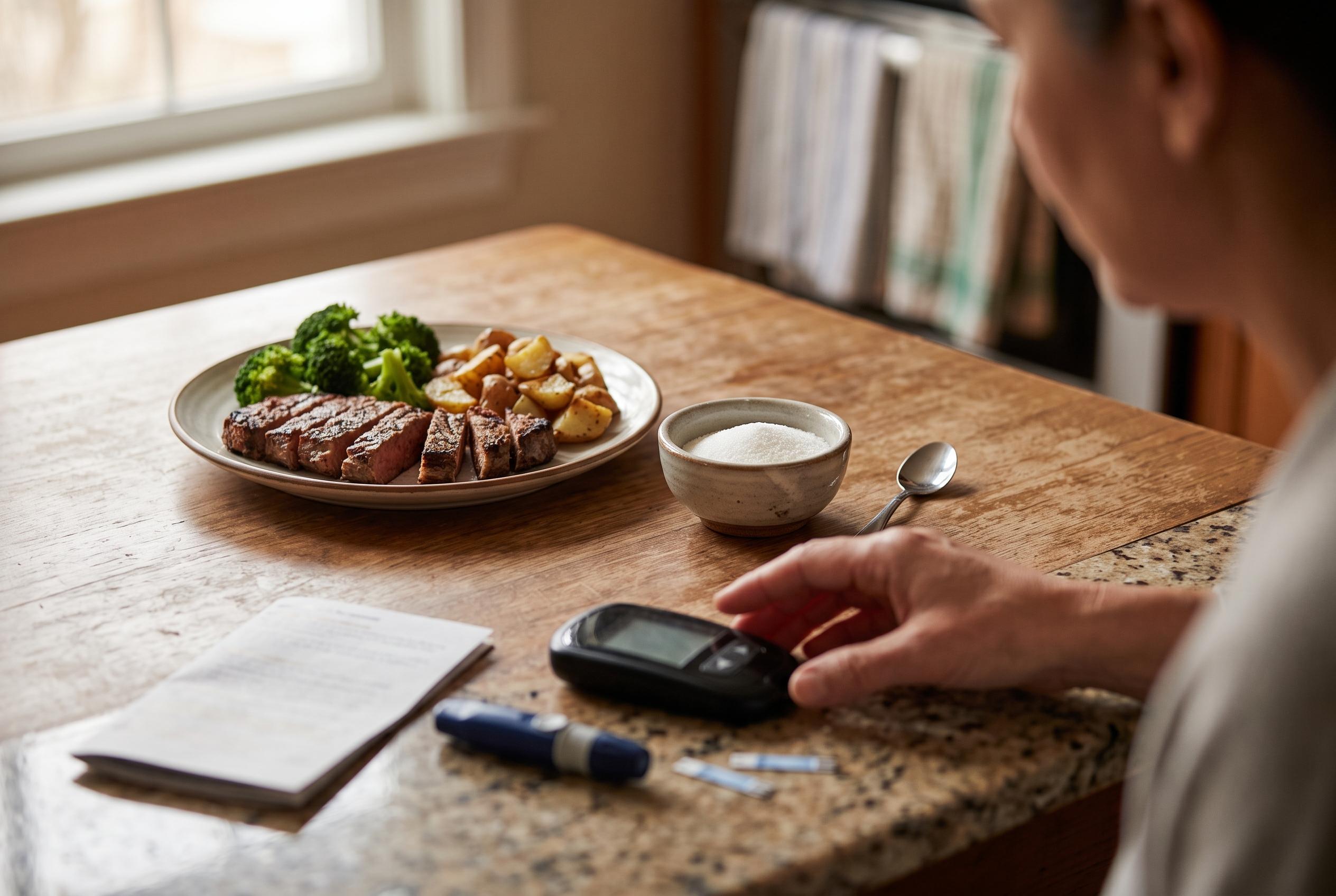

An observational study presented at the European Association for the Study of Diabetes in Milan indicates that a sugar found in red meat may increase the risk of type 2 diabetes, highlighting inflammation’s role in the disease’s development.
An observational study presented at the annual meeting of the European Association for the Study of Diabetes in Milan suggests that a sugar found in red meat may be linked to a higher risk of type 2 diabetes, adding to a growing body of research on how meat-derived compounds may affect inflammation and metabolism. The preliminary analysis examined N-glycolylneuraminic acid, or Neu5Gc, a molecule that humans cannot make themselves but can absorb from foods such as beef and lamb. According to the presentation, people with the highest intake of meat-derived Neu5Gc had a markedly higher likelihood of developing type 2 diabetes than those with the lowest intake. Medical Xpress reported the findings as part of the conference’s early-stage research programme, noting that the results are not yet final.
The work was based on data from the French NutriNet-Santé cohort, which followed 89,953 adults who had no diabetes or cancer at the start of the study. Researchers used repeated dietary records to estimate Neu5Gc intake and then tracked new diabetes cases over a median of 7.2 years, during which 966 participants developed the disease. After accounting for age, sex, smoking, physical activity, diet quality and other health conditions, the highest-intake group had a 63% greater risk of type 2 diabetes than the lowest group. The association remained in the same direction after adjustment for body mass index, although it was weaker, suggesting that weight explained only part of the link.
Lead author Leopold Fezeu of Université Sorbonne Paris Nord said the results support the idea that chronic inflammation may help explain why red meat consumption is associated with type 2 diabetes, beyond the amount of meat eaten and partly independent of body fat. He added that the findings suggested a possible threshold effect, with risk rising more steeply at higher exposure levels. The study also found no clear association between dairy-derived Neu5Gc and diabetes, which the researchers said may reflect the lower Neu5Gc content of milk products and smaller serving sizes. By contrast, total dietary Neu5Gc was associated with a 37% higher risk at the top end of intake, but that relationship appeared to be driven mainly by red meat.
The new report fits into a broader scientific discussion about Neu5Gc and inflammation. Earlier research from the National Institutes of Health has suggested that gut bacteria can release Neu5Gc from red meat, potentially contributing to harmful inflammatory effects, while a 2019 paper in Nature Microbiology reported that Neu5Gc-rich diets can alter the gut microbiome in ways that may influence that process. Other studies have proposed that when Neu5Gc is incorporated into human tissues, the immune system may treat it as foreign and trigger a chronic inflammatory response. Even so, the diabetes findings remain preliminary, and the European Association for the Study of Diabetes presentation cautioned that observational data cannot prove cause and effect or rule out all unmeasured influences. Fezeu said further research should test whether reducing exposure to meat-derived Neu5Gc, including by choosing poultry or plant proteins instead of beef and lamb, could help lower diabetes risk.
Disclaimer: This content is for informational purposes only and is not intended to be a substitute for professional medical judgment, advice, diagnosis, or treatment.



