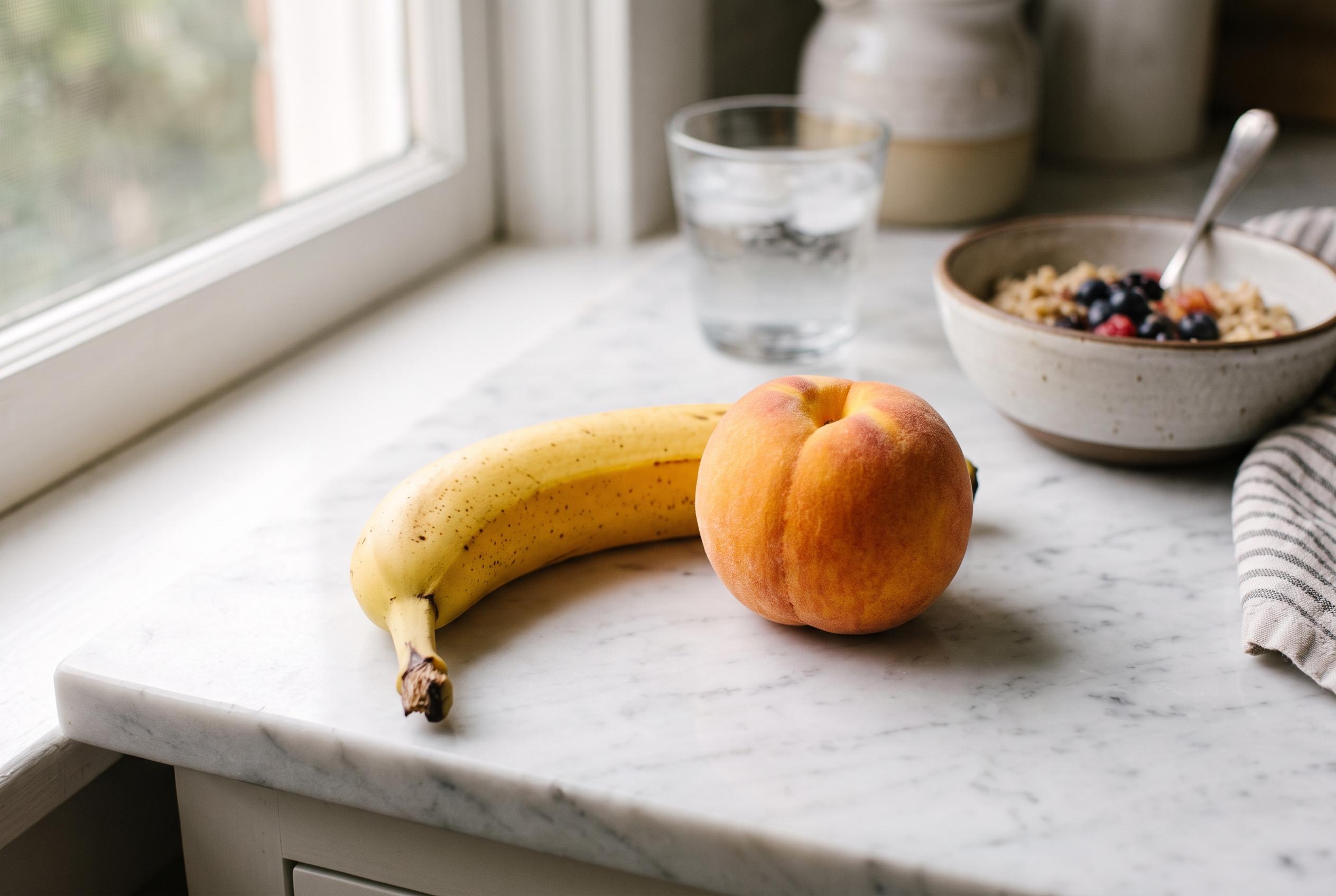

A Sky News Arabia report compares peaches and bananas, highlighting how ripeness, portion size, and nutritional content influence blood sugar management and dietary choices.
A recent Sky News Arabia report examined a simple but practical question for people watching their blood sugar: which fruit is the better choice, peaches or bananas? Drawing on data from the US Department of Agriculture and a review by a nutrition specialist, the report said a medium peach contains about 14.5 grams of carbohydrates, compared with roughly 26.4 grams in a medium banana.
That difference does not mean bananas must be avoided. It does, however, make portion size and ripeness especially important, particularly for people with diabetes or anyone trying to manage carbohydrate intake carefully. Harvard T.H. Chan School of Public Health notes that bananas become more sugar-dense as they ripen, because some of their starch is converted into simpler sugars. Unripe bananas contain more resistant starch, which is digested less completely and tends to have a gentler effect on blood glucose.
The glycaemic index, a measure of how quickly a food may raise blood sugar, also points to a gap between the two fruits. Sky News Arabia cited figures suggesting peaches sit at about 28, while less ripe bananas are around 47 and very ripe bananas near 57. Other nutrition references place peaches and bananas in the low-to-moderate range, but the exact number can shift with variety, size and ripeness. In other words, the broader pattern is clear even if the precise score is not fixed.
Bananas do offer some nutritional advantages. The Sky News Arabia report said a medium banana provides more fibre than a medium peach, and substantially more potassium, a mineral that supports nerve and muscle function. But potassium intake is not a simple health bonus for everyone; people with kidney disease or those taking medicines that affect potassium levels may need individual advice. The report also underlined a wider point echoed by the American Diabetes Association: fruit can fit into a diabetic diet, as long as the carbohydrate content is counted and the portion is sensible.
How the fruit is eaten matters too. Pairing it with protein or healthy fats, such as plain yoghurt or nuts, can slow digestion and blunt a rapid rise in blood sugar. On that basis, peaches may have the edge when the main goal is lower carbohydrate intake, while bananas may be the stronger option for fibre and potassium. The best choice depends less on a fruit’s label than on the size of the serving, how ripe it is, and what else is on the plate.
Disclaimer: This content is for informational purposes only and is not intended to be a substitute for professional medical judgment, advice, diagnosis, or treatment.