

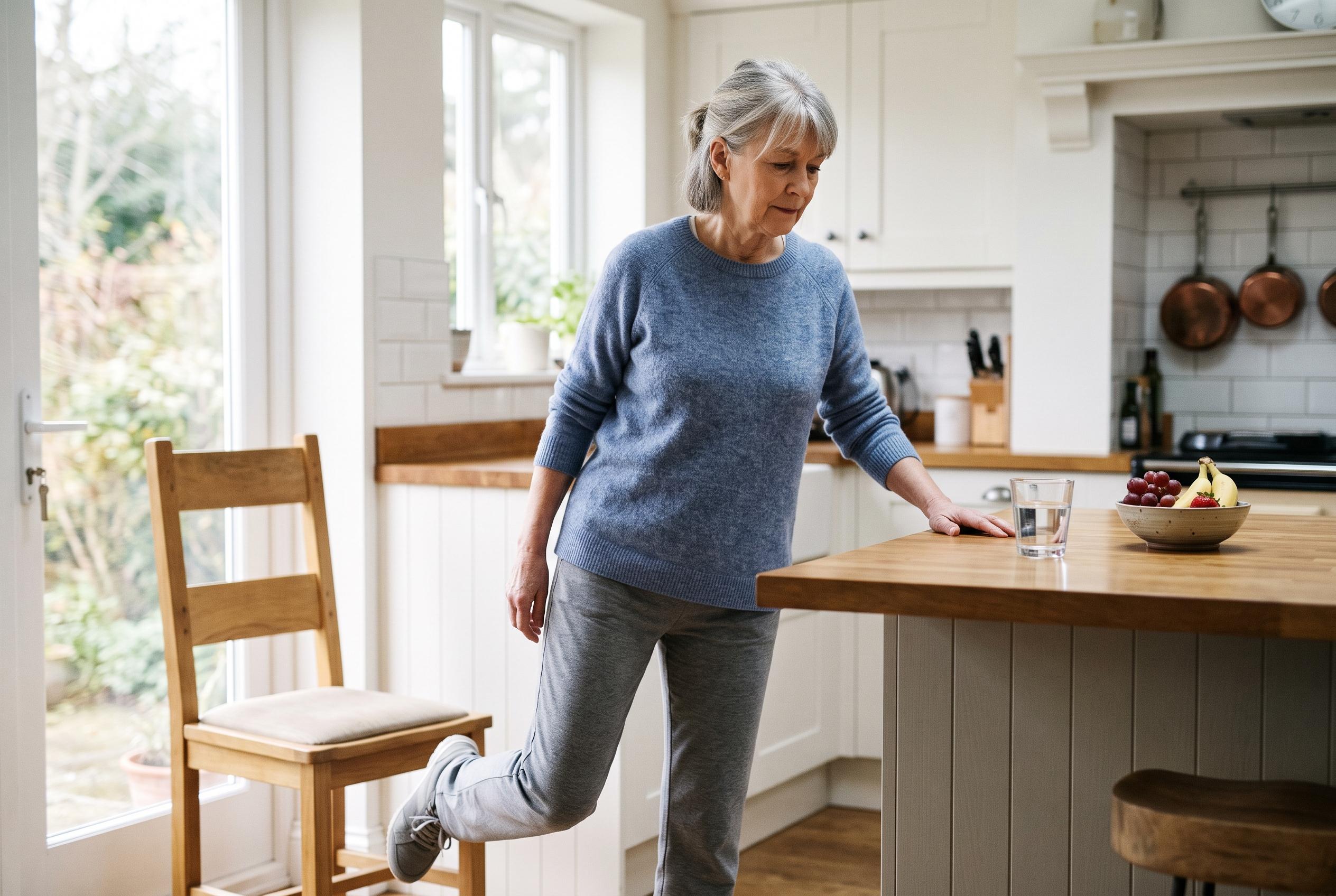

Short bouts of chair- and counter-based exercises after eating could complement walking by helping older adults manage post-meal blood sugar, though people taking glucose-lowering medicines should seek medical advice first.
For adults over 60, the familiar advice to take a post-meal walk may not be enough on its own. A fitness writer at Eat This, Not That argues that the muscles already in the body can do more to help steady blood sugar after eating, especially in the hours after dinner, when many people settle in front of the television and stay seated. The article says short bouts of strength work at home may lower post-meal readings more effectively than an easy stroll, particularly when carried out soon after eating.
The reasoning is straightforward. Working muscles draw sugar out of the bloodstream, and larger muscles used more vigorously can take on a greater share of that job. As people age, muscle mass tends to decline unless it is trained, which can leave less room for the body to store the glucose that arrives after a meal. That is why the Eat This, Not That piece places so much emphasis on movements that recruit the legs, hips, chest, back and arms together, rather than relying only on a slow walk.
The routine centres on five simple exercises that can be done with a dining chair, a kitchen counter and a couple of grocery bags: sit-to-stands, seated heel raises, kitchen counter push-ups, grocery-bag deadlifts and grocery-bag carries. Several of these movements overlap with exercises recommended elsewhere for older adults to preserve mobility, walking speed and independence, including sit-to-stands, heel raises and push-up variations. Fitness writers and physical therapists cited by Tom’s Guide and Fit and Well have recently highlighted similar drills as useful for maintaining gait, balance and the ability to get up from a chair or the floor without assistance.
The article recommends beginning within 15 to 30 minutes of finishing a meal, when blood sugar is still rising, and keeping the session to about 10 minutes. It also suggests using the exercises more formally three times a week on non-consecutive days to build and preserve muscle over time. That broader strength-training approach is consistent with other recent home-workout guidance for older adults, which tends to favour brief, repeatable routines over long or complicated sessions.
The piece also notes an important caveat: anyone taking medicine that lowers blood sugar should speak with a doctor or diabetes educator before moving exercise to immediately after meals. Still, the overall message is clear. Walking remains useful, but for older adults trying to blunt post-dinner spikes, the combination of regular walking and short bursts of strength work may be more effective than either approach alone.
Disclaimer: This content is for informational purposes only and is not intended to be a substitute for professional medical judgment, advice, diagnosis, or treatment.



