

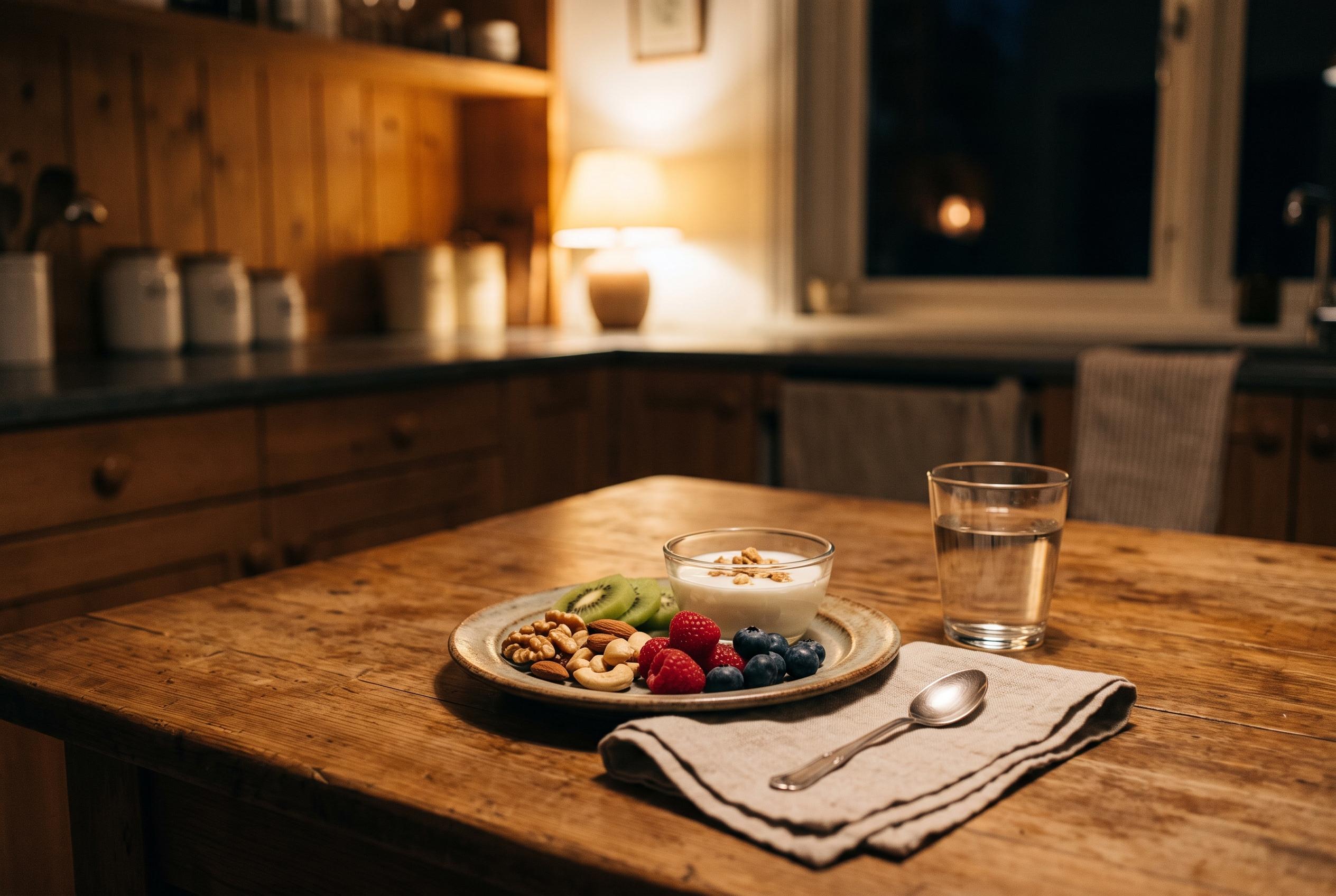

A small, balanced snack may be helpful when hunger is genuine, but experts warn that portion size, food choice and eating too close to sleep can affect digestion and rest.
Eating late at night is not automatically a problem, but dietitians say timing and portion size matter. If dinner was hours ago and hunger is genuine, a small snack can be reasonable, though experts generally suggest finishing the evening meal about three hours before sleep when possible. That allows the body time to digest and may reduce the chance of heartburn or acid reflux, which can worsen when lying down soon after eating. According to Michelle Routhenstein, a preventive cardiology dietitian quoted by Parade, meal timing may also support the normal overnight drop in blood pressure that occurs during sleep.
The key distinction, dietitians say, is whether the urge to eat is physical or emotional. Julia Zumpano of Cleveland Clinic tells Parade that physical hunger tends to arrive after several hours without food and may bring stomach growling, weakness or low energy. Emotional hunger, by contrast, often follows stress, fatigue or a difficult mood and may appear even shortly after a meal. That difference matters because late-night eating driven by habit or emotion can easily turn into extra calories without much benefit.
When a bedtime snack is appropriate, the most useful option is usually modest: roughly 200 calories, with both protein and complex carbohydrates, such as fibre. Lauren Twigge, another registered dietitian quoted by Parade, says that pairing those nutrients can help keep hunger in check while also topping up nutrients that may have been missed earlier in the day. Zumpano adds that protein and fibre can slow the rise in blood sugar, which may help avoid a sharp spike and crash overnight. Routhenstein, however, notes that there is no single magic number. For some people, particularly those taking insulin or medicines that can cause low blood sugar, the right bedtime snack depends on individual medical advice.
Several sleep and nutrition guides point in the same direction. Healthline and the Sleep Foundation both recommend snack choices that are light, easy to digest and relatively low in sugar, salt and saturated fat, while Cleveland Clinic warns against late-night foods chosen out of boredom rather than hunger. The general pattern is consistent: snacks that combine protein, fibre or healthy fats are more likely to satisfy without disturbing sleep, while heavily processed options can leave people feeling bloated, thirsty or overly alert.
Parade’s dietitians suggest a few practical combinations that fit that template. One option is banana with peanut butter, which adds fibre, protein and minerals including magnesium and potassium. Another is half a cup of cottage cheese with a small apple, which brings protein, carbohydrates and a mix of creaminess and crunch. A third is a slice of whole-grain sourdough with an egg and mashed avocado, a savoury choice that provides protein, fibre, potassium and unsaturated fat. Sleep Foundation similarly highlights tart cherries and unsalted nuts as bedtime-friendly foods, noting that they contain compounds associated with better sleep quality.
What matters just as much is what to leave out. Parade’s experts caution against chips, candy and desserts such as ice cream close to bedtime because they can combine sugar, salt and fat in ways that encourage blood sugar swings, reflux and poor digestion. Cleveland Clinic and Healthline make a similar point, warning that high-sugar, high-caffeine or heavy foods are more likely to interfere with sleep than calm the body for the night. In short, the best bedtime snack is not a second dinner or a reward at the end of the day. It is a small, balanced choice that responds to real hunger without creating a new problem before sleep.
Disclaimer: This content is for informational purposes only and is not intended to be a substitute for professional medical judgment, advice, diagnosis, or treatment.



