

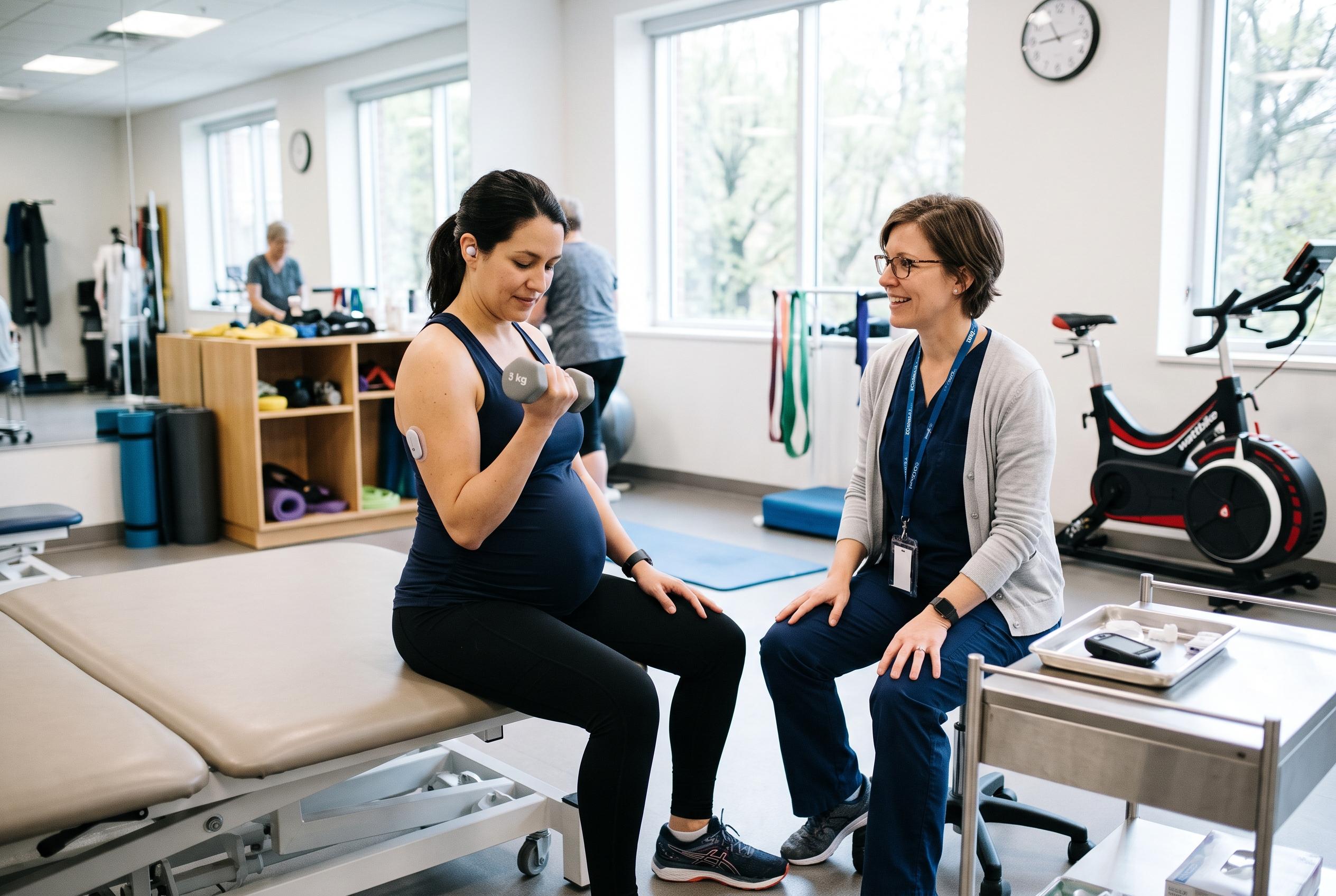

Hospital Virgen Macarena has begun recruiting pregnant women with type 1 diabetes for a supervised programme combining strength training, cycling and repeated glucose monitoring.
Researchers at Hospital Virgen Macarena in Seville have begun a study looking at whether different forms of physical exercise can help pregnant women with type 1 diabetes keep blood glucose under tighter control. The hospital says the project is designed for women whose diabetes requires especially careful monitoring during pregnancy, when both maternal and foetal health depend on keeping sugar levels within narrow targets.
The study has started recruiting participants and will offer them a supervised exercise programme led by healthcare staff from the Seville hospital, alongside sports professionals. It is being carried out at the Physical Activity and Sports Performance Research Centre at Pablo de Olavide University, with Miguel Ángel Oviedo of the University of Seville also taking part. According to the hospital, the aim is to test a protocol in which participants attend four visits that include a personalised health assessment, strength-training sessions, stationary cycling and repeated glucose monitoring.
Isabel Corrales, a gynaecologist at Hospital Virgen Macarena, said the project is intended to advance scientific understanding of pregnancy and type 1 diabetes, while also giving participants personalised information about how their bodies respond to exercise and a complete health report. The hospital says the programme follows safety guidance from the American College of Obstetricians and Gynecologists and the American Diabetes Association, and is adapted to each woman’s individual needs.
That wider clinical context matters because obstetric guidance in the United States already encourages regular physical activity during pregnancy, including in pregnancies complicated by diabetes. The American College of Obstetricians and Gynecologists says moderate exercise can be safe in healthy pregnancies and may reduce some complications, while also helping blood sugar control in women with gestational diabetes and type 1 or type 2 diabetes. Its guidance generally recommends around 150 minutes of moderate-intensity aerobic activity a week in pregnancy, or at least 20 to 30 minutes on most days, provided a clinician has cleared the patient.
For women with type 1 diabetes, the challenge is more exacting. Unlike gestational diabetes, which develops during pregnancy, type 1 diabetes is a long-term autoimmune condition in which the body cannot properly regulate glucose. That means exercise has to be carefully planned to avoid swings in blood sugar, but structured activity can still be part of good pregnancy care. A study in Diabetes Care previously found that a controlled diet combined with increased physical activity lowered glucose levels in pregnant women with type 1 diabetes without causing significant hypoglycaemia, supporting the idea that supervised exercise may be a useful tool when properly individualised.
Disclaimer: This content is for informational purposes only and is not intended to be a substitute for professional medical judgment, advice, diagnosis, or treatment.



