
Researchers in Saskatchewan are leveraging food-processing technology to convert the province’s peas into premium ingredients, aiming to create new market opportunities and retain more value locally, with recent developments focusing on modified pea starch for diverse food applications.
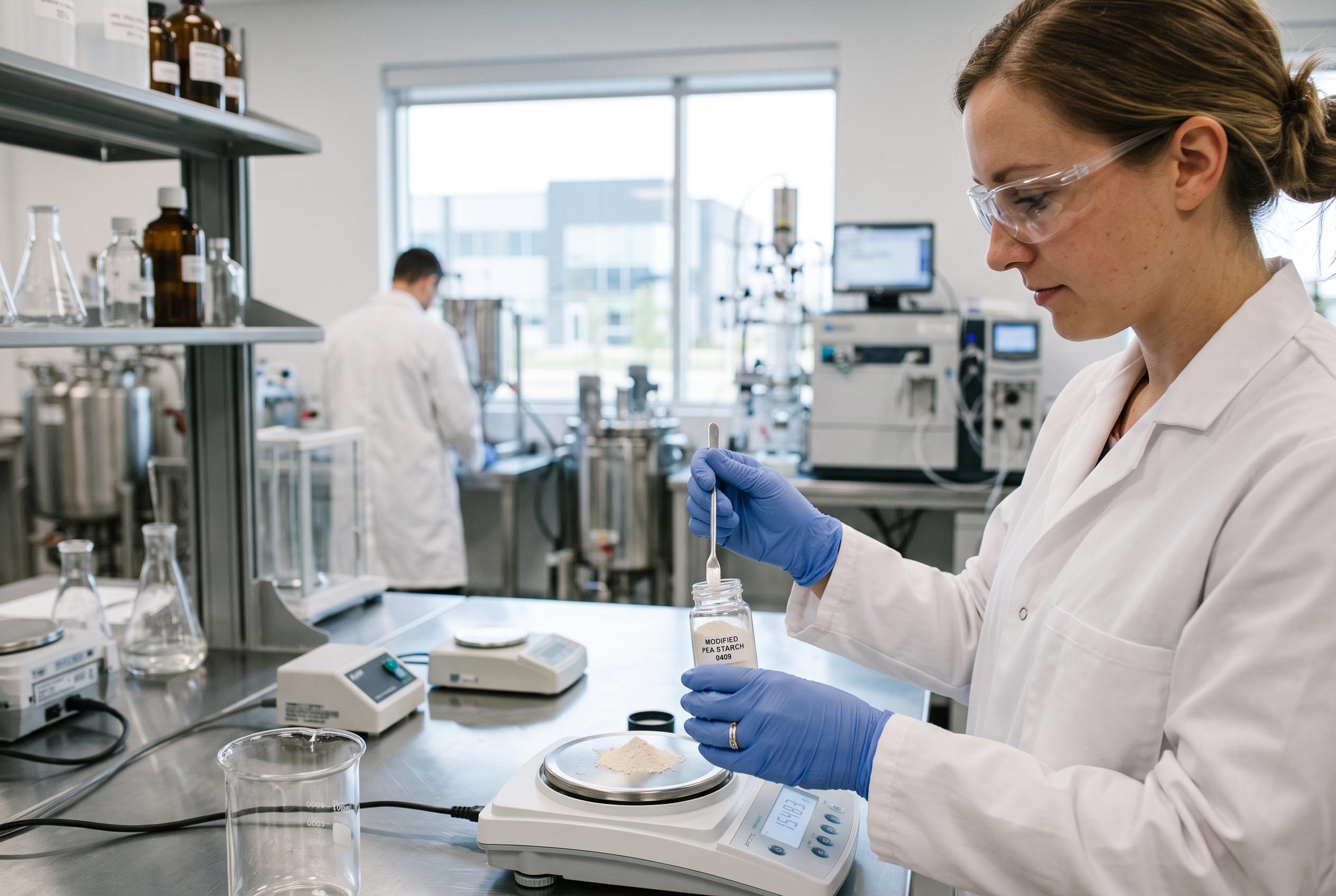
Researchers in Saskatchewan are trying to do more with peas before they leave the province, using food-processing technology to turn a familiar Prairie crop into higher-value ingredients for new products. Work led by the University of Saskatchewan and the Saskatchewan Food Industry Development Centre is focused on modifying pea starch so it can be used in foods rather than sold mainly into lower-margin commodity markets.
At a demonstration in Saskatoon on 13 August, the Food Centre showed updated extrusion methods for starch and flour, including starch modification, protein texturisation and prototype foods. The event brought together representatives from industry, government and academia, underlining the push to move promising research out of the lab and towards commercial production.
Peas are already important in Prairie rotations because they fix nitrogen and help break disease cycles, but much of their economic value is still captured elsewhere. Yongfeng Ai, an associate professor of food and bioproduct sciences at the University of Saskatchewan, said ingredient makers need profitable outlets for both protein and starch. While pea protein has drawn interest from plant-based food producers, starch is often sold into feed, industrial and pet-food markets at commodity prices. The Food Centre says its extrusion expertise can help shift that balance by creating starch ingredients with greater value in food applications.
The modified starch work builds on research in Ai’s laboratory and was scaled up at the Food Centre for human feeding studies. In that research, the altered starch was linked with a 22 per cent lower blood-glucose response than conventional starch, a finding that could matter for people with pre-diabetes or diabetes. The process also increased resistant starch and dietary fibre while preserving a clean flavour and useful functionality, making it suitable for products ranging from sauces and pasta to cakes and cookies.
The Food Centre, a non-profit organisation that supports agri-food development, says its extrusion research and development facility can handle production-scale testing and product development for snacks, cereals, meat analogues and other foods. Its capacity allows researchers to work through pre-treatment, drying and milling, then assess costs, equipment needs and commercial viability. For Saskatchewan’s pulse sector, the broader aim is simple: create more domestic markets for peas and keep more of the resulting value in the province.
Disclaimer: This content is for informational purposes only and is not intended to be a substitute for professional medical judgment, advice, diagnosis, or treatment.