

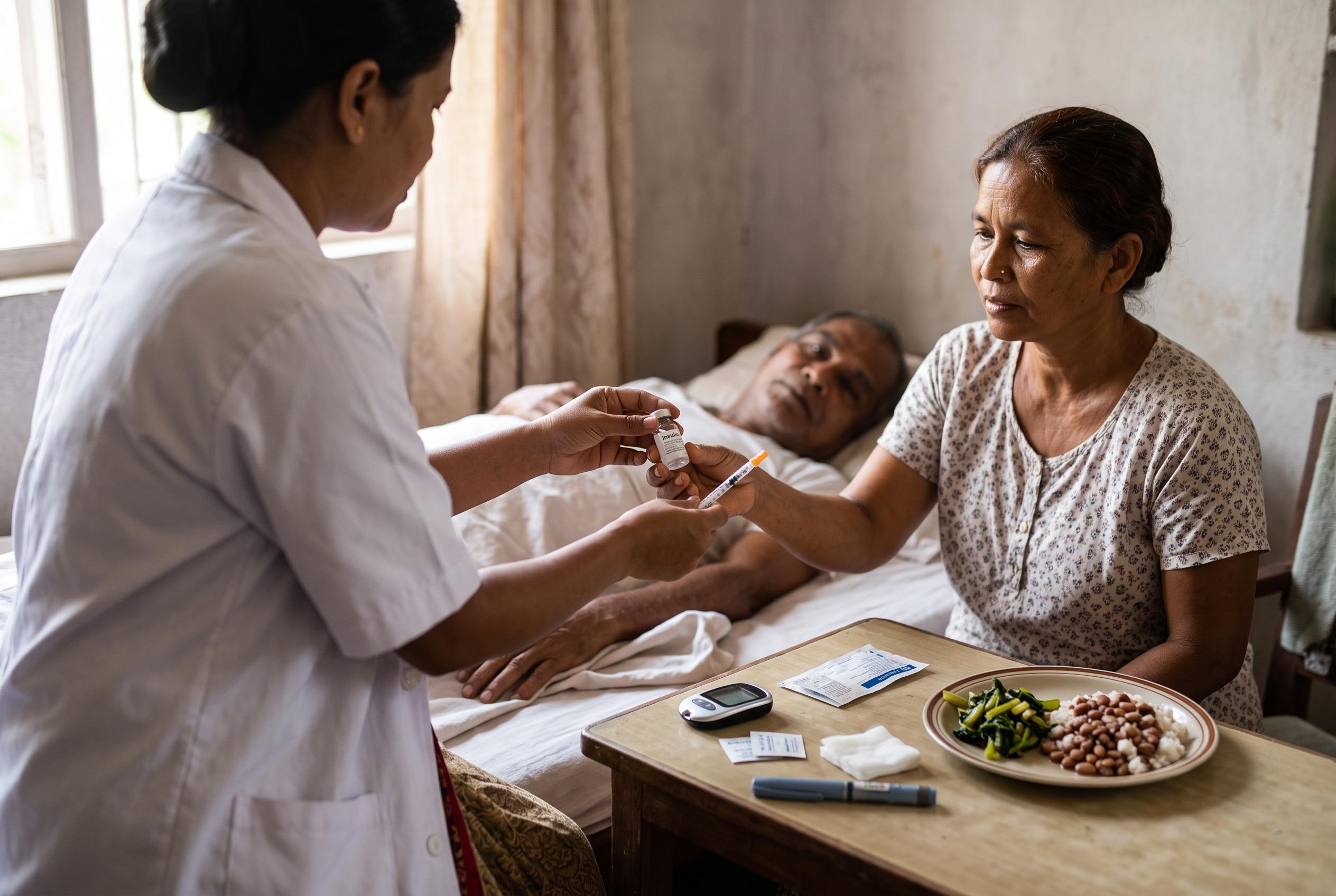

A recent study reveals that in low- and middle-income countries, undiagnosed diabetes coupled with delayed treatment leads to disproportionate reliance on insulin, prompting calls for improved early detection and access to comprehensive care.
A new analysis in Nature Communications suggests that diabetes care across low- and middle-income countries is shaped by a stark contradiction: many people are never diagnosed at all, yet those who are identified are relatively likely to end up on insulin. The pattern points to health systems that are missing large numbers of cases early, while often reserving treatment for more advanced disease.
The study examined use of glucose-lowering medicines in 62 low- and middle-income countries and found that 51.9% of people living with diabetes had not been diagnosed. Among those who had received a diagnosis, 18.6% were taking no medication. The researchers argue that this combination helps explain why insulin use can appear disproportionately high in poorer settings: if patients are found later in the course of illness, they may be more likely to need insulin by the time treatment begins.
That interpretation fits with broader evidence on global diabetes care. The World Health Organization has warned that diabetes is rising worldwide and that access to diagnosis and essential medicines remains uneven, particularly in lower-income countries. Other reviews have reached similar conclusions, linking high insulin dependence in these settings to limited diagnostic capacity, patchy access to non-insulin drugs and weaker primary care systems.
The implication is not simply that insulin is being used too often, but that it is often being used late, after opportunities for earlier intervention have been missed. In many countries, the problem starts well before treatment choice: people are not being tested, are not reaching care in time or are being treated in systems with too few medicines to offer a full range of options. That leaves insulin, the most familiar fallback therapy, as the default for patients whose diabetes has already progressed.
The study therefore adds weight to calls for stronger case-finding, better access to diagnosis and a broader supply of glucose-lowering medicines. As other commentary on diabetes care in low- and middle-income countries has noted, improving screening and widening treatment choices could reduce unnecessary reliance on insulin while helping more patients receive treatment earlier, when it is often easier to control blood sugar and prevent complications.
Disclaimer: This content is for informational purposes only and is not intended to be a substitute for professional medical judgment, advice, diagnosis, or treatment.



