

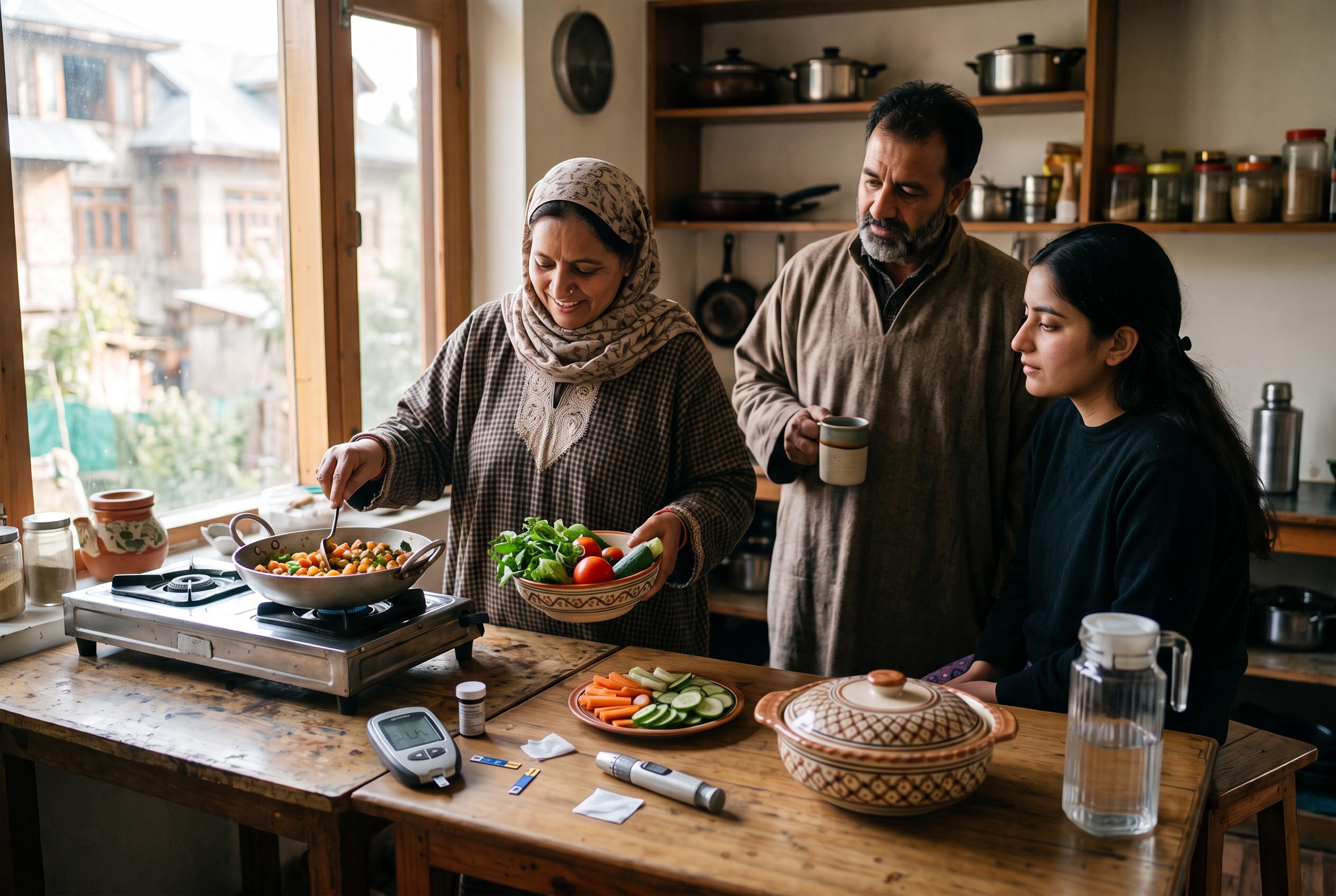

With a growing regional and global surge in metabolic diseases, Kashmir explores practical dietary and lifestyle measures to combat diabetes and prediabetes, emphasising early intervention and traditional diets’ adaptation.
Diabetes and prediabetes are no longer distant public health concerns for Kashmir; they are part of a wider regional and global rise in metabolic disease that is already affecting millions. The World Health Organization says about 830 million people worldwide are living with diabetes, most of them in low- and middle-income countries. In India, the ICMR-INDIAB study estimated roughly 101 million people had diabetes in 2021, while a separate regional analysis reported a weighted diabetes prevalence of 11.8% in Jammu and Kashmir, underlining that the burden is firmly present in the valley as well.
That wider picture matters because prediabetes is even more common than established diabetes and often goes unnoticed. Public health data cited by the International Diabetes Federation suggest hundreds of millions of adults worldwide are living with impaired glucose tolerance or impaired fasting glucose, conditions that signal elevated risk even when symptoms are absent. In India, ICMR-INDIAB estimated about 136 million people had prediabetes in 2021, more than the number already diagnosed with diabetes. For many people, this stage is not a warning to panic, but a clear opportunity to act early.
The practical message emerging from the Kashmir-focused guidance is that food order, portion size and post-meal movement can make a measurable difference, though they are not substitutes for proper medical care. The article describes how starting a meal with vegetables, then protein, and leaving rice or bread until last may soften the blood-sugar rise after eating. It also notes that a small serving of nuts before a meal can help some people blunt the glucose peak, with research in Asian Indians with prediabetes finding benefit from almonds taken before meals.
Plain curd or yoghurt may also have a place in that sequence, especially when it replaces refined snacks and sweetened foods. The article points out that unsweetened yoghurt generally produces only a modest glucose rise and can be paired with vegetables such as haakh as part of an ordinary Kashmiri meal. However, it also stresses that this is best understood as a practical observation supported by clinical experience, not as a treatment proven in a controlled trial. The same caution applies to post-meal walking: a short walk after eating can lower glucose, but it complements rather than replaces medication and dietary treatment.
The science behind these steps is straightforward. Fibre-rich vegetables slow digestion. Protein and fat trigger gut hormones that delay stomach emptying and increase satiety. Working muscles draw glucose from the blood more readily during and after activity, which is why even a 10 to 15 minute walk after meals can help. Studies also suggest that eating vegetables and protein before carbohydrate can reduce the post-meal glucose surge, while short walks after each meal may be more effective than taking all exercise at once later in the day.
At the same time, the article makes a point that is often overlooked in popular diabetes advice: lower readings after a better meal pattern do not mean diabetes has been reversed. Continuous glucose monitoring can show encouraging short-term changes, but it does not by itself prove remission. HbA1c, the standard three-month measure of blood sugar exposure, remains essential, and medical definitions of type 2 diabetes remission require sustained improvement without glucose-lowering drugs. That distinction matters because glucose can improve rapidly once food and activity change, yet the underlying risk may remain.
The broader prevention message is equally important for Kashmir and for India as a whole. People with prediabetes, especially those with abdominal obesity, a family history of diabetes, high blood pressure or abnormal lipids, are being urged to check their baseline risk, adjust portions before abandoning traditional food entirely, and keep up regular follow-up testing. The Diabetes Prevention Program, one of the landmark trials in this field, found that intensive lifestyle change reduced the development of type 2 diabetes by 58% over about three years. The lesson is not that traditional diets must disappear, but that they should be adapted with care, consistency and medical supervision.
Disclaimer: This content is for informational purposes only and is not intended to be a substitute for professional medical judgment, advice, diagnosis, or treatment.



