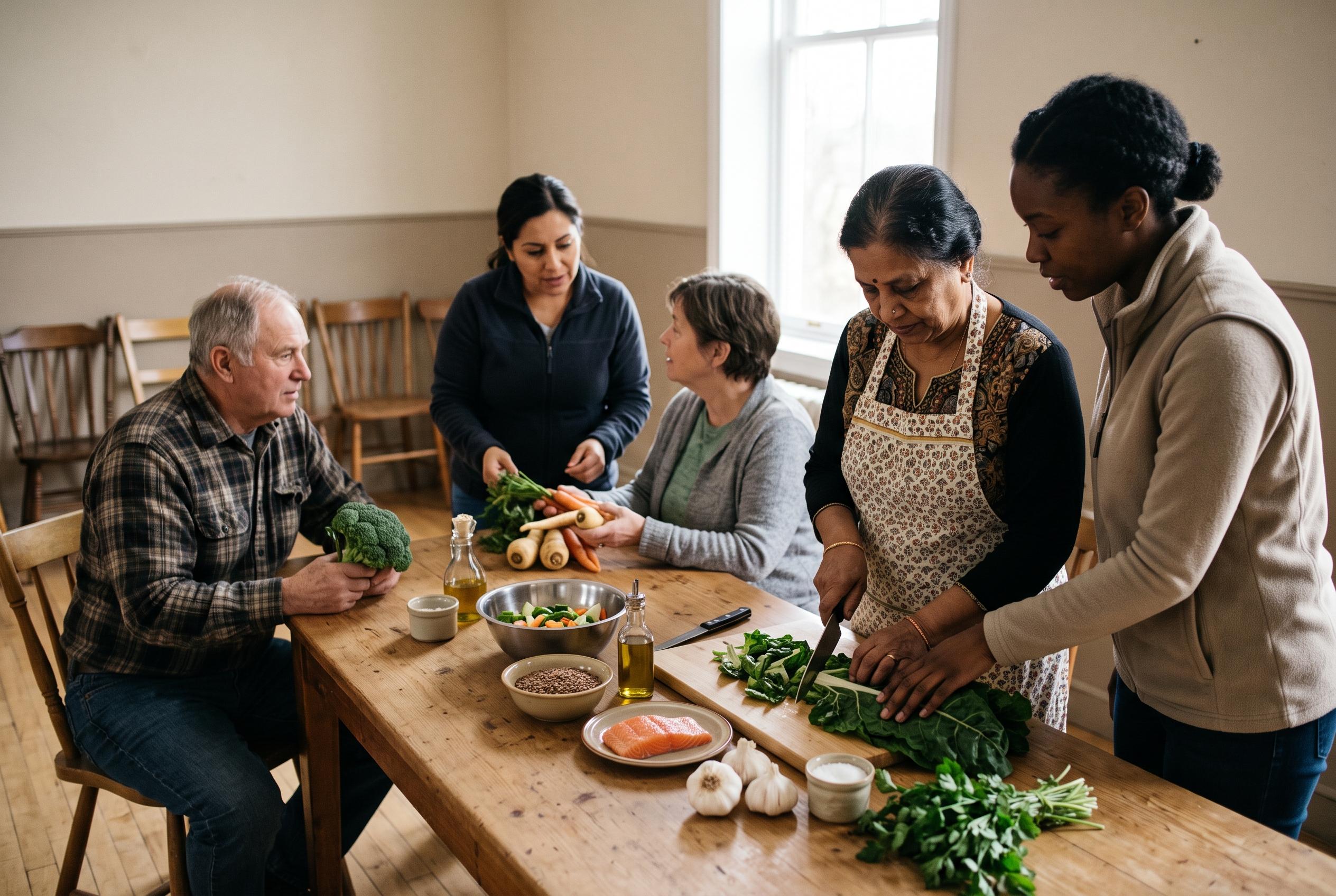

A recent study highlights that effective dietary interventions for heart failure depend not only on nutritional advice but also on the systemic logistics tailored to rural communities, emphasising the importance of practical infrastructure for health programmes to succeed.
A family kitchen, not a clinic handout, may decide whether a heart-failure plan works. In a personal essay published by KevinMD, Shiv K. Goel describes discovering, only after repeated admissions, that his low-sodium advice was being applied to a household cooking for several people on a weekly batch schedule. He argues that food-is-medicine programmes often underestimate the practical question of whether patients have the equipment, transport and storage needed to use the meals they are given.
That concern is echoed by the MUTTON-HF trial, published in JAMA Internal Medicine in July. The randomised study involved 206 adults with heart failure at two Indian Health Service sites in rural Navajo Nation and compared ordinary dietary advice with eight weeks of two prepared meals a day built around traditional foods including mutton, corn, beans and squash. The trial found fewer hospitalisations and emergency department visits in the meal group, along with better quality of life, lower food insecurity and reduced blood pressure.
But the most striking feature of the programme was not the menu. According to the trial design paper and related study summaries, the intervention depended on community-based sourcing, Native-run food preparation and a delivery system adapted to rural life. The organisers supplied microwaves and mini-fridges, and in homes without electricity they provided propane appliances and fuel. Because most participants had no mail delivery, the team created pickup hubs and used community health workers for households that could not travel.
A feasibility study of the programme suggested that this infrastructure was not an afterthought but a core part of its success. It reported that 90% of weekly meal boxes were successfully received, with strong acceptability scores and a sharp rise in food-secure households over the course of the intervention. In other words, the trial did not simply tailor the food to the culture; it also tailored the logistics to the reality of rural delivery.
Goel uses that example to argue that many programmes fail not because the nutrition is wrong, but because the system around it is missing. His point is that clinicians can prescribe a sodium target, but if they do not know who cooks, what appliance is available or where the food will be stored, they are treating the instruction as if it were separate from daily life.
That is why the lesson from MUTTON-HF may be broader than one Indigenous health programme. Food-is-medicine projects can show promise, but the evidence suggests they work best when they include the infrastructure that lets patients actually use the food. Without that, he warns, health systems may end up blaming patients for “nonadherence” when the real problem is that the prescription never fit the kitchen in the first place.
Disclaimer: This content is for informational purposes only and is not intended to be a substitute for professional medical judgment, advice, diagnosis, or treatment.