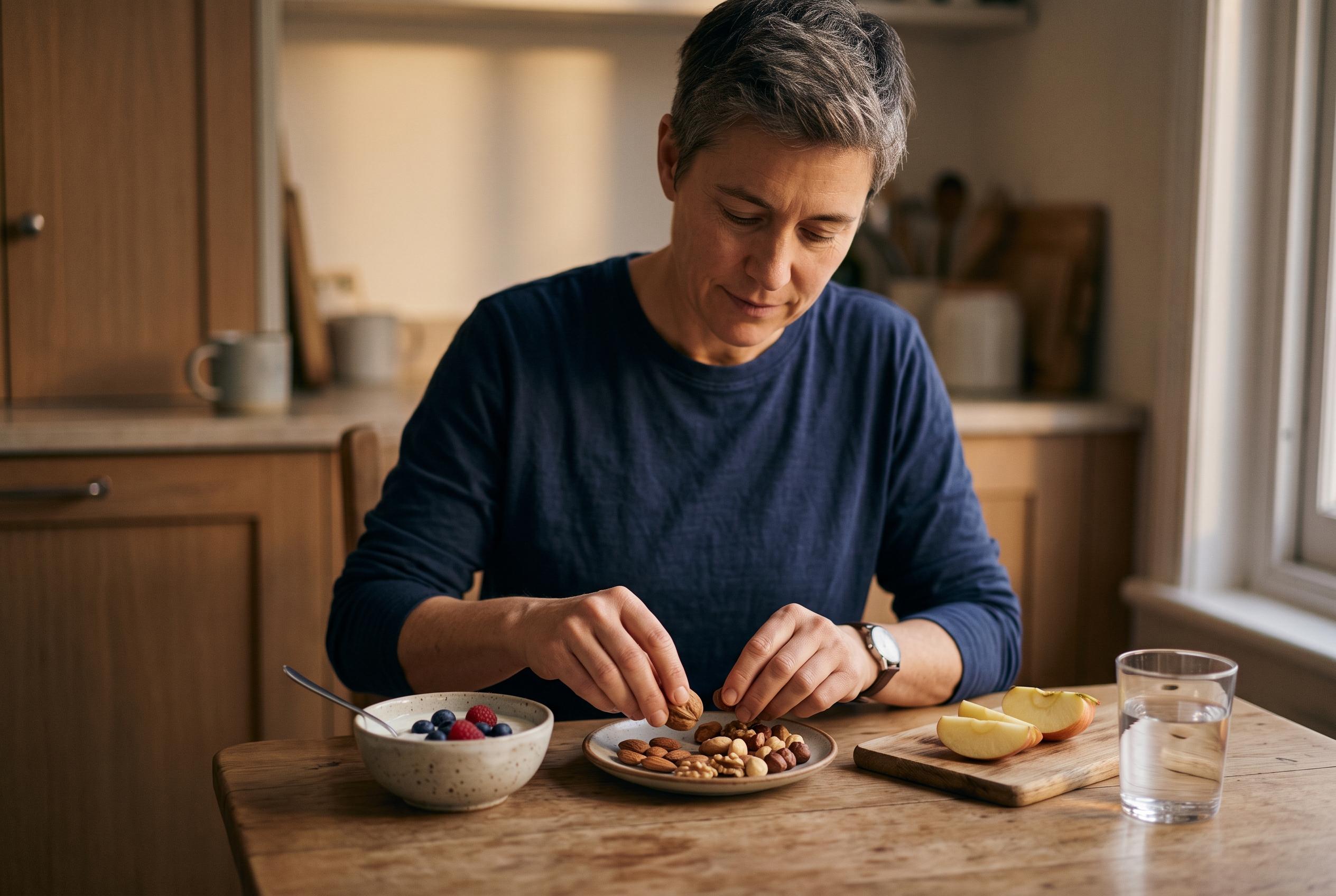

Research highlights that choosing low-sugar, nutrient-dense snacks like nuts, fruit, or yoghurt is key to maintaining glucose levels before bed, with portion control and food mix playing critical roles.
A late-evening snack does not automatically send blood sugar soaring. What matters more is the mix of foods, the portion size and how much added sugar or refined carbohydrate is involved, according to Verywell Health and diabetes guidance from Diabetes UK and Frimley Health NHS Foundation Trust.
For people who want something before bed, a small serving of Greek yoghurt, a piece of fruit with nut butter, or a handful of unsalted nuts is often a better choice than sweets, pastries or other fast-digesting carbohydrates. Diabetes UK says snacks that are lower in sugar and fat, such as fruit, nuts, seeds and yoghurt, can help people manage glucose levels while avoiding unnecessary calories.
The same principle applies to more filling combinations. Verywell Health notes that a banana with milk can work because the protein in milk slows the absorption of carbohydrates, while less ripe bananas contain more resistant starch, which is digested more slowly. An apple eaten with its skin, paired with nut butter, can also be a steadier option because the fibre in the fruit and the fat and protein in the spread help blunt a rapid rise in glucose. Frimley Health NHS Foundation Trust also recommends snacks with a low to medium glycaemic index, such as fruit or wholegrain options.
Legumes can fit the same pattern. Verywell Health highlights roasted chickpeas as a practical evening snack because they provide plant protein and fibre, both of which slow digestion. In general, a bedtime snack of roughly 150 to 200 calories, with limited sugar and modest carbohydrate content, is a sensible guide for many people, although individual responses vary. For anyone with diabetes or difficulties controlling glucose, Diabetes UK advises tailoring evening eating with professional input rather than relying on one-size-fits-all rules.
Disclaimer: This content is for informational purposes only and is not intended to be a substitute for professional medical judgment, advice, diagnosis, or treatment.