

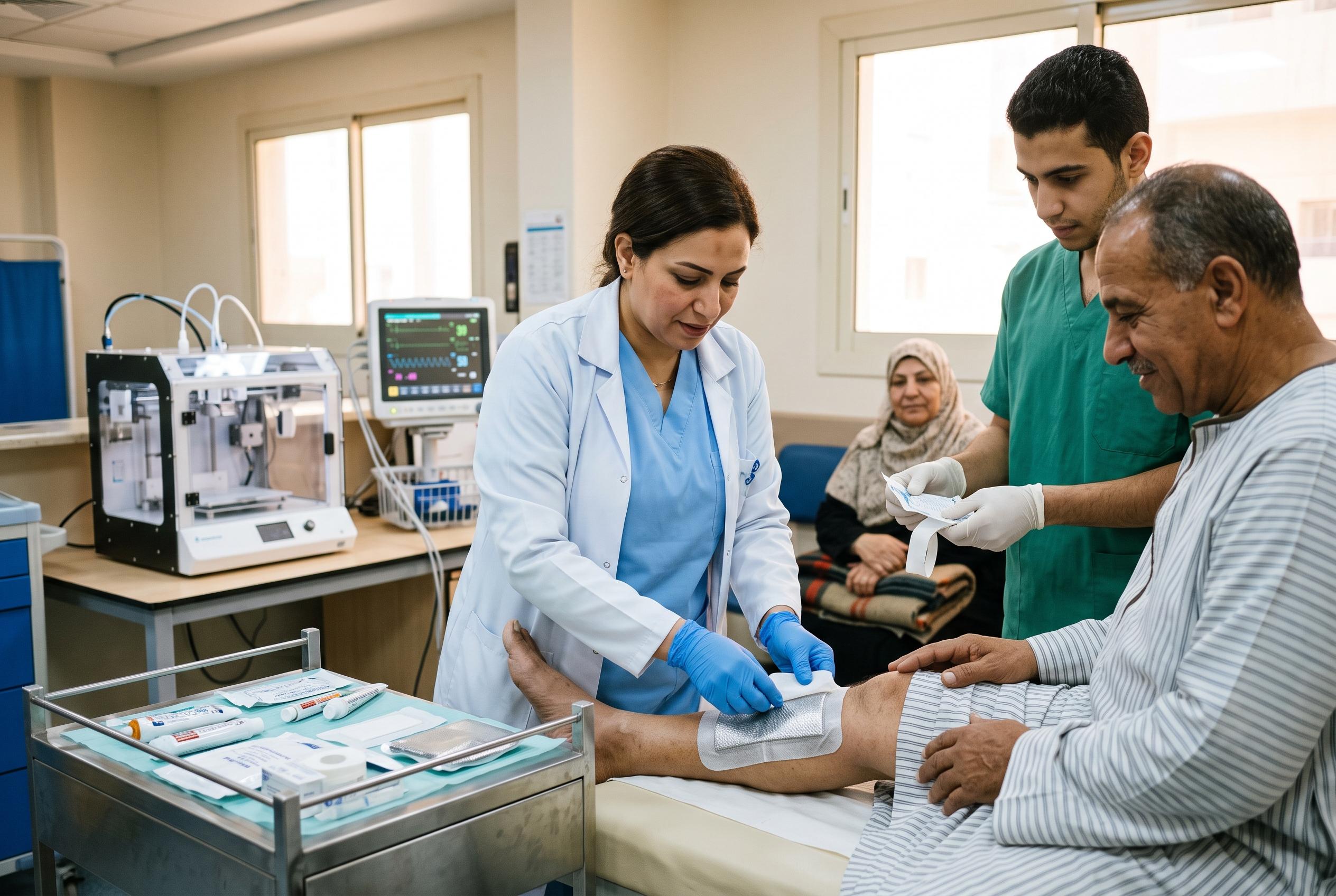

Egypt’s Health Care Authority signs a cooperation protocol with Health Arena for Pharmaceuticals and Medical Supplies, focusing on integrating AI diagnostics and 3D bioprinting to enhance chronic wound treatment and localise advanced health solutions in a move to deepen public-private partnerships.
Egypt’s Health Care Authority has signed a co-operation protocol with Health Arena for Pharmaceuticals and Medical Supplies as part of a wider push to deepen public-private partnerships, bring in medical technology and localise advanced health solutions, according to the authority’s announcement. The agreement was witnessed by Ahmed El-Sobky, the authority’s chairman and general supervisor of the universal health insurance project, and signed on the authority’s behalf by Mohamed Sami Hamed, assistant executive director and head of the central revenue-cycle management department, alongside Ahmed El-Khouly, chief executive of Health Arena.
The deal is aimed at more than one line of work at once. According to the authority, it covers the rollout of artificial intelligence tools in hospitals under its umbrella, including VUNO-Med DeepCARS and chest X-ray analysis systems. Health Arena’s own company profile says it was founded in Cairo in 2024 and focuses on AI-driven diagnostics, advanced medical devices and healthcare solutions designed to improve earlier detection and faster recovery, which fits the direction of the new partnership.
El-Sobky said the co-operation also includes a structured pathway for 3D bioprinting in the treatment of chronic wounds, particularly diabetic foot ulcers. Bioprinting, a branch of regenerative medicine, uses printing technologies to build biological structures and is being explored internationally as a way to support tissue repair. 3DHEALS, a specialist healthcare printing community, describes bioprinting as part of a broader global effort to move the technology from research into clinical use. In this case, the authority said the aim is to turn emerging research into practical treatment options for difficult-to-heal ulcers.
The protocol also provides for bringing in Korean experts to help deploy the technology and train staff, while sending authority personnel to South Korea for education on the AI systems and visits to VUNO-Med, the Korean company behind the software. Health Arena says it already works with VUNO on AI tools for healthcare, including chest X-ray and DeepCARS applications. The two sides also plan to establish a centre of excellence for training medical and engineering staff, knowledge transfer and the wider use of intelligent healthcare services, in line with Egypt’s broader drive to expand digital health and local expertise.
Disclaimer: This content is for informational purposes only and is not intended to be a substitute for professional medical judgment, advice, diagnosis, or treatment.



