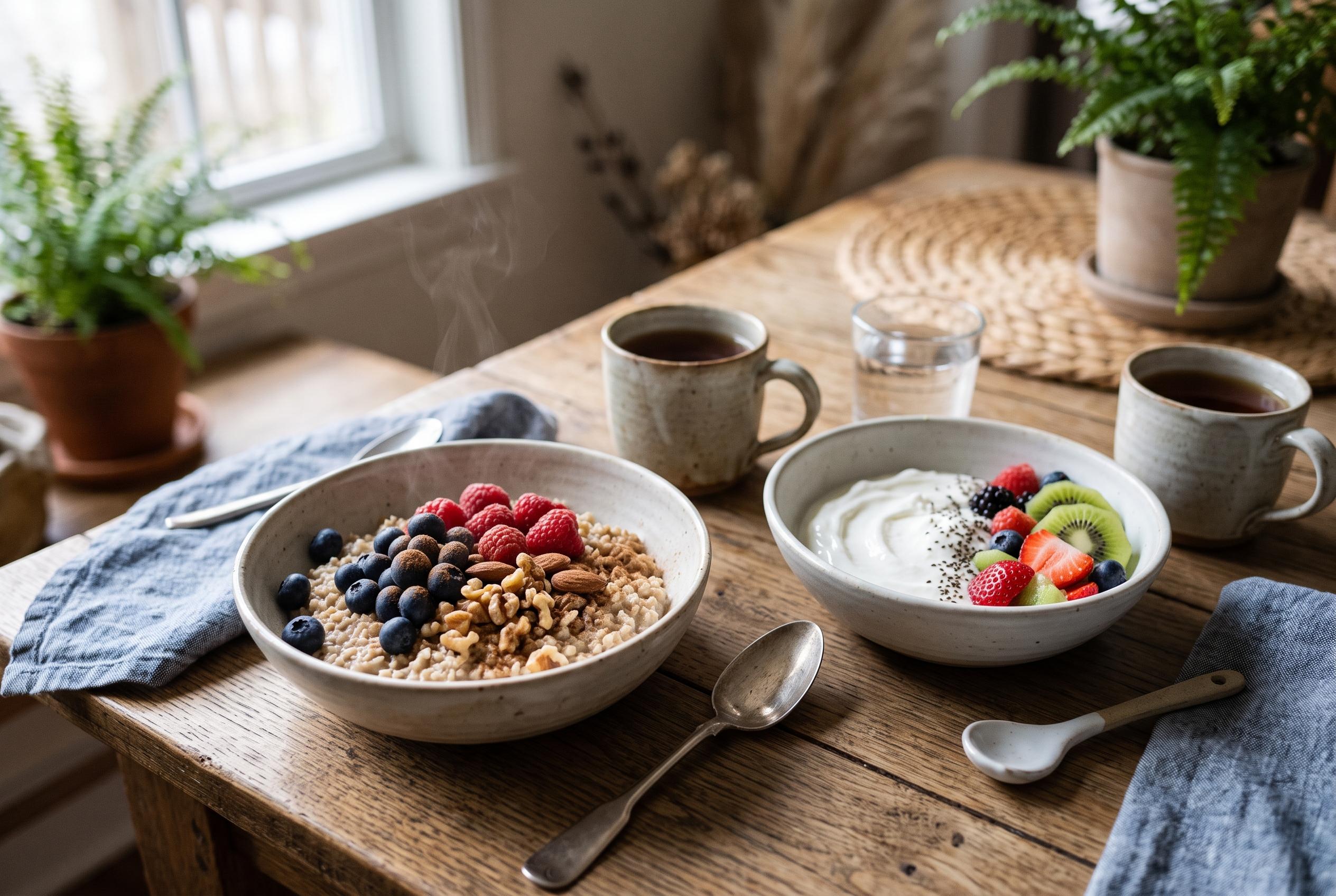

The impact of oatmeal and yoghurt on blood glucose levels varies based on how they are prepared and what is added. Experts highlight the importance of choosing minimally processed options and mindful toppings to maintain stable blood sugar during breakfast.
For people trying to keep blood sugar steady at breakfast, the choice between oatmeal and yoghurt is less straightforward than it sounds. Registered dietitian Lauren Panoff told Verywell Health that either food can work well, or work against you, depending on how it is prepared and what is added to it. Oatmeal tends to sit in the middle of the glycaemic index, the measure used to show how quickly a food raises blood glucose, while plain yoghurt is generally lower, according to the Glycaemic Index website and guidance from MedlinePlus.
Panoff said steel-cut and rolled oats are the better options because they contain more beta-glucan, a soluble fibre that slows digestion and glucose absorption. Healthline and the Glycaemic Index Guide both note that instant oats are processed more heavily, which makes them quicker to cook but also faster to digest, and therefore more likely to cause a sharper rise in blood sugar. Oats also contain relatively little protein, with the US Department of Agriculture data cited in the article putting cooked oatmeal at about 6 grams per cup.
Yoghurt can be even more blood-sugar-friendly, but only in its plain form. Panoff pointed to Greek yoghurt in particular, which usually has 15 to 20 grams of protein per cup and may also benefit from its fat content. Sources on yoghurt’s glycaemic impact, including the Glycaemic Index website and Yogurt in Nutrition, say plain yoghurt is typically low on the glycaemic index, while sweetened or flavoured versions can rise markedly once added sugar is included. The article also cited research in Nutrition Research suggesting fat may help with blood sugar control, and a study in Cureus Journal of Medical Science linking probiotics with improved insulin sensitivity over time.
Panoff’s bottom line was that the topping matters as much as the base. Nuts, seeds, berries, sliced fruit, cinnamon and protein powder can make either breakfast more balanced, while brown sugar, honey, maple syrup, granola and sweetened dried fruit can push glucose higher. In practical terms, she said unsweetened Greek yoghurt has a slight edge over plain oatmeal for blood sugar stability because of its protein and fat content, but oatmeal can close the gap when it is paired with protein and healthy fats. That matches Mayo Clinic guidance that low-glycaemic foods work best when they are part of a broader, balanced meal.
Disclaimer: This content is for informational purposes only and is not intended to be a substitute for professional medical judgment, advice, diagnosis, or treatment.