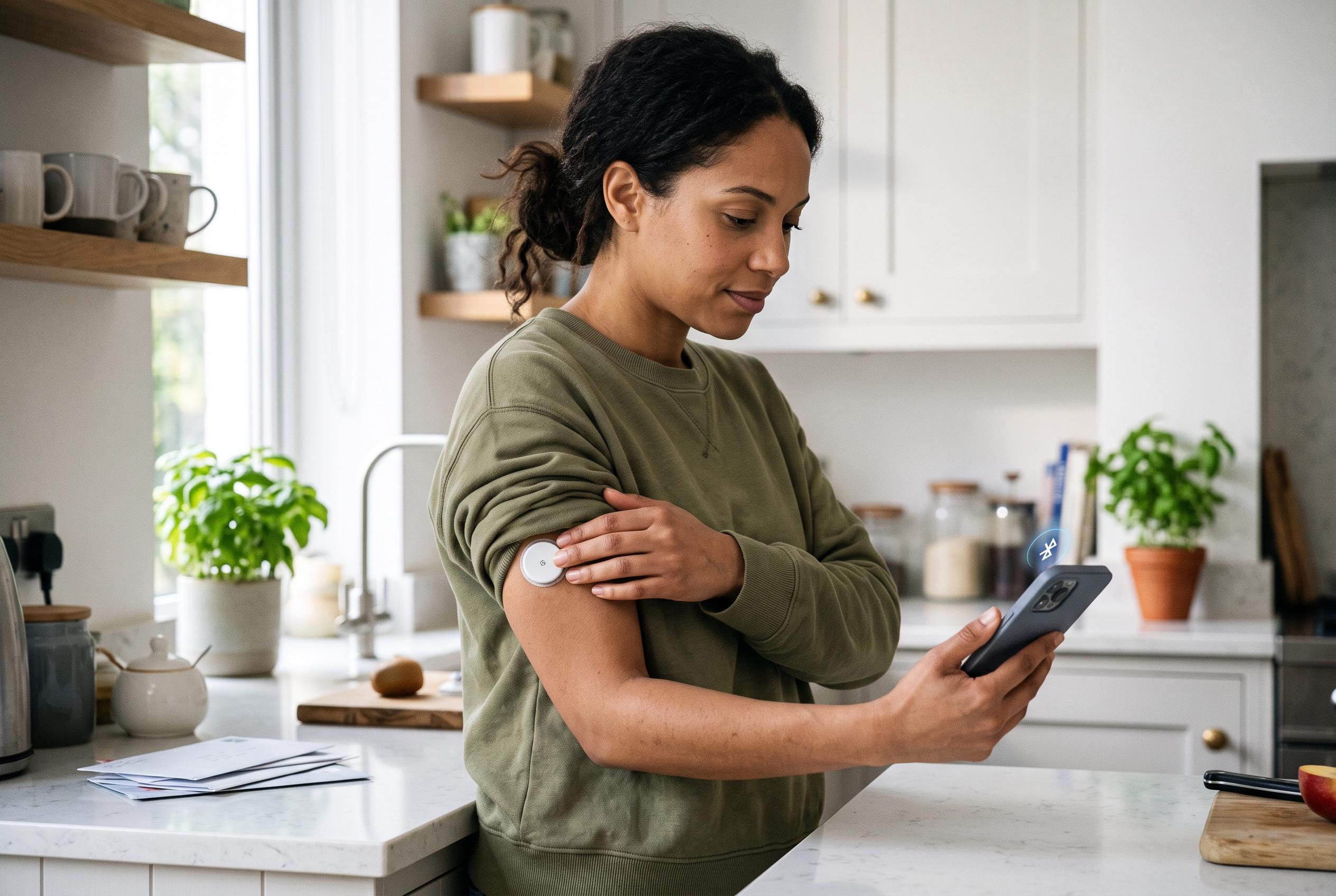

Industry forecasts predict strong growth in blood glucose monitoring over the next decade, driven by rising diabetes prevalence and technological advances in continuous and connected systems, though cost and access remain barriers to wider adoption.
Market researchers are increasingly aligned on the direction of travel for blood glucose monitoring, even if they are far from agreement on the exact numbers. Across a cluster of industry forecasts published in 2026, the sector is expected to expand strongly into the next decade as diabetes rates climb and continuous monitoring becomes more commonplace. What varies is the pace: depending on how analysts define the market, projections run from the high-20-billions of US dollars by 2032 to well above US$30 billion over a similar period.
That spread is striking. Fortune Business Insights values the blood glucose monitoring system market at US$18.03 billion in 2025 and expects it to rise to US$32.59 billion by 2034, implying annual growth of 7.0%. Data Bridge Market Research starts from US$17.81 billion in 2024 and projects US$33.56 billion by 2032 at an 8.24% compound annual rate. 360iResearch is more conservative on absolute size, putting the market at US$15.27 billion in 2025 and US$27.23 billion in 2032, while still forecasting 8.61% annual growth. Credence Research, whose PR Newswire release covers the broader blood glucose monitoring devices category rather than systems alone, is more bullish still, forecasting a rise from US$16.2 billion in 2024 to US$36.8 billion by 2032 at 10.8%.
Despite those differences, the demand story is consistent. Fortune Business Insights cites International Diabetes Federation data showing that about 589 million adults aged 20 to 79 were living with diabetes worldwide in 2024. It also says type 2 diabetes will account for 76.28% of the market in 2026, underlining how much of the industry rests on the larger, long-duration patient population rather than only on intensive insulin users. In North America and the Caribbean alone, the same source says 56.2 million adults were living with diabetes in 2025, a figure it expects to reach 68.1 million by 2050.
The more important commercial shift, however, is not simply the number of patients but the kind of kit they use. Fortune Business Insights expects continuous glucose monitoring, or CGM, systems to take 63.76% of the market in 2026. Maximize Market Research describes smartphone and wearable integration as a major reason, arguing that connected devices have made it easier for users to track and share data. It also points to the emergence of closed-loop systems that can adjust insulin delivery using real-time readings. Credence Research, in its February 16, 2026 release, adds that adoption is being helped by demand for home diagnostics and for tools that are accurate and easy to use.
That does not mean older formats are disappearing. ResearchAndMarkets defines the category broadly enough to include blood glucose meters, test strips, lancets and lancing devices, sold through both retail and institutional channels. 360iResearch uses a similarly granular framework, breaking the market down by product type, application, end user and distribution channel, and keeping gestational diabetes separate from type 1 and type 2 diabetes. Those distinctions matter because they help explain why forecasts that appear to cover the same industry can produce notably different totals.
Geography remains just as concentrated as the technology mix is changing. Fortune Business Insights says North America held 44.20% of the market in 2025, generating US$7.96 billion in revenue that year. It identifies Abbott, Dexcom and Roche among the companies investing in new systems, while a ResearchAndMarkets listing for a 2026 industry report points to a wider competitive field that also includes Medtronic, LifeScan, Ascensia Diabetes Care, SD Biosensor and Sinocare. In other words, this is still a market in which a relatively small number of established groups set the pace, even as specialists try to carve out positions in sensors, software and newer device formats.
The bullish case also comes with clear limits. Fortune Business Insights says average annual CGM costs can range from US$2,000 to US$7,000, a level that can curb uptake where reimbursement is weak. It highlights Brazil, China and India as examples of markets where cost remains a barrier, and cites FIND data suggesting only 16.0% of people with type 1 diabetes in South Africa use CGMs. The same source says roughly one in two people with diabetes worldwide is still undiagnosed, which is another brake on adoption. ResearchAndMarkets adds a newer supply-side concern, saying tariffs are pushing up the cost of sensors, semiconductor chips, batteries, plastics and sterile consumables, lengthening procurement cycles even as they encourage more local sourcing and assembly.
For manufacturers, investors and health systems, the message is less about a single headline number than about where value is moving. The strongest momentum is plainly in continuous, connected and potentially less invasive monitoring, with Fortune Business Insights pointing to Afon Technology’s May 2025 launch of the non-invasive Glucowear sensor as one sign of that race. Yet the enduring presence of strips, meters and pharmacy channels means the market is not flipping overnight. Growth looks robust by almost any measure; the real uncertainty is how quickly clinicians, payers and patients move from episodic finger-prick testing to always-on glucose data.
Disclaimer: This content is for informational purposes only and is not intended to be a substitute for professional medical judgment, advice, diagnosis, or treatment.