

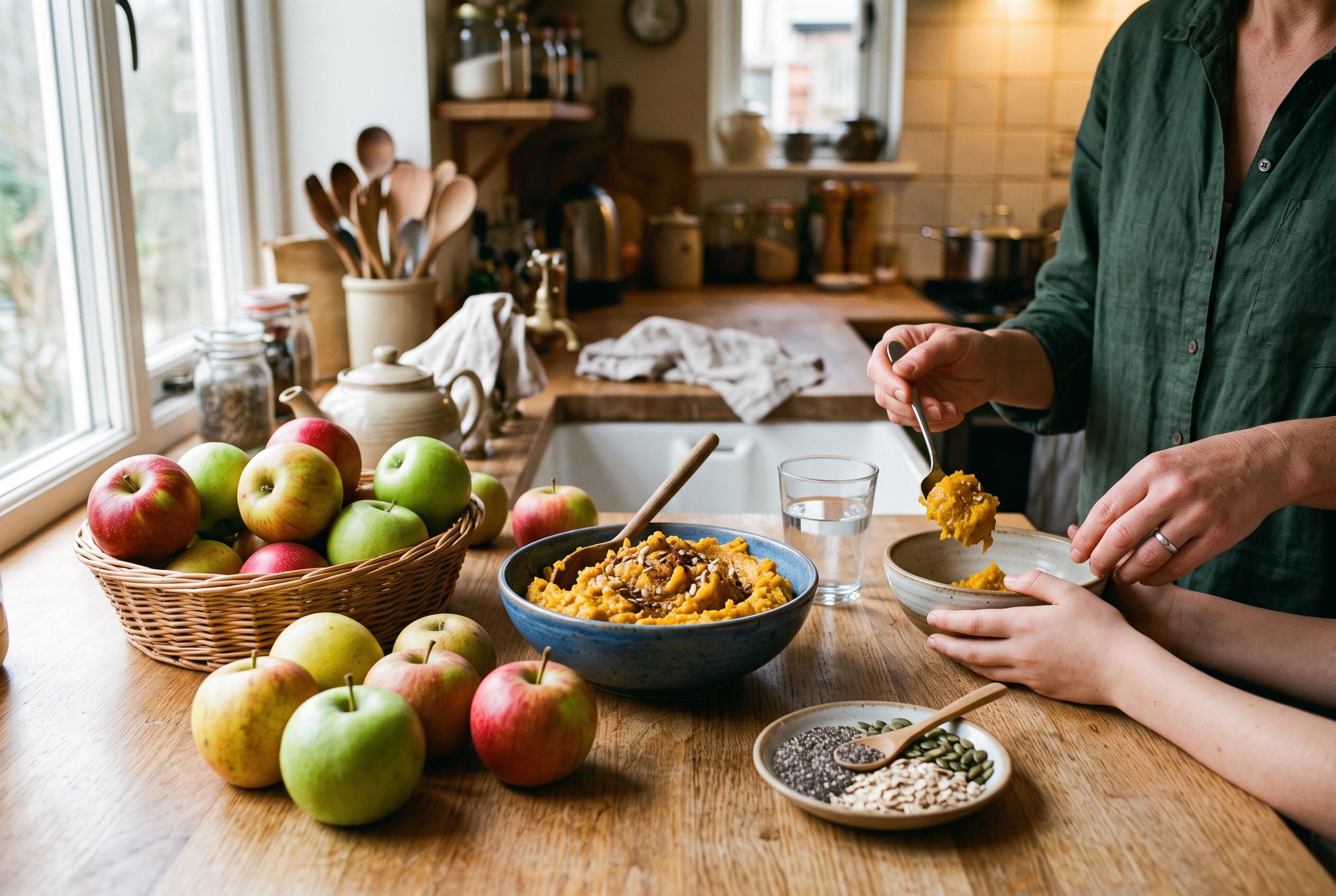

Apples generally raise blood glucose more slowly, while plain pumpkin contains less sugar overall and has a low glycaemic load. Both foods also provide fibre that may support digestion.
Apples and pumpkin can both support digestion, but they affect blood sugar in different ways. According to Verywell Health, the key difference is that apples generally have a lower glycaemic index than pumpkin, meaning they tend to raise blood glucose more slowly. That matters because the glycaemic index measures how quickly a food can push blood sugar upwards, although the effect also depends on portion size, what else is eaten and individual response.
For apples, the index is about 36, which places them firmly in the low-GI category. The US Department of Agriculture says a medium Gala apple with skin contains about 3 grams of fibre and 16.5 grams of sugar. Fibre helps slow digestion and can make a person feel fuller for longer, which helps soften the impact of the fruit’s natural sugars. That picture changes if apples are turned into desserts or served with added sugar, which can make them much more blood-sugar-friendly. People with diabetes are generally advised to discuss their diet with a healthcare professional so they can choose foods that suit their needs.
Pumpkin, by contrast, usually contains less sugar than apples in its plain, cooked form. The USDA says a cup of cooked pumpkin contains about 5 grams of sugar and 2.7 grams of fibre. Verywell Health notes that its glycaemic index is around 60, which falls into the medium range, but its glycaemic load is low because pumpkin is relatively low in carbohydrates overall. In practice, that means plain pumpkin is unlikely to have the same effect as a sweeter, heavily processed dish such as pumpkin pie, which can raise glucose far more sharply.
Both foods can also aid digestion because they contain different types of fibre. Insoluble fibre adds bulk to stool and helps it move through the digestive tract more quickly, while soluble fibre feeds beneficial gut bacteria and can slow the absorption of sugar. Verywell Health also points out that both apples and pumpkin contain pectin, a form of soluble fibre linked to digestive support and healthier cholesterol levels. In pumpkin, much of that pectin is found in the skin and seeds.
There are simple ways to put both foods to use in everyday meals. Apples can be baked with cinnamon and nutmeg, air-fried, or sliced into salads. Pumpkin can be roasted and blended into purée for soups, stirred into Greek yoghurt with cinnamon, or spread on toast with a little maple syrup. Both can also work in smoothies, although apples should be cored first and pumpkin seeds removed before blending.
Disclaimer: This content is for informational purposes only and is not intended to be a substitute for professional medical judgment, advice, diagnosis, or treatment.



