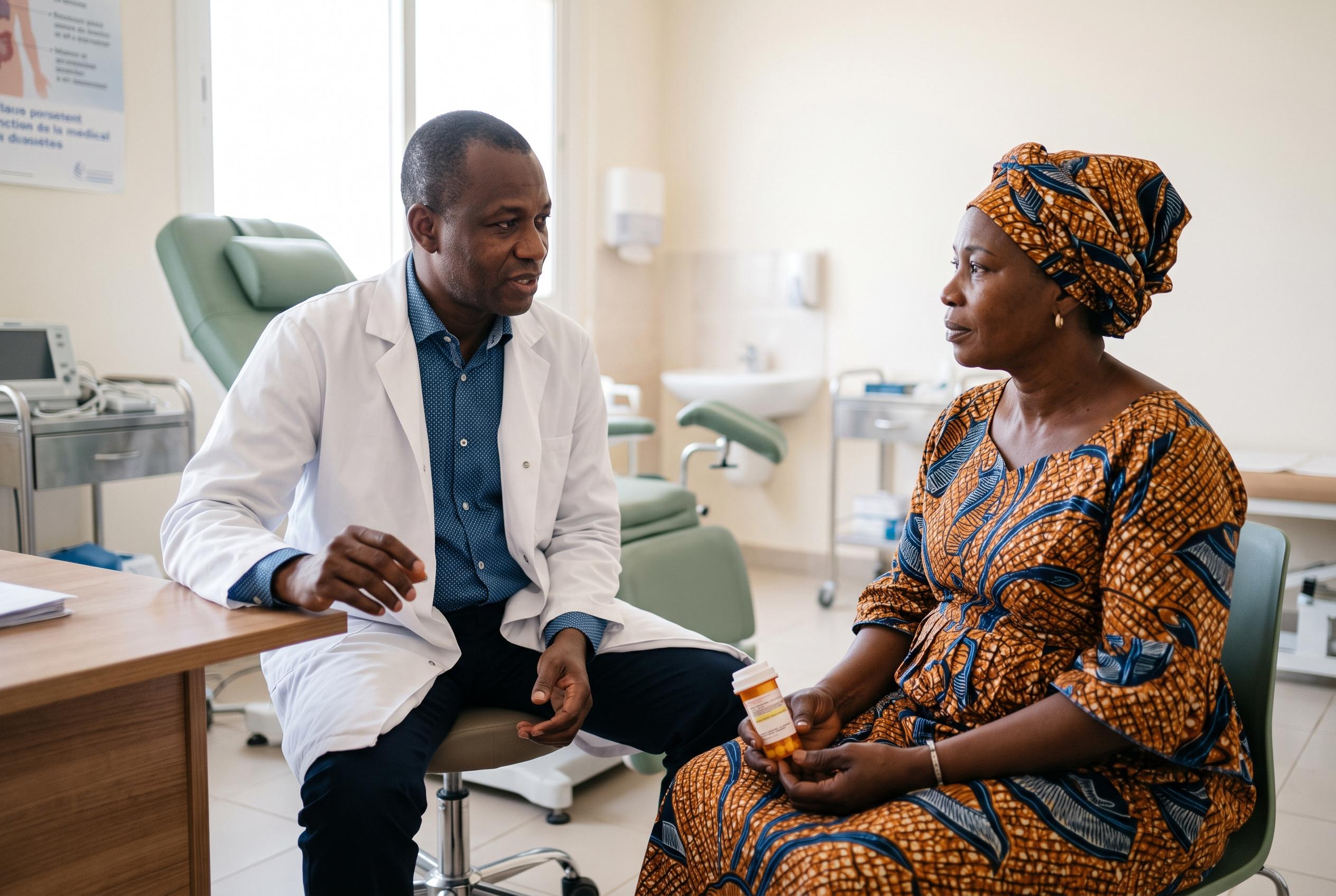

Health workers in Dakar say clearer conversations about medicines, side effects and lifestyle can improve diabetes control and prevent dangerous treatment changes.
Health workers in Senegal are urging patients with diabetes to speak more openly with clinicians about their treatment, warning that better understanding of medicines and closer dialogue can improve care and reduce the risk of harmful side effects. At a webinar held in Dakar to mark World Patient Safety Day, doctors and patients discussed how clearer communication can help people living with long-term conditions take part more fully in decisions about their care, according to the Senegalese news agency APS.
Seynabou Mbow, speaking for the non-communicable diseases division, said the goal of the initiative was to strengthen exchanges between health workers and patients, especially those who depend on long-term treatment. She argued that people need to understand both their illness and the medicines they are given so they can report unwanted reactions and help shape better care. Mbow also cautioned against relying only on advice from relatives or answers generated by artificial intelligence when questions arise about treatment, saying any change should first be discussed with a doctor.
Djiby Sow, who addressed the meeting on diabetes management, said patients should not alter prescribed treatment without medical advice, particularly when a regimen is working well and is not causing serious adverse effects. He pointed to the danger of hypoglycaemia, or low blood sugar, if a patient skips a meal after taking certain medicines or insulin. He also highlighted sleep problems and weight gain as factors that can worsen insulin resistance and make blood sugar harder to control.
Research cited in medical literature supports that emphasis on education and communication. A systematic review indexed by the US National Library of Medicine found that structured group education for adults with type 2 diabetes can reduce HbA1c, a measure of long-term blood sugar control, while a review in PubMed described therapeutic patient education as important for improving clinical, lifestyle and psychosocial outcomes. Other studies have likewise concluded that participatory decision-making and clear physician-patient communication are central to successful self-management, while Diabetes UK says people with diabetes benefit most from health professionals who are open, supportive and willing to discuss the emotional and practical burdens of the condition.
Disclaimer: This content is for informational purposes only and is not intended to be a substitute for professional medical judgment, advice, diagnosis, or treatment.