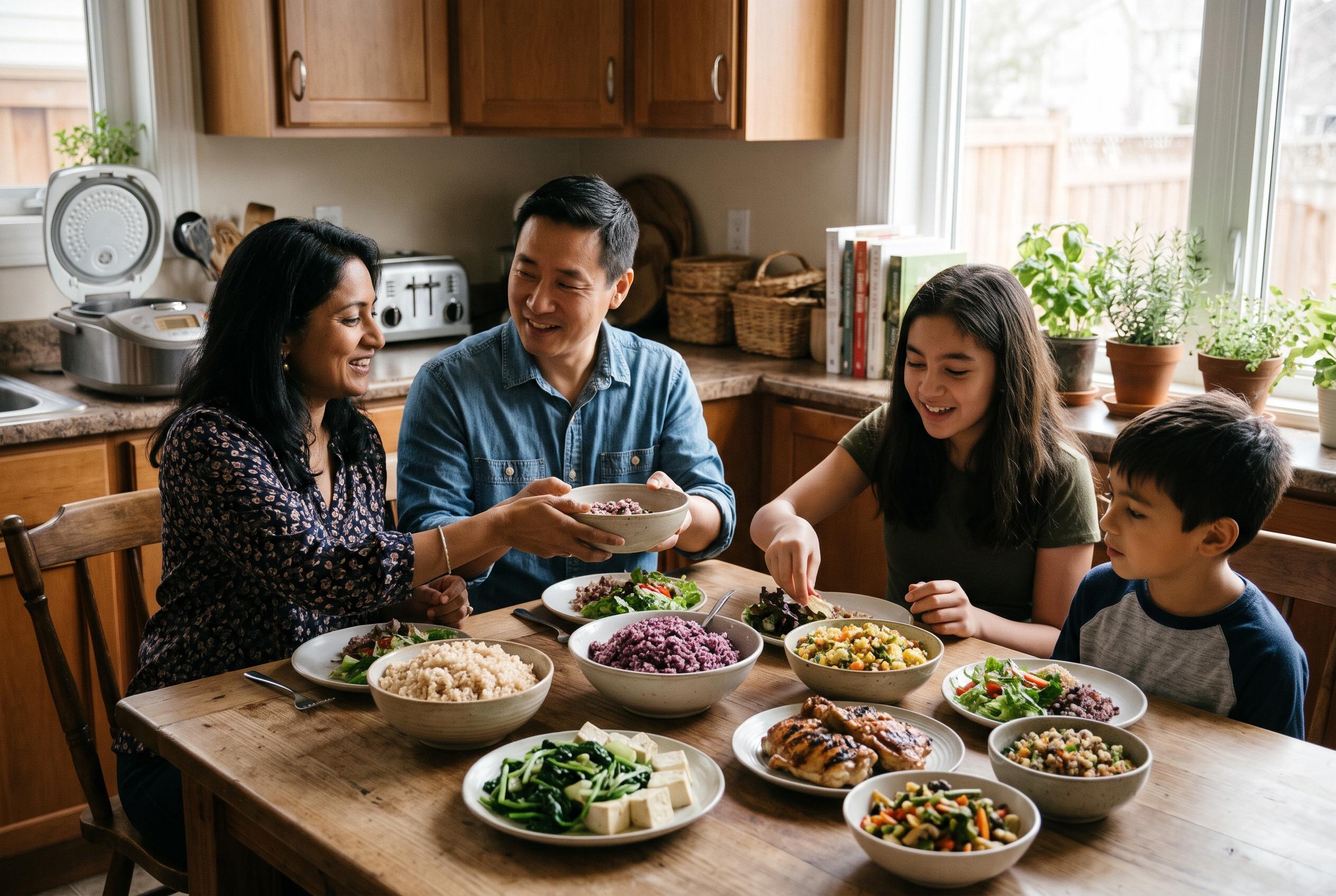

A Taiwanese nutritionist says grain type, processing and portion size matter more than rice colour, with purple glutinous rice potentially raising blood sugar quickly.
Choosing purple rice instead of white rice does not automatically make a meal healthier or better for blood sugar control, according to Taiwanese nutritionist Wang Yuqing, who says colour alone is a poor guide to how a grain will behave in the body. Her advice, reported by Starheadline, challenges a common assumption that darker rice is always lower in sugar-raising potential. In practice, the type of grain, how it is processed and the size of the portion matter far more than its shade.
Wang said that many products sold as purple rice are in fact purple glutinous rice, which has a sticky texture and can raise blood sugar more quickly than people expect. Independent glycaemic index guides back up the broader point that rice is not a single category: white rice tends to sit higher on the glycaemic scale, brown rice is usually lower because it keeps its bran and germ, and sticky rice can be markedly higher still. That means the “healthier” choice depends less on appearance than on the grain’s structure and preparation.
The nutritionist identified brown rice as the most reliable everyday option for people trying to steady blood sugar. Because it retains more of the grain, brown rice generally contains more fibre and more nutrients than refined white rice, and it digests more slowly. Other grains can also help, but only when they are present in meaningful amounts. Guides comparing rice varieties note that parboiled rice and quinoa tend to produce a gentler glucose response than many common white-rice products, while the benefit of mixed-grain rice depends heavily on how much of the blend is actually whole grain rather than polished rice.
Wang also stressed that even the best choice of rice remains a starch, so portion control still matters. She recommended eating vegetables and protein first, then rice last, as this eating order can slow the absorption of glucose and help prevent sharp blood sugar spikes. That practical advice aligns with broader evidence that the glycaemic effect of rice is shaped not only by the grain itself, but also by serving size, cooking method and what is eaten alongside it.
Disclaimer: This content is for informational purposes only and is not intended to be a substitute for professional medical judgment, advice, diagnosis, or treatment.