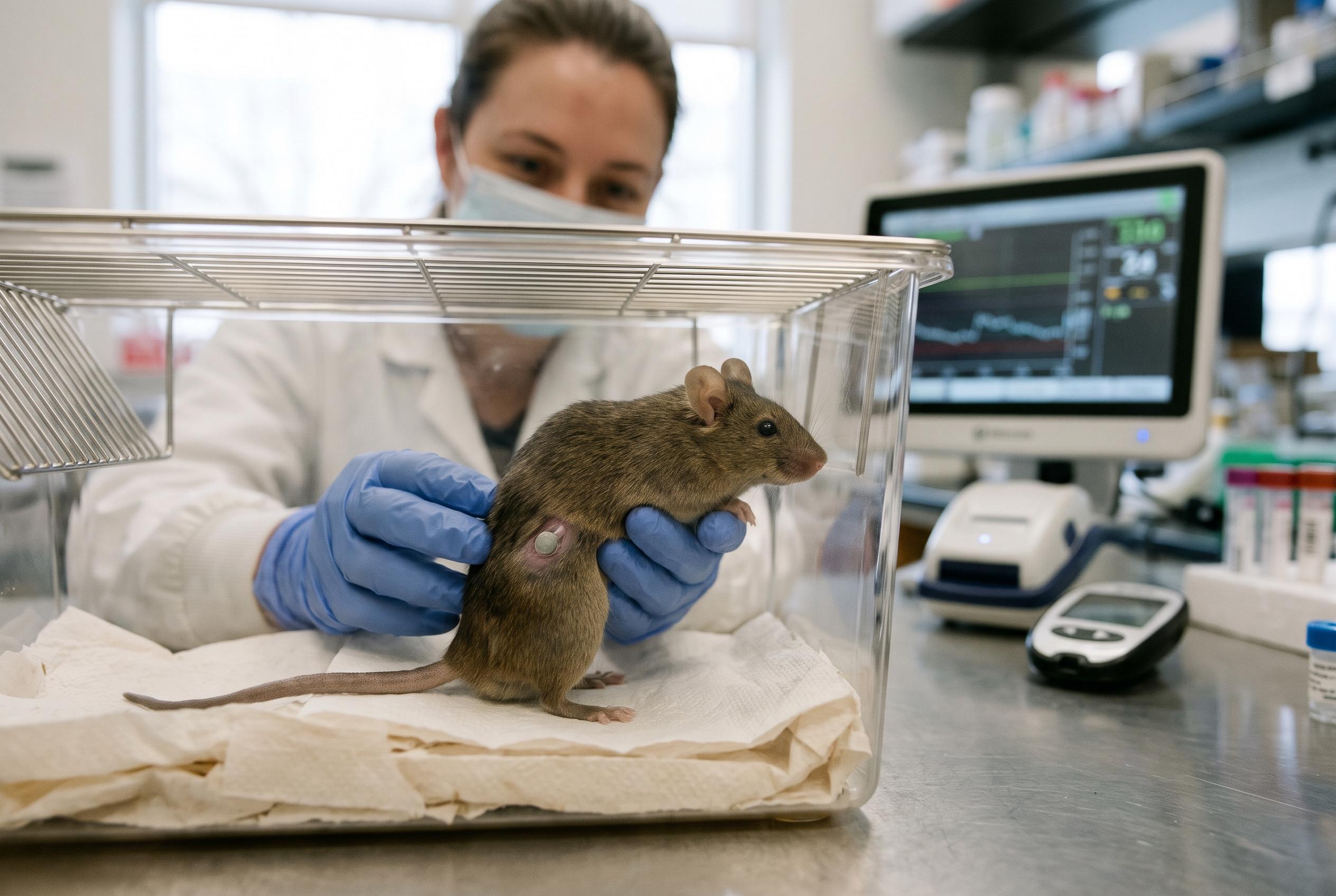

The experimental device converted excess glucose into a compound cleared by the kidneys, but its results so far are limited to mice.
Researchers at ETH Zurich have developed an experimental implant that may one day offer a drug-free way to lower blood sugar in type 2 diabetes, a condition that affects more than 2.5 billion people worldwide when obesity is included, according to Physics World and ETH Zurich. The device, called ECHO for electrocatalytic closed-loop health optimisation, is built around an electrically driven catalyst that converts excess glucose into gluconate, a compound the body can then clear through the kidneys. According to ETH Zurich, the aim is to regulate blood glucose through a chemical reaction rather than by supplying another medicine.
The implant combines graphite felt with gold nanoclusters and platinum particles, creating a porous structure with a large active surface area for glucose to reach. ETH Zurich says the catalyst, power electronics and wireless receiver are housed in a small 3D-printed shell and encased in a biocompatible coating. Physics World reported that the system is designed to sit under the skin and does not need direct contact with blood, instead drawing glucose from the interstitial fluid that constantly exchanges with the bloodstream. The researchers say that sets it apart from conventional closed-loop insulin systems, which still depend on stored hormone.
In tests in obese mice with type 2 diabetes, the implant was able to bring raised blood glucose back into the normal range within an hour when activated at low power, Physics World reported. Repeated daily use for six weeks kept glucose levels under control without evidence of hypoglycaemia, while the animals also lost up to 10% of their body weight and showed lower triglyceride levels. ETH Zurich says the mice did not show obvious inflammatory, behavioural or thermal damage linked to the device. Chemical & Engineering News and Genetic Engineering & Biotechnology News both described the findings as encouraging but clearly preclinical, with no evidence yet that the approach works in people.
The team also linked the implant to a commercial continuous glucose monitor and a smartphone-based control loop, allowing the system to switch on when glucose crossed a preset threshold and shut down when levels returned to normal, according to Physics World, DeviceMed and ETH Zurich. In one test, five-minute activation cycles maintained stable control across a range of glucose thresholds over the 12-day operating life of the monitor. The researchers have also carried out a five-litre laboratory experiment, roughly comparable to an adult human’s total blood volume, to explore whether the chemistry might scale up, though they stress that much more work is needed before any human trial could be considered.
Martin Fussenegger, who leads the project at ETH Zurich, told Physics World that the long-term goal is a more autonomous form of glucose management that does not rely on a drug reservoir. The next steps, according to ETH Zurich, are to improve the efficiency, durability and miniaturisation of the implant, and to test it in larger animals under conditions closer to those in humans. For now, the work sits firmly in the research stage, but it points to a broader field of electrocatalytic medicine in which electronics and chemistry could be combined to tackle metabolic disease in new ways.
Disclaimer: This content is for informational purposes only and is not intended to be a substitute for professional medical judgment, advice, diagnosis, or treatment.