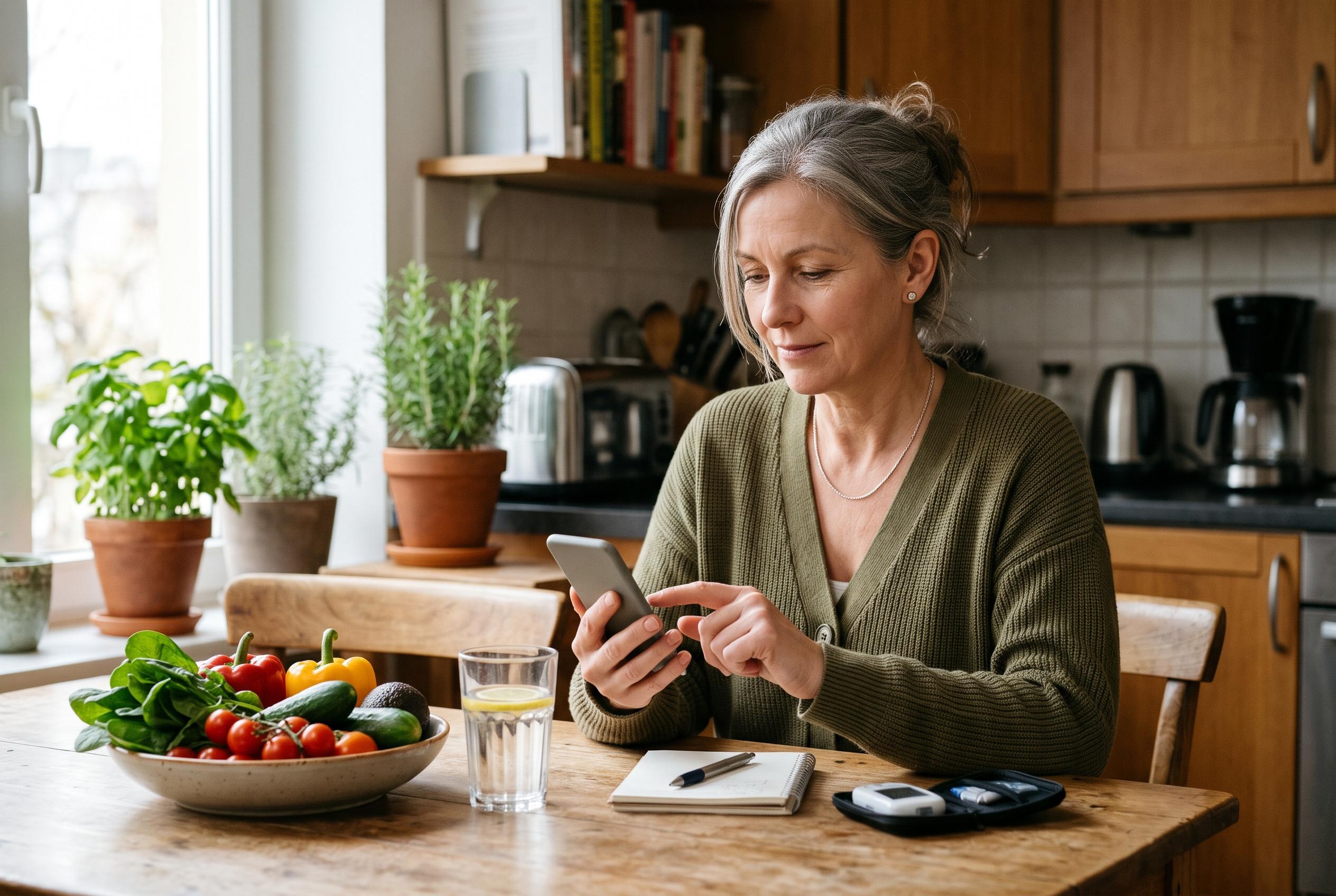

A small University of New Hampshire project found early signs that a free mobile app could improve patients’ confidence and dietary habits, while highlighting the need for longer and larger studies.
A quality improvement project from the University of New Hampshire suggests that a simple mobile app may help people with diabetes become more confident about managing their condition, offering a possible bridge for primary care practices that do not always have the time to deliver intensive one-to-one coaching. The project, built around the Mountain Model of translating research into practice, focused on how digital tools might support the everyday self-management that is central to diabetes care, from eating habits to exercise and blood sugar monitoring.
In the project, ten patients from a primary care practice were shown how to use a free, HIPAA-compliant app to record nutrition and physical activity. They completed a self-efficacy survey before the intervention and again one to two weeks later, after using the app and receiving follow-up through the patient portal. Five people completed both surveys. Four of them recorded better self-efficacy scores, one showed no change, and every respondent said their diet had improved in some way. The project did not reach statistical significance, but it pointed to a favourable short-term trend in both confidence and behaviour.
That cautious result fits with the wider evidence base. The National Library of Medicine’s technical brief on diabetes apps says many products are available, but patients often have little guidance on which ones are actually useful. It also notes that apps can be more effective when they are paired with support from clinicians, particularly when they help with blood glucose tracking, medication use and physical activity. A rapid evidence review in the journal JMIR similarly found that common app features include reminders and tracking tools, and that some apps can improve short-term outcomes, especially HbA1c, the standard measure of average blood sugar over roughly three months.
Earlier research points in the same direction. A systematic review and meta-analysis published in the Journal of Medical Internet Research found that mobile phone applications were associated with better glycaemic control in randomised trials. Another review, published in Studies in Health Technology and Informatics, said patients using these tools often report healthier eating, more exercise and more frequent glucose checks, although many apps still provide only generic advice rather than personalised education. The CDC also says diabetes self-management education and support remains a key part of care, covering healthy eating, physical activity, medicines and blood sugar monitoring. More recently, an updated review published in the Journal of Diabetes Science and Technology found that commercial diabetes apps are proliferating rapidly, making it harder for patients and clinicians to choose among them, and called for more long-term evidence.
Taken together, the University of New Hampshire project adds to a consistent message: digital tools are not a substitute for clinical care, but they may help extend it. For busy primary care teams, the appeal lies in their relative simplicity. If an app can prompt a patient to track meals, move more often and think more actively about self-care, it may offer a practical way to reinforce habits that matter to diabetes management without demanding large amounts of staff time. The evidence so far is encouraging, but the broader literature also makes clear that stronger, longer studies are still needed before any single app can be treated as a proven solution.
Disclaimer: This content is for informational purposes only and is not intended to be a substitute for professional medical judgment, advice, diagnosis, or treatment.