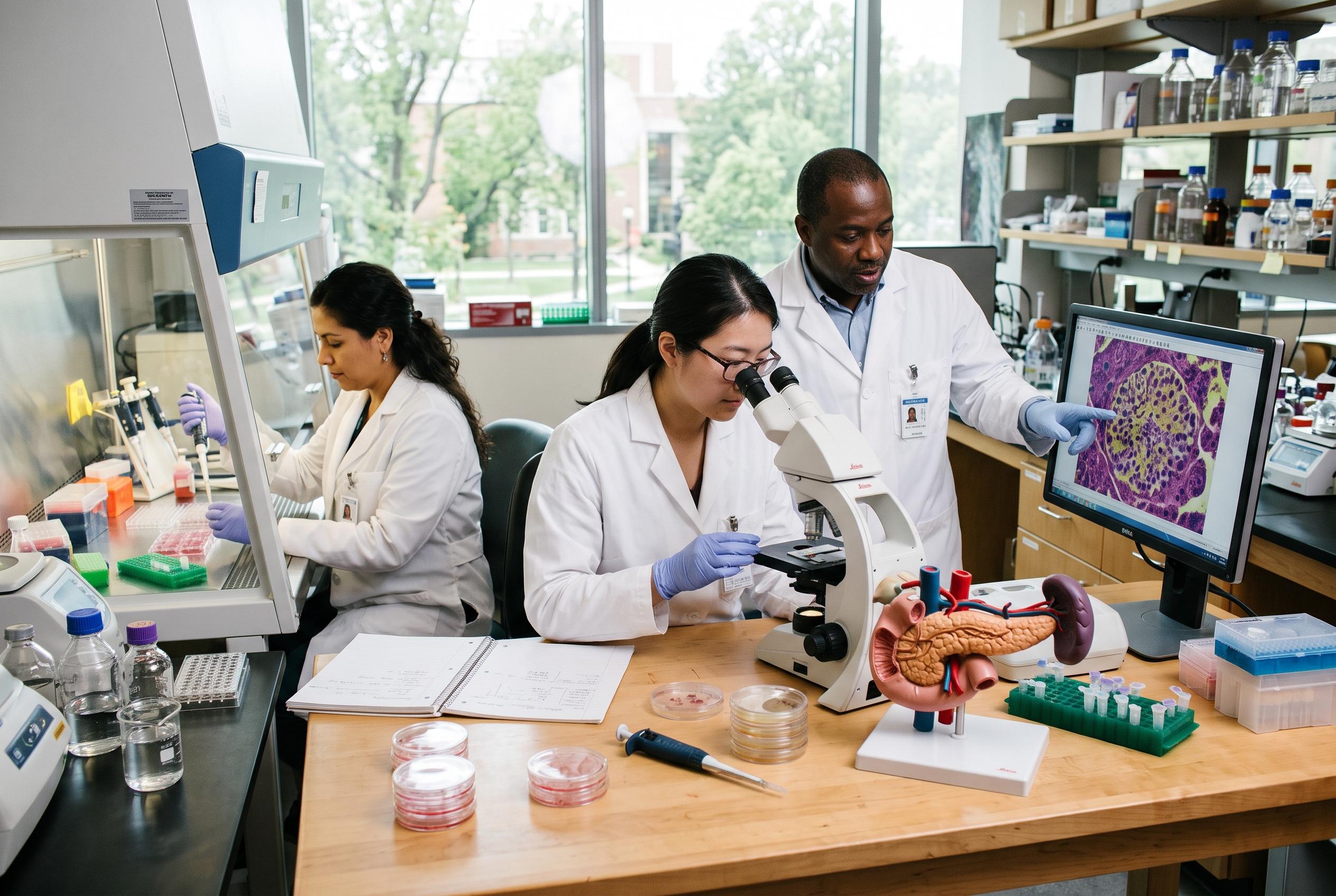

An analysis of more than 4 million cells has identified a previously unknown population and mapped how pancreatic tissue changes from fetal development to adulthood and disease.
An international research team has produced the most detailed human pancreas cell atlas yet, offering what the study describes as an unprecedented view of how the organ works and how it reacts to disease. Published in Cell Metabolism and based on the analysis of more than 4 million pancreatic cells and cell nuclei, the research spans samples from fetal development through to adulthood, including tissue from healthy people and patients with type 2 diabetes. According to the report, the project was carried out under the Human Cell Atlas initiative and was coordinated by Berlin Institute of Health at Charité in Germany, with contributions from Spain’s National Genomic Analysis Centre and the Josep Carreras Leukaemia Research Institute.
The team used 10 complementary genomic techniques to map not only what pancreatic cells do, but also how they are regulated and where they sit within the tissue. Among the most notable findings was the identification of a rare and previously unknown cell population called pCACs, which appears to have a high degree of flexibility and the ability to respond to injury or changes in the pancreas’s environment. Holger Heyn of the National Genomic Analysis Centre said the integration of the different layers of data had revealed the remarkable ability of these cells to adapt, while Elisabetta Mereu of the Josep Carreras institute said the work paints a much more dynamic picture of the pancreas and suggests that cellular plasticity is an inherent feature of a healthy organ.
Researchers also tested how the organ responds to metabolic stress by exposing pancreatic islets to high glucose levels, uncovering key molecular changes in the beta cells of people with type 2 diabetes. Funded by the European Commission through the ESPACE consortium, the atlas is intended to act as a reference point for scientists developing new diagnostic tools, diabetes treatments and regenerative medicine strategies.
Disclaimer: This content is for informational purposes only and is not intended to be a substitute for professional medical judgment, advice, diagnosis, or treatment.