

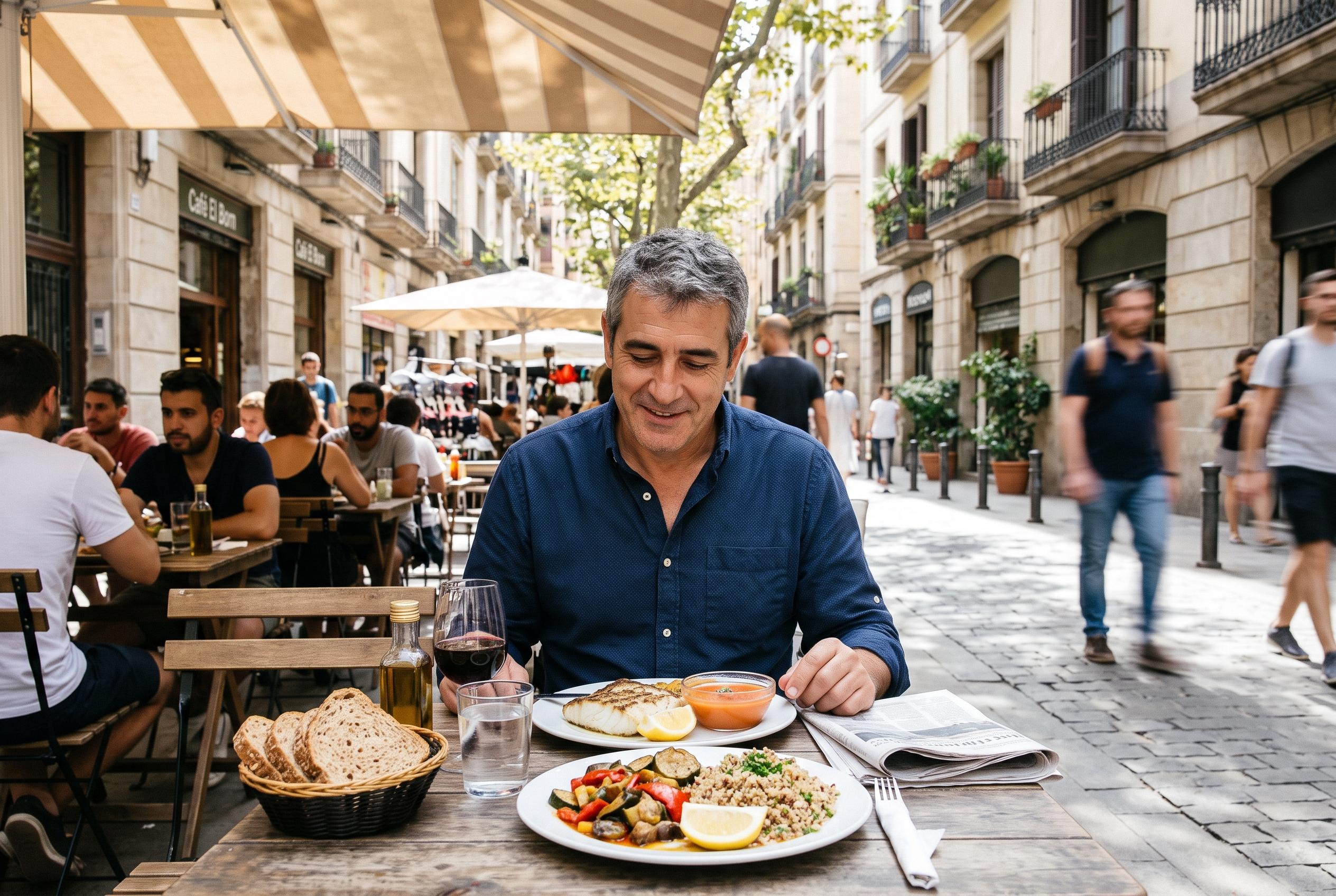

Spain’s extended lunch break shapes when people eat and what they choose, but a nutritionist says better meal balance matters more than cutting back or forcing breakfast.
Spain’s long midday pause continues to shape how people eat at work, and a piece in elDiario.es argues that the schedule itself can push employees towards habits that are convenient but not always balanced. In many European countries, lunch is rushed; in Spain, the break can stretch to two hours or more, which shifts the day’s rhythm and often leaves breakfast lighter, mid-morning snacks improvised and dinner delayed.
That cultural pattern helps explain why the “menu of the day” remains such a powerful fixture in Spanish working life. Yet, as the elDiario.es article notes, it can also encourage poor choices when the meal is built around refined carbohydrates, fried food and sugary dessert. Mireia Elías, a nutritionist at Alimentación 3S, said the biggest problem is not the format itself but the inability to choose well from it. She warned that starting with a plate of pasta or rice and leaving vegetables, protein or healthy fats until later can cause blood sugar to rise quickly, followed by a slump in the afternoon.
The article also pushes back against the idea that breakfast must be eaten by everyone. Elías said it is not a compulsory meal, and that whether someone benefits from it depends on hunger, satiety and personal routine. What matters more, she argued, is what that first meal contains. A coffee with milk and a piece of fruit, or a similar light breakfast built mostly on carbohydrates, may not provide enough protein, fibre or fat to keep energy stable. A 2019 meta-analysis of randomised trials found that skipping breakfast does not automatically lead to greater hunger later in the day, although the quality of what is eaten matters when breakfast is taken.
The wider European context supports that idea. Research published in Public Health Nutrition found that main meals are generally eaten later in Mediterranean countries than in northern Europe, with Spain standing out for its late breakfast, lunch and dinner times. Other reporting on workplace habits shows the same divide: Belgian workers have been found to take the shortest lunch break in Europe, at around 22 minutes, while an analysis cited by the University of Gastronomic Sciences found Italians spend an average of 51.6 minutes on lunch, above the EU average of 37.4 minutes. In practice, those differences shape not only when people eat, but also how often they rely on vending machines, canteen snacks or whatever is available between meetings.
Elías’s advice is rooted in that reality. She recommends building meals around vegetables, protein and healthy fats first, then adding carbohydrate rather than letting refined starches dominate the plate. At lunch, she suggests water instead of sweet drinks and says sugary desserts should be treated as occasional extras rather than daily habits. For people bringing food from home, she points to the so-called Harvard plate model: half vegetables, a quarter protein and a quarter carbohydrate. Her broader message is that eating well at work does not necessarily mean eating less or cooking more, but planning better so that energy remains steadier and afternoon cravings are less likely to take over.
Disclaimer: This content is for informational purposes only and is not intended to be a substitute for professional medical judgment, advice, diagnosis, or treatment.



