

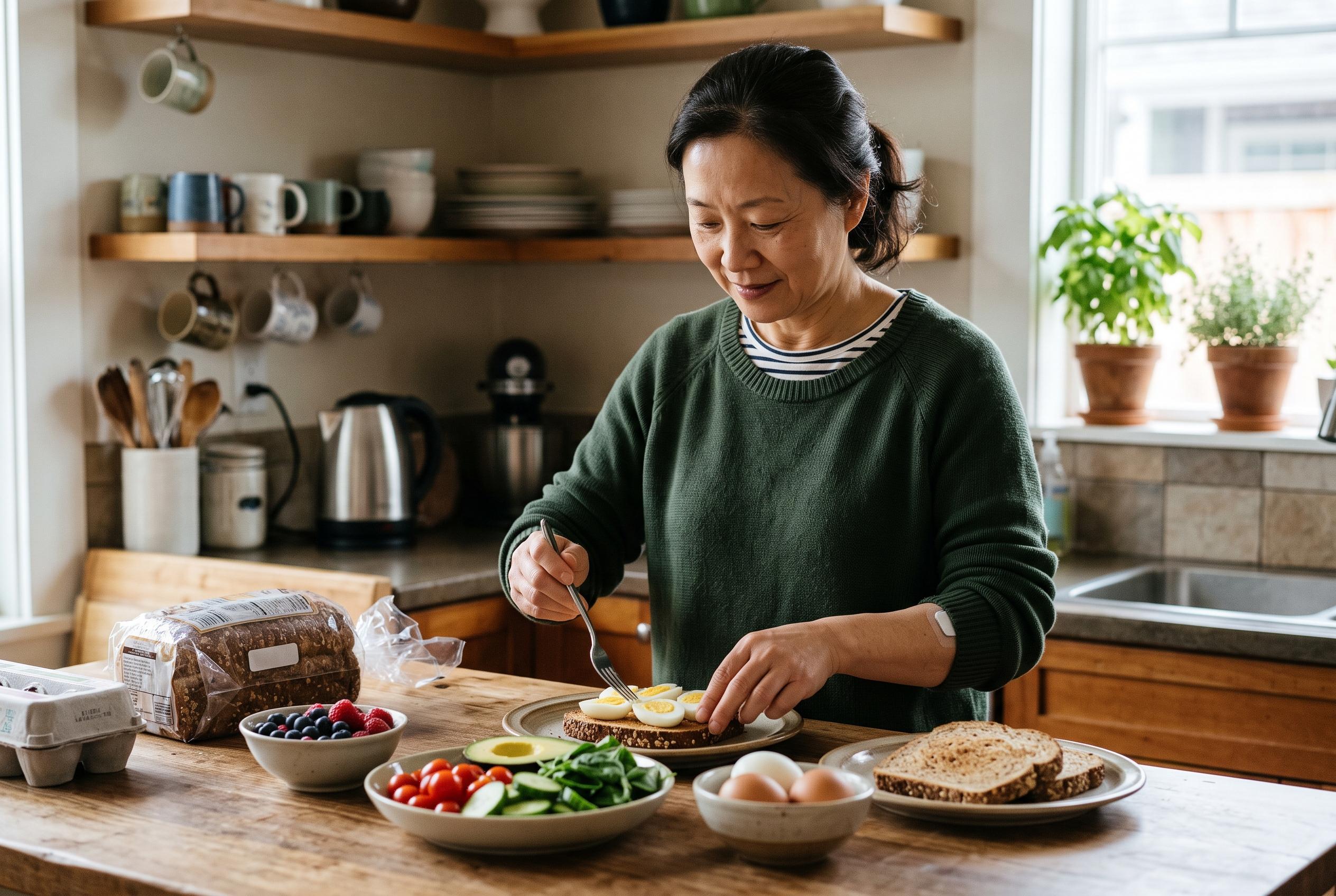

A Taiwanese dietitian says people with diabetes should focus on less processed, lower-glycaemic carbohydrates and pair them with protein and vegetables rather than eliminate starch altogether.
A Taiwanese dietitian is pushing back against the idea that people with diabetes should avoid starchy foods at breakfast altogether, arguing instead that the better question is which carbohydrates to choose and how to combine them. In a recent piece for Liberty Times, nutritionist Hsieh Yi-fang said breakfast for diabetes management is not about cutting out carbohydrates, but about selecting less processed, lower-glycaemic options and pairing them with protein, vegetables and unsweetened drinks. That advice broadly matches a 2026 systematic review and meta-analysis on breakfast composition, which found that legume-based breakfasts and low-glycaemic-index breakfasts were most effective at lowering two-hour post-meal blood glucose in people with diabetes.
The practical examples Hsieh offered are straightforward: eggs with unsweetened soy milk and thick oats, sweet potato with soy milk and eggs, or barley rice with tofu and vegetables. She also warned against combinations such as white toast with jam and milk tea, or sweet buns with sugary coffee, which are more likely to drive up blood sugar after eating. The PubMed review on breakfast composition supports the wider principle behind that advice, while also underlining that the type of breakfast matters more than simply whether it contains starch.
Hsieh also said protein is important, but not a case of “more is better”. She pointed to evidence that extra protein or amino acid supplementation in the morning has not yet been shown clearly to increase muscle mass, grip strength or lower-body strength in older adults. Her suggested target of around 20 to 25 grams of protein at breakfast is consistent with a balanced meal rather than a protein-only plate. That approach fits broader nutrition guidance, which tends to emphasise adequacy and distribution across the day rather than a single large protein hit.
Beyond food choice, timing and eating order may also matter. A 2026 systematic review and meta-analysis on meal timing found that earlier eating may help glucose control, although the authors stressed that the studies were too varied and short to support firm clinical rules. Separately, the review Hsieh cited on meal sequence concluded that eating vegetables, fruit or protein before carbohydrate-rich foods can blunt the post-meal glucose rise. A related review focused on people with diabetes reached a similar conclusion, finding that a carbohydrate-last pattern can reduce post-meal glucose excursions.
Her final point was that breakfast should be complete, regular and minimally processed, then followed by movement. Even a 10- to 20-minute walk after eating, or simply avoiding sitting still straight after breakfast, may help with blood sugar control. Hsieh’s overall message was that people with diabetes do not need to fear breakfast carbohydrates, but they do need to choose them carefully, keep portions sensible and build the meal around fibre, protein and whole-grain foods rather than refined starches.
Disclaimer: This content is for informational purposes only and is not intended to be a substitute for professional medical judgment, advice, diagnosis, or treatment.



