

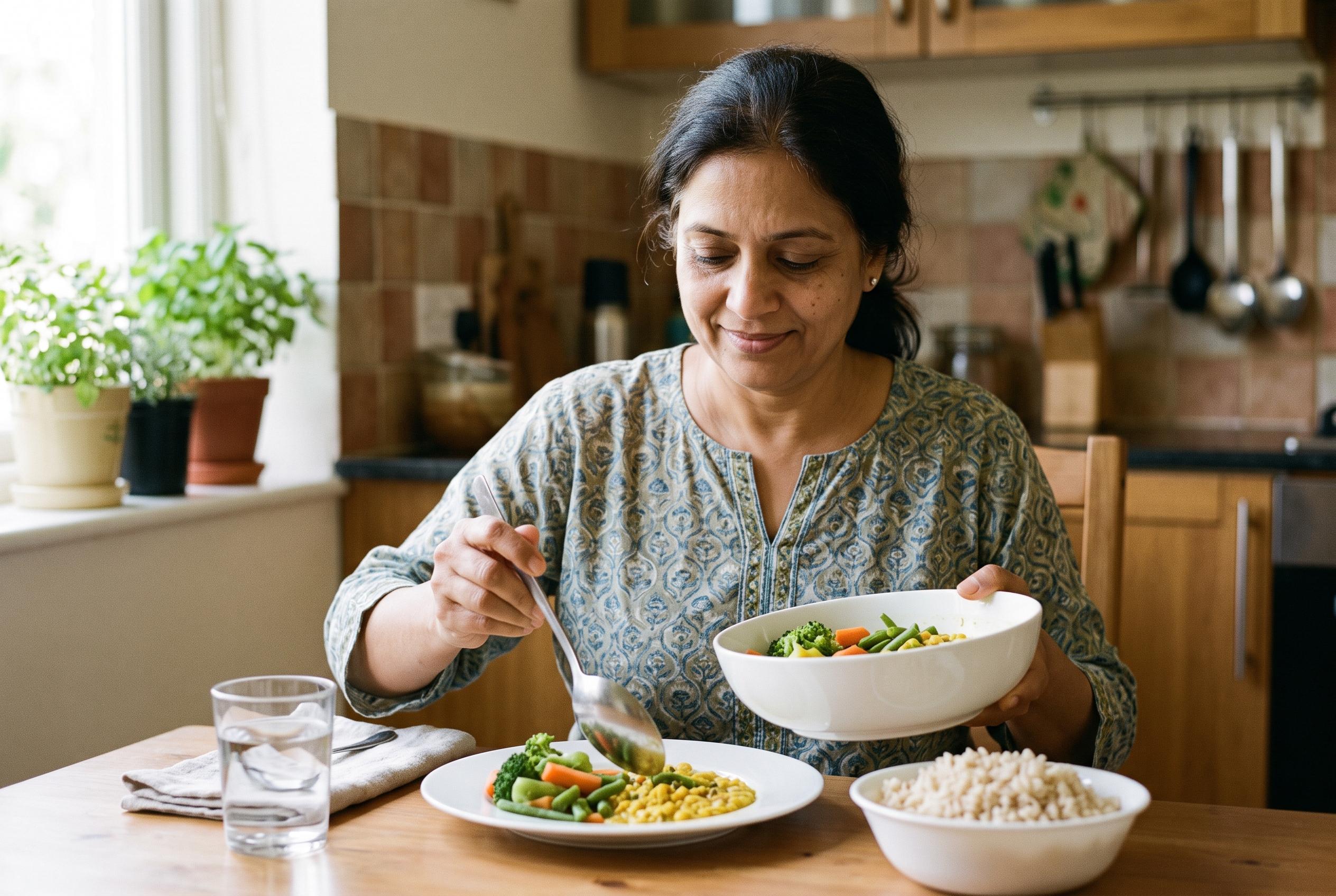

Nutrition experts recommend easing back into regular meals after nine days of fasting, with smaller portions and less fried, sugary and rich food to reduce the risk of bloating, acidity and blood-sugar spikes.
After nine days of Navratri fasting, the return to ordinary meals can feel like a celebration in itself. But nutrition experts caution that enthusiasm at the table can quickly turn into discomfort if the first post-fast meals are overloaded with fried snacks, sugar, rich gravies or oversized portions. The safest approach is to ease back into regular eating gradually, with balanced meals and modest serving sizes, rather than treating the end of the fast as a licence to indulge.
That advice is consistent with broader guidance on breaking a fast. Health information site 1mg says bloating and acidity are less likely when people start with light, easy-to-digest foods, eat slowly and avoid immediately piling on heavy or greasy dishes. Similar guidance from Healthline notes that once a fast ends, the digestive system may be more sensitive than usual, making it sensible to reintroduce food carefully rather than in large, calorie-dense portions.
Among the foods most likely to cause trouble are deep-fried items such as poori, pakoras and samosas. These snacks are popular during festivals, but they can sit heavily in the stomach, particularly after several days of smaller meals. Sweets and desserts present another risk, not because they should be avoided entirely, but because eating too much sugar at once can lead to a sharp rise in blood glucose and leave people feeling unwell. A small serving is less likely to cause problems than several helpings in one sitting.
Spicy curries, oily gravies and cream-heavy restaurant dishes can also be harder to tolerate immediately after fasting. Some people experience acidity or heartburn when they return too quickly to rich food. Nutrition guidance from Scienceinsights.org and Biologyinsights.org similarly recommends beginning with lighter, easier-to-digest meals and holding back on very fatty or heavily seasoned dishes until the stomach has adjusted. The same logic applies to large portions of refined carbohydrates, such as white bread, noodle dishes and snacks made with refined flour, which can leave people hungry again soon if they are not paired with protein, vegetables or fibre.
Sugary drinks are another easy trap. Soft drinks, packaged juices and other sweetened beverages can add a lot of sugar without making a person feel full, which makes them a poor choice right after fasting. Water remains the simplest option, while whole fruit and unsweetened drinks are better alternatives for both hydration and nutrition. In practice, the post-fast reset works best when meals are built around moderation: smaller servings, less oil, more vegetables and whole grains, and enough protein to make the meal satisfying.
Disclaimer: This content is for informational purposes only and is not intended to be a substitute for professional medical judgment, advice, diagnosis, or treatment.



