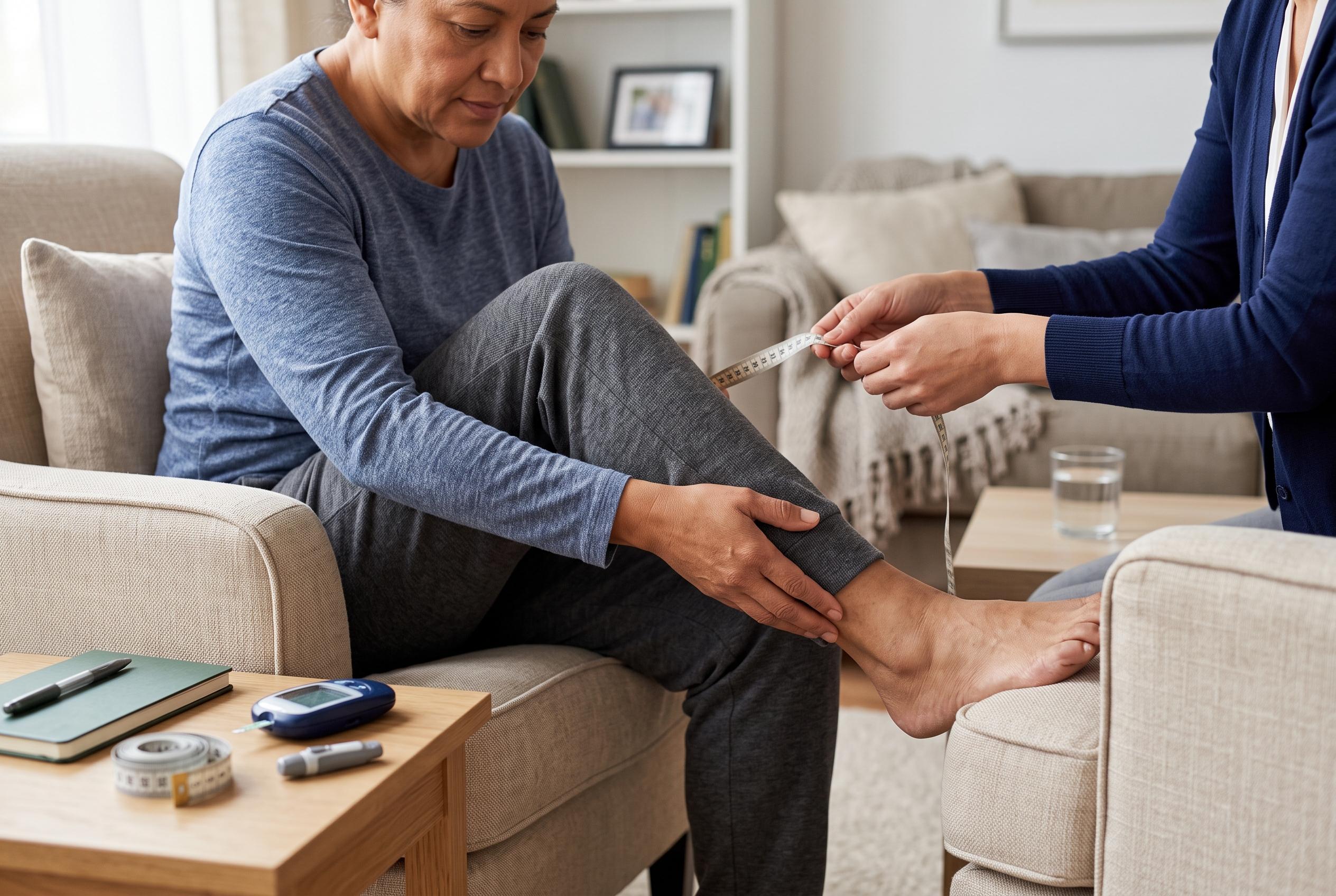

A recent study highlights that body-shape measures focusing on fat distribution, particularly the conicity index, could be promising tools for early detection of diabetic peripheral neuropathy, ahead of traditional BMI assessments.
A new study published in Dove Medical Press suggests that simple body-shape measures may help identify people with type 2 diabetes who are at higher risk of diabetic peripheral neuropathy, a complication that can cause pain, numbness and, in severe cases, foot ulcers and amputation. The researchers analysed 950 adults with type 2 diabetes treated at a hospital in Harbin, China, and found that 376 had diabetic peripheral neuropathy. Their results add to a wider body of evidence showing that neuropathy is common in diabetes and tends to become more frequent as disease duration lengthens, with global diabetes prevalence also continuing to rise, according to the International Diabetes Federation.
The study compared 14 obesity-related indices, ranging from the familiar body mass index to newer measures that attempt to capture abdominal fat and metabolic risk more precisely. These included waist circumference, waist-to-hip ratio, the conicity index, a body shape index, relative fat mass and the Chinese visceral adiposity index. The authors reported that all of the indices were positively associated with neuropathy risk after adjustment for multiple factors, but the strongest relationships came from measures linked more closely to central obesity and fat distribution than from body mass index alone.
Among the various measures, relative fat mass showed the strongest statistical association with neuropathy, while the conicity index performed best at distinguishing between patients with and without the complication. In receiver-operating-characteristic analysis, the conicity index recorded the highest area under the curve, narrowly ahead of a body shape index. The same pattern held when the researchers examined whether adding each index to a standard risk model improved discrimination: the conicity index provided the largest gain, followed by a body shape index and the weight-adjusted waist index. The authors also reported that these findings were broadly consistent across sex, age and diabetes-duration subgroups.
The hospital-based study is notable because it went beyond traditional obesity markers to assess newer indices that try to capture visceral fat and metabolic burden more accurately. The authors found that the associations persisted even after further adjustment for triglycerides, the triglyceride-glucose index and the systemic immune-inflammation index, suggesting the relationships were not explained solely by lipid abnormalities, insulin resistance or low-grade inflammation. That matters because earlier research has linked diabetic peripheral neuropathy not only to glycaemic exposure and disease duration, but also to obesity and central fat accumulation.
The findings fit with earlier work showing that diabetic peripheral neuropathy is common and often under-recognised. A 2019 systematic review and meta-analysis estimated the pooled prevalence at 30% across diabetes populations, with a higher rate in type 2 diabetes. Other clinical sources have reported that neuropathy may already be present at diagnosis in some patients and becomes more common over time, reinforcing the case for early screening. The Harbin study does not prove that obesity causes neuropathy, but it strengthens the argument that body-shape and fat-distribution measures may be useful, low-cost tools for identifying patients who deserve closer neurological assessment.
Even so, the authors stressed that the research has limits. It was cross-sectional, meaning it can show association but not cause and effect, and it was conducted at a single centre in China, so the results may not travel neatly to other populations. The study also did not separately evaluate factors such as diet, exercise, lipid-lowering treatment or the use of weight-lowering diabetes medicines. For now, the conicity index appears the most promising of the measures tested, but larger prospective studies will be needed before it can be recommended as a routine clinical screening tool.
Disclaimer: This content is for informational purposes only and is not intended to be a substitute for professional medical judgment, advice, diagnosis, or treatment.