

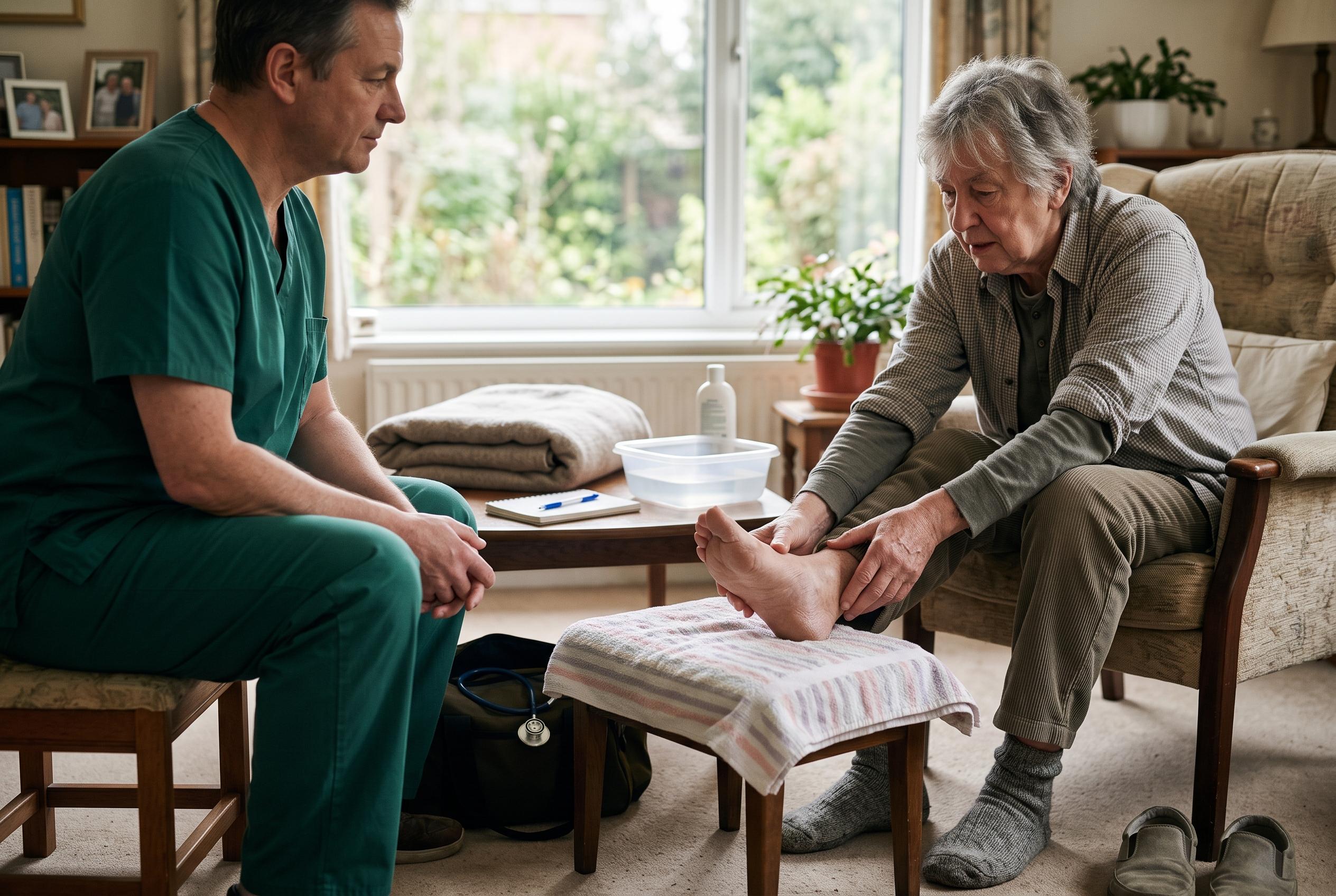

A new guide highlights the importance of recognising subtle foot problems in elderly individuals, which can signal broader mobility decline and threaten independence if left untreated.
A guide published by My Stay At Home Adventures argues that foot problems in older people are too often dismissed as a normal part of ageing, when they can be an early warning of broader mobility issues. The article says small changes in gait, nail condition, sensation, skin integrity and footwear tolerance may seem minor at first, but can steadily erode confidence, walking distance and independence.
That warning is supported by wider clinical guidance. Michigan Foot Doctors says foot pain affects more than three-quarters of adults aged 65 and over, with common causes including osteoarthritis, bunions, hammertoes and peripheral neuropathy, a nerve condition that can reduce feeling in the feet. The group says untreated problems can contribute to falls, diabetic ulcers and functional decline, making early assessment more important in older patients than it may be in younger adults.
Changes in the way an older person walks are often easy to miss because they develop gradually. Physio-pedia says age-related changes such as widening and flattening of the feet, along with reduced cushioning under the sole, can alter balance and put extra strain on joints higher up the body. The US Centres for Disease Control and Prevention also notes that reduced ankle flexibility, weaker calf muscles, bunions and toe deformities can all affect stability and increase fall risk.
Nail changes deserve similar attention. Thickened, discoloured or painful nails may indicate fungal infection, while nails that are difficult to trim can worsen when they are left unattended. The more serious concern is loss of sensation. The CDC says reduced feeling from neuropathy is one of the foot-related risks linked with falls, and other clinical guides note that cuts, blisters and sores may go unnoticed for longer when circulation and sensation decline with age.
Recurring corns, calluses and pressure points can also signal an underlying problem with foot shape, alignment or footwear rather than simply hard skin that needs filing away. Several of the sources stress that older skin is more fragile and slower to recover, so repeated friction can lead to cracking and infection. Supportive shoes matter as well: the CDC recommends footwear with laces or straps, a firm heel counter, a bevelled heel and a broad, stable base.
The broad message is consistent across the material: ongoing foot pain, numbness, changing shoe fit and visible skin or nail problems should not be accepted as routine signs of ageing. Left alone, they can reduce mobility long before they become dramatic enough to demand urgent care. In older adults, even apparently small foot changes can be the first step towards a much larger loss of independence.
Disclaimer: This content is for informational purposes only and is not intended to be a substitute for professional medical judgment, advice, diagnosis, or treatment.



