

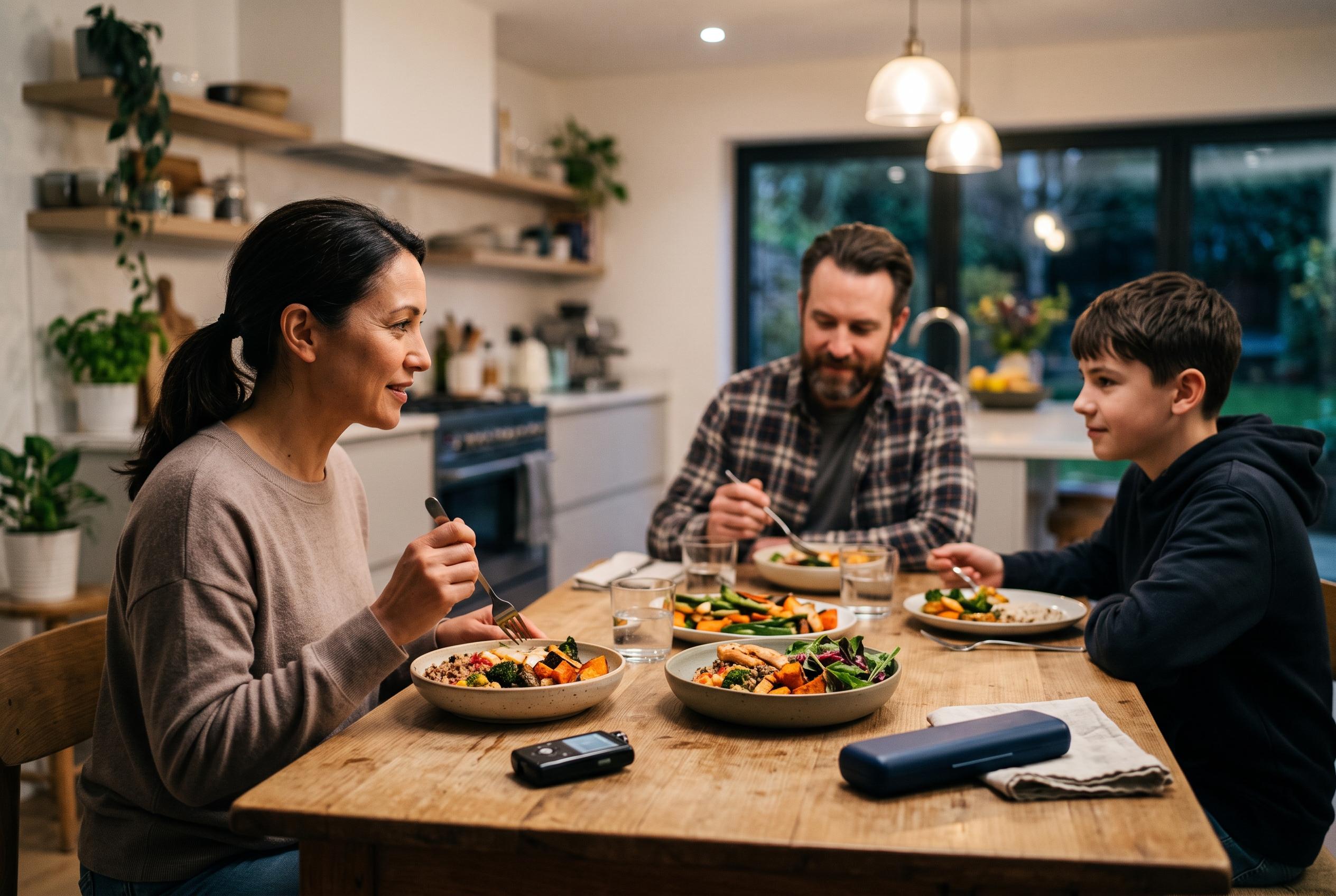

Research indicates that eating in company can lead to better blood glucose control, unveiling a potential link between social interactions and bodily stability, as published in Science Advances.
A study by researchers at the Hebrew University of Jerusalem and Sheba Medical Centre suggests that the body may handle food more efficiently when a meal is shared with other people. The work, published in Science Advances, found that blood glucose rose less sharply and returned towards baseline more quickly after a standard carbohydrate meal when participants ate in company rather than alone.
The research team, led by Shir Atzil, a professor at the Hebrew University, and doctoral researcher Monia Masalha, with Shai Fuchs of Sheba Medical Centre, described the pattern as “social physiology”. In their view, the finding points to a broader idea that human homeostasis, the process by which the body keeps itself stable, may operate more effectively in close social settings. The study builds on earlier observations that people living or working together often synchronise aspects of daily life, including sleep, stress and eating routines.
In the experiment, participants ate a standardised meal containing 50 grams of carbohydrate in white wheat bread, after which their glucose levels were monitored for two hours. The researchers said the average change in glucose was about 23%, though the effect varied widely between individuals. They reported no meaningful difference between men and women, and said they controlled for age, body-mass index, metabolic health, stress levels and physical touch. They also found similar benefits from social proximity in other settings, including improved temperature regulation during cold exposure and reduced stress responses in adults and infants.
Atzil said the findings suggest that relationships may have a direct biological role, not just an emotional one. The researchers stressed, however, that companionship is not a replacement for medical care, nutrition or exercise. They also said the work is still preliminary and that the next step is to test whether the same effect appears in siblings, strangers, people with pre-diabetes and diabetes, and older adults who often eat alone. If confirmed more broadly, the results could add a new dimension to public health thinking: what happens around the table may matter almost as much as what is on it.
Disclaimer: This content is for informational purposes only and is not intended to be a substitute for professional medical judgment, advice, diagnosis, or treatment.



