

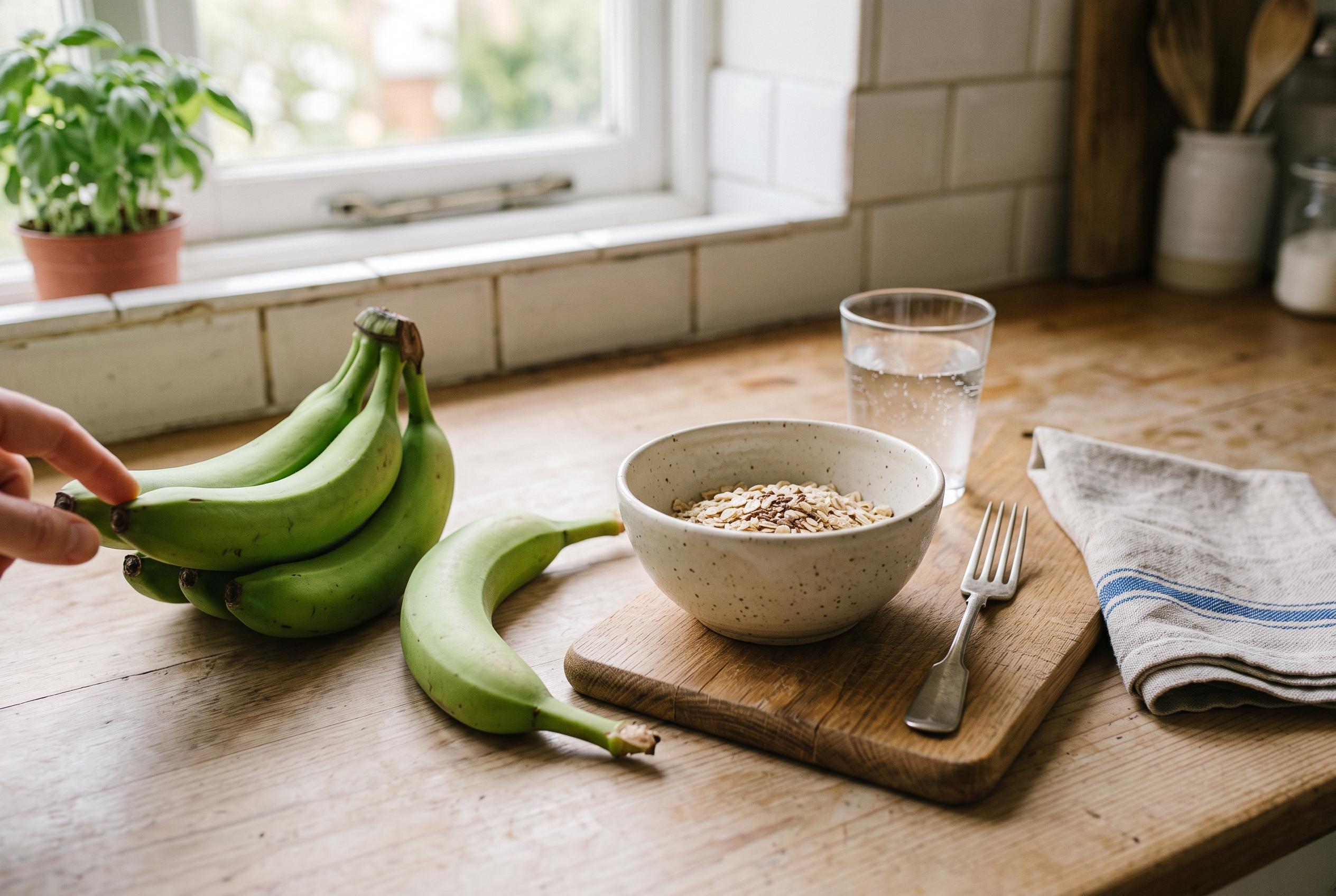

Emerging research highlights the nutritional advantages of green bananas, including higher resistant starch and dietary fibre, offering a less sugary option with possible benefits for blood sugar control, digestive health, and weight management.
Green bananas do not need to be left on the counter until they turn soft and yellow. According to Verywell Health, the unripe fruit can be eaten safely and tends to contain more resistant starch and dietary fibre, while having less sugar than fully ripe bananas. That shift in composition helps explain why the fruit tastes less sweet and has a lower glycaemic index when it is green.
The nutritional difference is not trivial. Healthline says green bananas are particularly rich in resistant starch, a form of carbohydrate that is not fully broken down in the small intestine and behaves in many respects like fibre. As bananas ripen, some of that starch is converted into simple sugars, which makes the fruit softer, sweeter and more digestible. In practical terms, that means a green banana is likely to have a smaller effect on blood sugar than a yellow one, although the exact response will still vary from person to person.
Researchers have been interested in whether those properties translate into health benefits. A recent review in PubMed examined green banana resistant starch as a functional ingredient and found it has possible prebiotic effects, with potential implications for digestive health, insulin sensitivity and weight management. Healthline has also reported that green bananas and products made from them have been linked in some studies with greater satiety, better blood sugar control and reduced insulin resistance, particularly in people with type 2 diabetes and obesity. Some findings also point to possible benefits for the gut, including support for children with constipation or chronic diarrhoea.
There are also culinary reasons some people choose green bananas. Their firmer texture makes them suitable for savoury dishes as well as breakfast bowls. They can be sliced into salads, boiled and mashed, stirred into porridge or fried with onions and spices. Banana flour, made by drying and grinding unripe fruit, has attracted attention as well; the sources note that it is especially high in resistant starch. Even so, researchers still need to establish how much cooking changes the nutritional profile of the fruit.
For most people, green bananas are considered a safe food, but they are not ideal for everyone. A sudden increase in fibre intake can cause bloating, abdominal discomfort or constipation, particularly in people whose diets are not used to large amounts of roughage. Caution is also sensible for anyone with a latex allergy, because the same source material notes a link with latex-fruit syndrome, in which similar proteins can trigger a reaction. For those who tolerate them, however, green bananas offer a less sugary alternative to ripe fruit and a useful way to add more fibre and resistant starch to the diet.
Disclaimer: This content is for informational purposes only and is not intended to be a substitute for professional medical judgment, advice, diagnosis, or treatment.



