

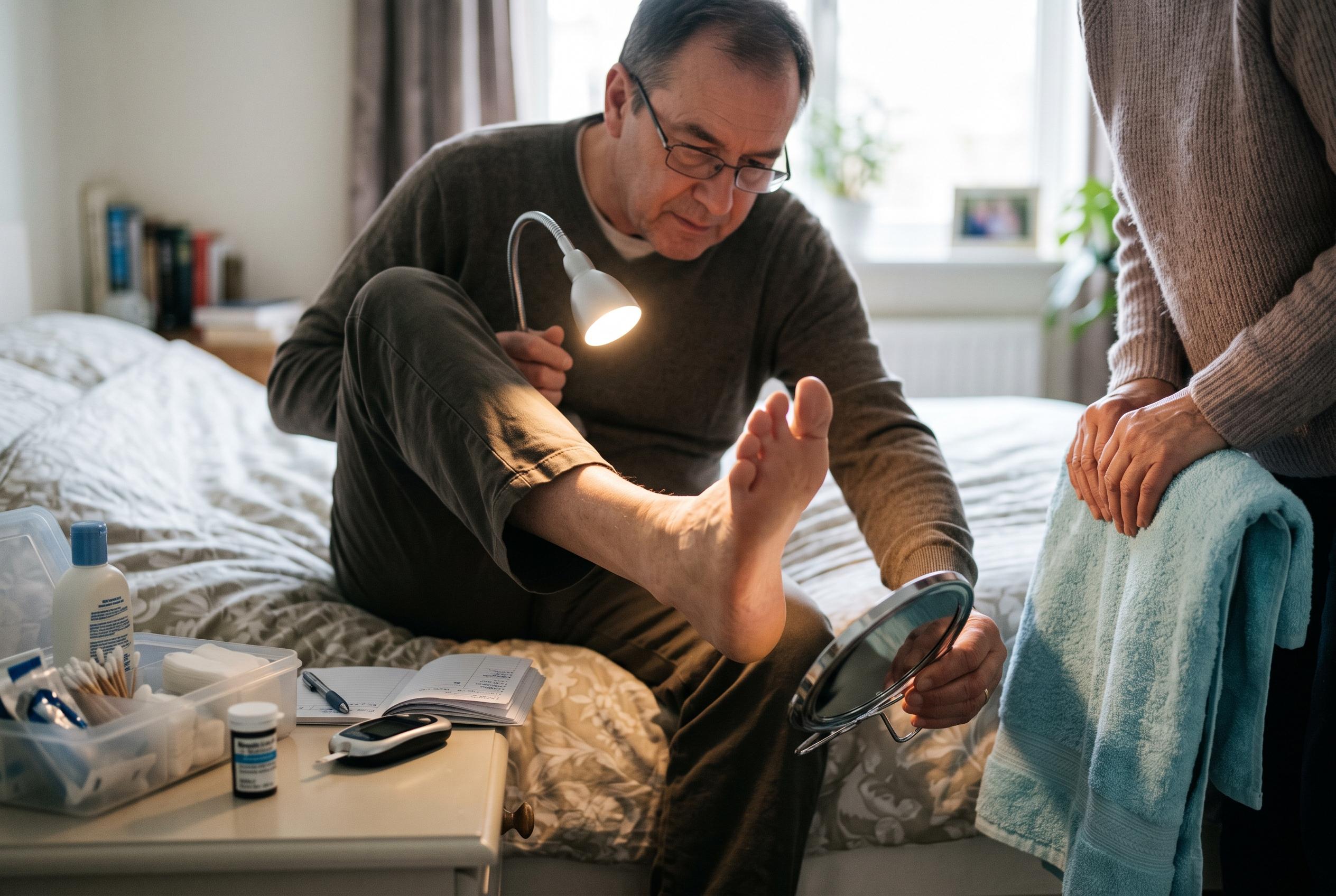

The Northamptonshire Healthcare NHS Foundation Trust has issued a crucial warning for people with diabetes to perform daily foot inspections and attend regular screenings, aiming to prevent serious complications like infection and amputation.
Northamptonshire Healthcare NHS Foundation Trust is urging people with diabetes to check their feet every day and attend routine screening appointments, warning that small problems can quickly become serious if they are missed.
The trust’s Diabetes and High Risk Foot Service, which provides specialist podiatry care across Northamptonshire, says diabetes can reduce sensation and blood flow in the feet. That means minor injuries such as blisters, cuts and cracked skin may go unnoticed and can develop into infection, ulceration and, in severe cases, amputation. The service works with specialists in rheumatology, diabetes and vascular surgery, and treats adults as well as children under 18, according to the trust’s foot-service information.
NHFT says regular foot screening is one of the simplest ways to identify risk early, because changes in the feet can be gradual and easy to overlook. Patients are advised to look each day for cuts, cracks, blisters, redness, swelling, hot or painful areas, and changes in skin colour. The trust also says well-fitting footwear is important, with specialist podiatrist Andrea Friel stressing that shoes should be wide, long and deep enough for the individual foot shape and should hold the foot securely without causing rubbing.
The warning also reflects the dangers of neuropathy, a condition in which nerve damage reduces feeling in the feet and lower legs. Some people experience tingling, burning pain or numbness, while others notice no symptoms at all. Rebecca Beck, a diabetes specialist podiatrist at NHFT, said people should know their risk level, attend annual checks unless they have been told to come sooner, and not delay seeking help if something changes. The trust says urgent attention is needed if a foot becomes red, warm, swollen or more painful, if a wound is not healing, or if there are signs of infection, poor circulation or Charcot foot, a serious condition that can change the shape of the foot.
Disclaimer: This content is for informational purposes only and is not intended to be a substitute for professional medical judgment, advice, diagnosis, or treatment.



