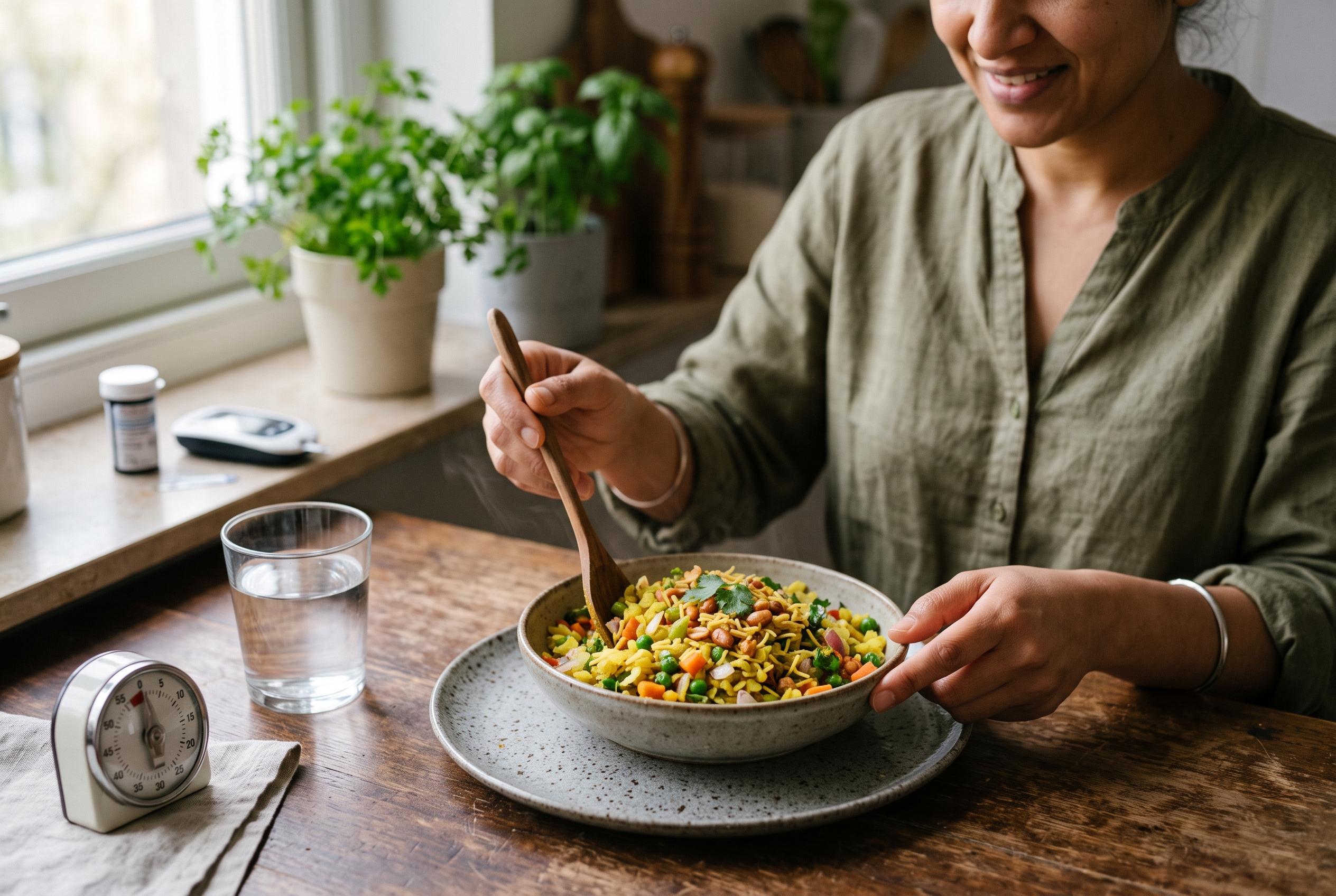

Viral claims that poha is inherently harmful for people with diabetes have been challenged by experts, emphasising portion size and preparation as key factors in its health impact.
Viral claims that poha is automatically bad for people with diabetes have prompted fresh confusion online, but doctors say the breakfast food is not the problem many social media posts make it out to be. In comments reported by Aaj Tak, Rajesh Khadgawat, a professor in the endocrinology department at AIIMS Delhi, said poha should not be treated as a health enemy simply because it is made from rice. He said it is a carbohydrate-containing food, but that does not mean it will inevitably cause a sharp rise in blood sugar.
The key issue, Khadgawat said, is quantity. A small serving and a large plate of poha do not have the same effect on the body, particularly for someone managing diabetes. He said moderate portions are unlikely to cause harm, but eating it repeatedly through the day or in excess would be unwise. The broader nutrition picture also matters, with other health guides noting that poha is a moderate glycaemic-index food, meaning it can raise blood sugar at a middling pace rather than behaving like a very low- or very high-impact meal.
Preparation can make an important difference as well. According to Aaj Tak, Khadgawat recommended combining poha with vegetables and peanuts, which can add fibre, protein and fat and help make the meal more balanced. He also cautioned against pairing it with sweet tea, biscuits or soft drinks, which can increase the overall sugar and carbohydrate load of the meal. Nutrition explainers on poha make a similar point, saying that the food is often more suitable when eaten with protein or healthy fat than when served on its own.
For people with diabetes, the takeaway is more nuanced than the alarm circulating on social media. Khadgawat’s message was that poha can remain part of a sensible breakfast if it is eaten in controlled portions and prepared thoughtfully. That means it need not be removed entirely from a diabetes-friendly diet, but it should also not be treated as a free pass to load the plate or combine it with sugary drinks and snacks.
Disclaimer: This content is for informational purposes only and is not intended to be a substitute for professional medical judgment, advice, diagnosis, or treatment.