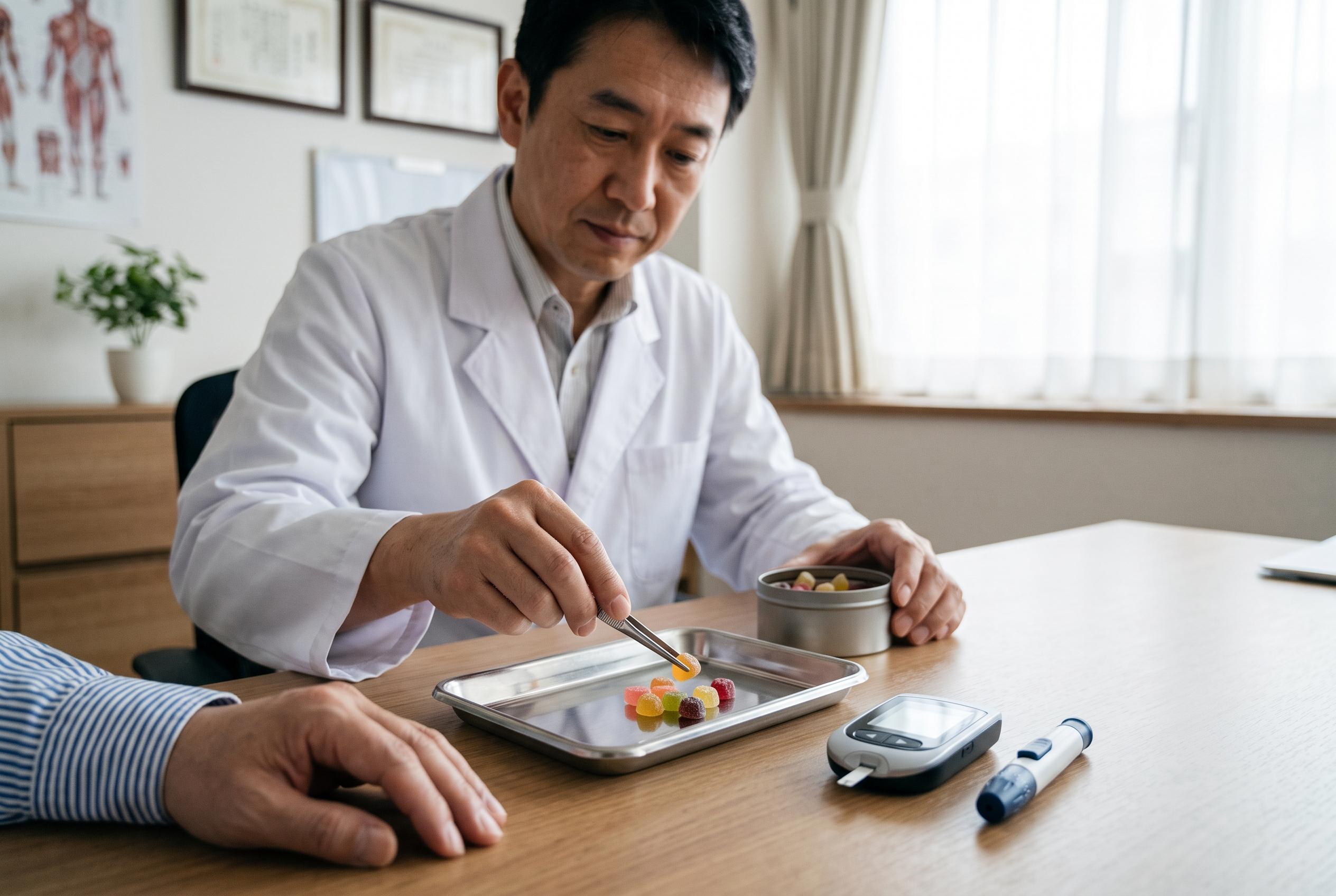

A Japanese internal medicine doctor demonstrates how a seemingly harmless gummy snack can cause rapid blood sugar rises, highlighting the importance of portion control and ingredient awareness for those managing glucose levels.
A Japanese doctor’s recent self-experiment has drawn attention to just how sharply some sweets can affect blood sugar, with the discussion focused on a popular gummy snack that many people may regard as harmless.
In a video posted on the YouTube channel “やさしい内科医 | 山村そうの血糖値実験室【糖尿病予防】”, internal medicine doctor Sō Yamamura tested Meiji’s Kaju Gummy by eating a 54g bag after starting from a fasting blood glucose reading of 98. He monitored the change with a FreeStyle Libre sensor linked to a smartphone app and said the fruit-flavoured snack was easy to finish in one sitting.
The readings rose quickly. According to the figures shown in the video, blood glucose had climbed to 141 after 20 minutes and 189 after 30 minutes, before reaching a peak of 237 at the one-hour mark. Yamamura said the rise amounted to a dramatic spike, and the device also recorded measurement errors at some points during the hour and a half after eating.
The explanation, he said, was straightforward: the bag contained 41.4g of carbohydrates, including 40.7g of sugars, and the ingredient list included syrup, sugar and concentrated grape juice. In other words, it was largely made up of the kind of carbohydrate that can raise blood sugar quickly.
The result fits with wider nutrition advice from other medical and diet sources. The Mayo Clinic Press has noted that foods and drinks marketed as modest or convenient can still trigger notable glucose rises when they contain sugars or other fast-absorbing carbohydrates, while guidance from diabetes-focused resources consistently recommends paying attention to portion size and to whether a product contains fibre, which can slow absorption.
Yamamura’s advice was practical rather than alarmist. He warned that a single bag could be enough to push blood sugar up sharply, and suggested sharing sweets instead of eating them alone in one sitting. For people trying to manage glucose levels, the broader lesson is that snacks can be more metabolically potent than they look.
Disclaimer: This content is for informational purposes only and is not intended to be a substitute for professional medical judgment, advice, diagnosis, or treatment.