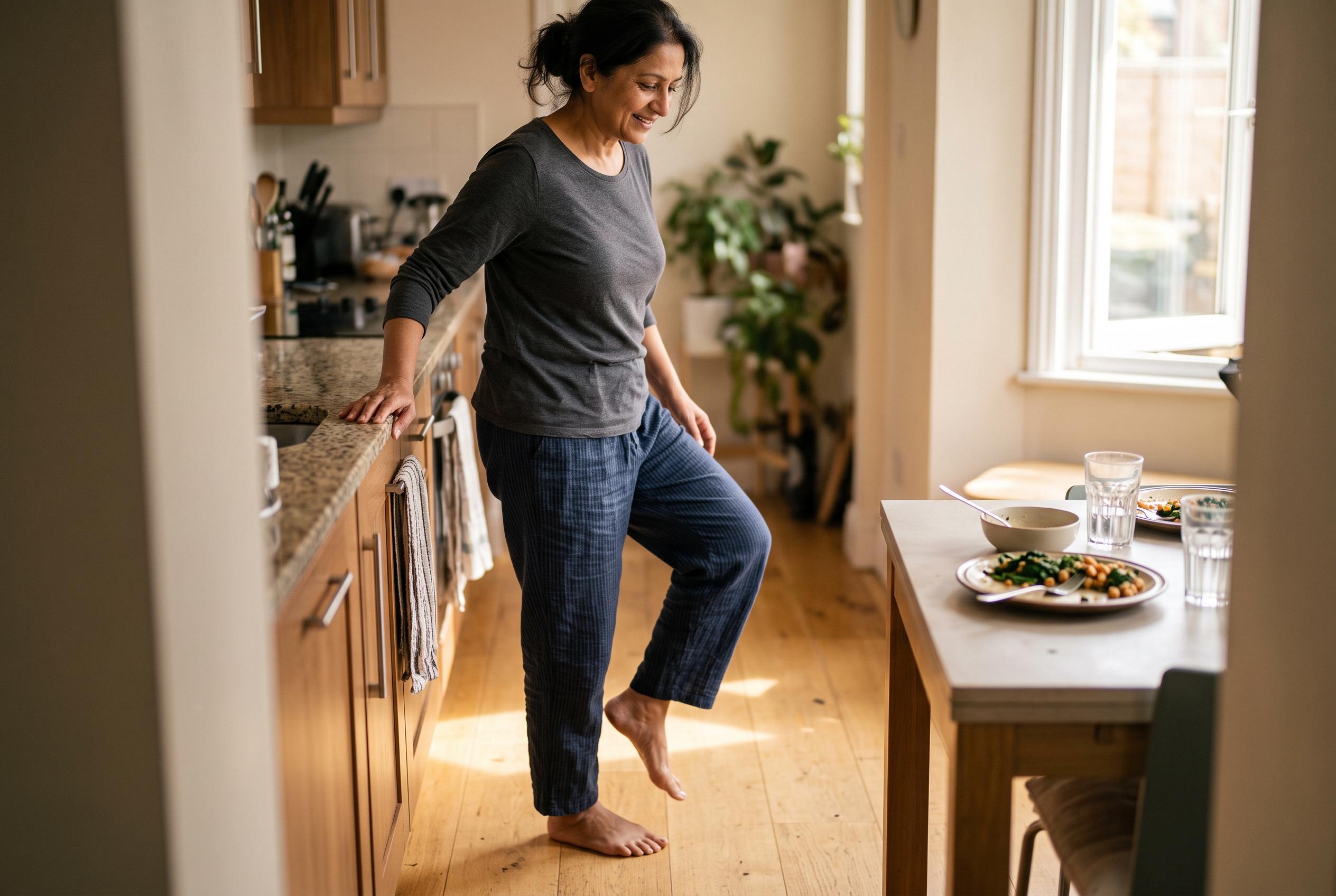

A nutritionist highlights that brief, easy activities like calf raises, air squats, and walking after meals can help manage blood glucose levels effectively, offering a practical alternative to lengthy gym sessions.
A nutritionist’s advice that blood sugar control does not have to mean long gym sessions is drawing attention to a simple idea: brief, regular movement after meals can help the body handle glucose more efficiently. In an NDTV Health article, Deepsikha Jain pointed to three low-effort options: calf raises, air squats and walking.
Jain said calf raises can be done standing or seated by lifting the heels and lowering them again, a movement that targets the soleus muscle in the calf. The Indian Express has also reported growing interest in so-called “soleus push-ups”, noting that seated calf work may help the muscle absorb glucose in a way that supports post-meal blood sugar control. Other health writers have made similar claims, though they also stress that such exercises are best seen as one part of broader metabolic care rather than a stand-alone fix.
Her second suggestion was air squats, which require no equipment and work the large muscles of the thighs and legs. According to Jain, that extra muscle activity can help the body use more glucose. Third on her list was walking after meals, even briefly, which she said can encourage muscles to take up glucose for energy and blunt a spike after eating.
That overall message is consistent with guidance from the American Diabetes Association, which says exercise can lower blood glucose because active muscles use more glucose and become more sensitive to insulin. Tom’s Guide has also highlighted research suggesting squats may create a stronger glucose-lowering effect than walking because they recruit more muscle groups, though walking remains a practical habit for many people. The appeal of Jain’s advice is its simplicity: for many people, managing blood sugar may begin with a few minutes of movement rather than an all-out workout.
Disclaimer: This content is for informational purposes only and is not intended to be a substitute for professional medical judgment, advice, diagnosis, or treatment.