

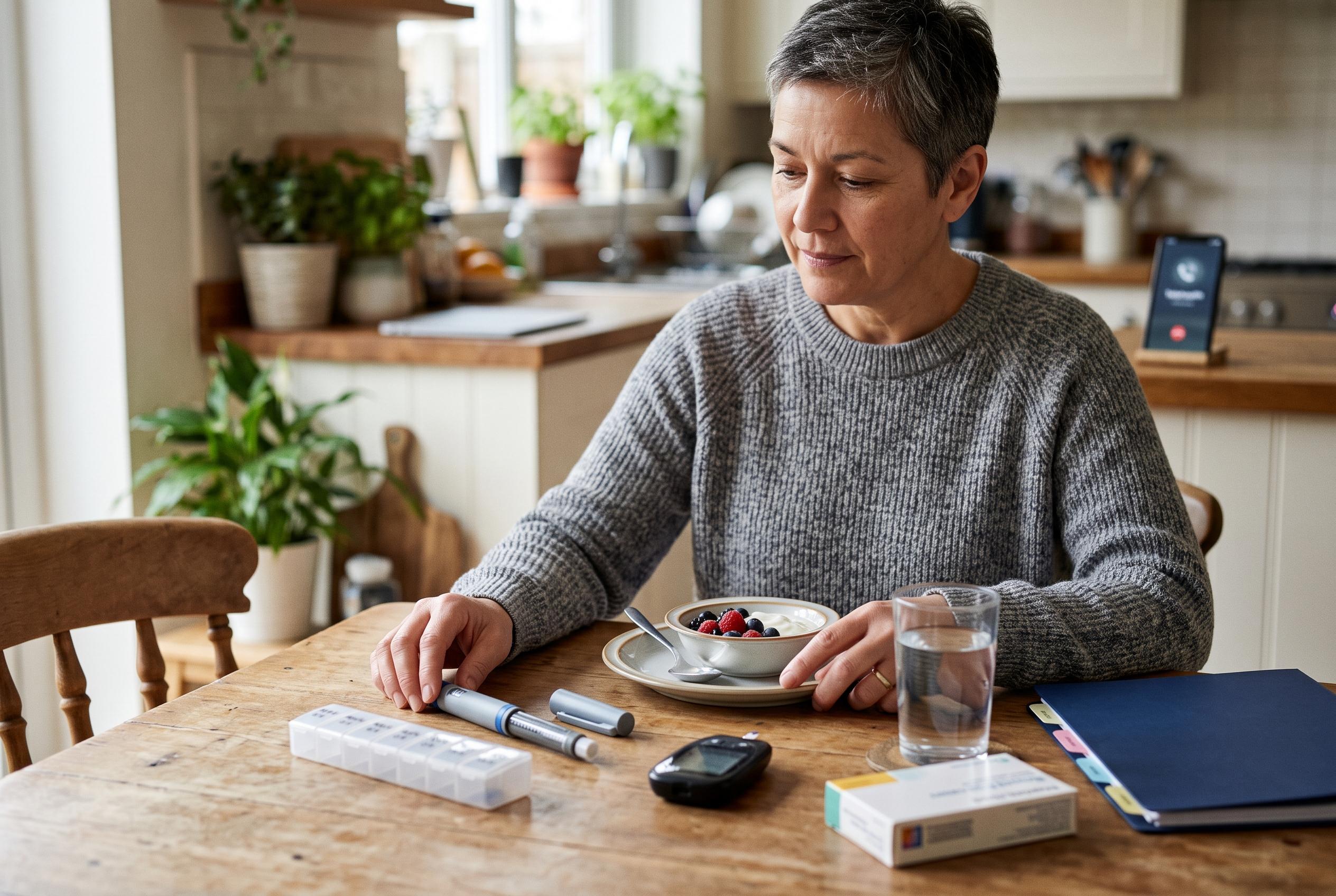

While GLP-1 receptor agonists show significant promise in lowering blood sugar and aiding weight loss, real-world application faces hurdles like adherence and side effects, impacting overall effectiveness.
GLP-1 medicines can cut blood sugar sharply in type 2 diabetes, but the size of the effect depends on the drug, the dose and how consistently it is taken. Diabetes Daily, citing clinical trial data and expert commentary from Amy Mechley, a lifestyle medicine intensivist in Cincinnati, said the biggest studies have shown average A1C reductions of up to 2.4 percentage points, although real-world results are often more modest.
These drugs work in several ways at once. They prompt the pancreas to release more insulin when glucose is high, reduce the liver’s glucagon-driven sugar output and slow the rate at which food leaves the stomach. Over time, they can also help with weight loss, which improves insulin sensitivity. In practical terms, that means the medicines can lower after-meal spikes as well as improve overall glucose control.
The strongest trial results vary by product and study design. Diabetes Daily highlighted semaglutide, tirzepatide, dulaglutide and liraglutide, with tirzepatide showing the largest A1C fall in some trials. Independent reviews on the National Institutes of Health’s PubMed Central platform also show that GLP-1 receptor agonists reliably reduce A1C, although the average drop differs by medication and dose. A separate review found that roughly half of patients reached an A1C below 7% within six months of starting treatment.
But clinical-trial performance is not always repeated in ordinary care. Diabetes Daily said one study of people taking semaglutide in routine practice found an average A1C reduction of 1.2 percentage points, less than the reductions commonly reported in trials. That gap reflects missed doses, dose limits, side effects and the fact that everyday care rarely offers the tightly controlled conditions of a study.
The medicines can also be misunderstood as a cure. Mechley told Diabetes Daily that achieving a normal A1C does not mean diabetes has been reversed, and remission usually requires an A1C below 6.5% for at least three months without glucose-lowering medication. The article also pointed to a major obstacle: many people stop GLP-1 treatment early because of nausea or other stomach-related side effects. In that sense, the success of these drugs depends not just on prescription strength, but on persistence, follow-up and support.
Disclaimer: This content is for informational purposes only and is not intended to be a substitute for professional medical judgment, advice, diagnosis, or treatment.



