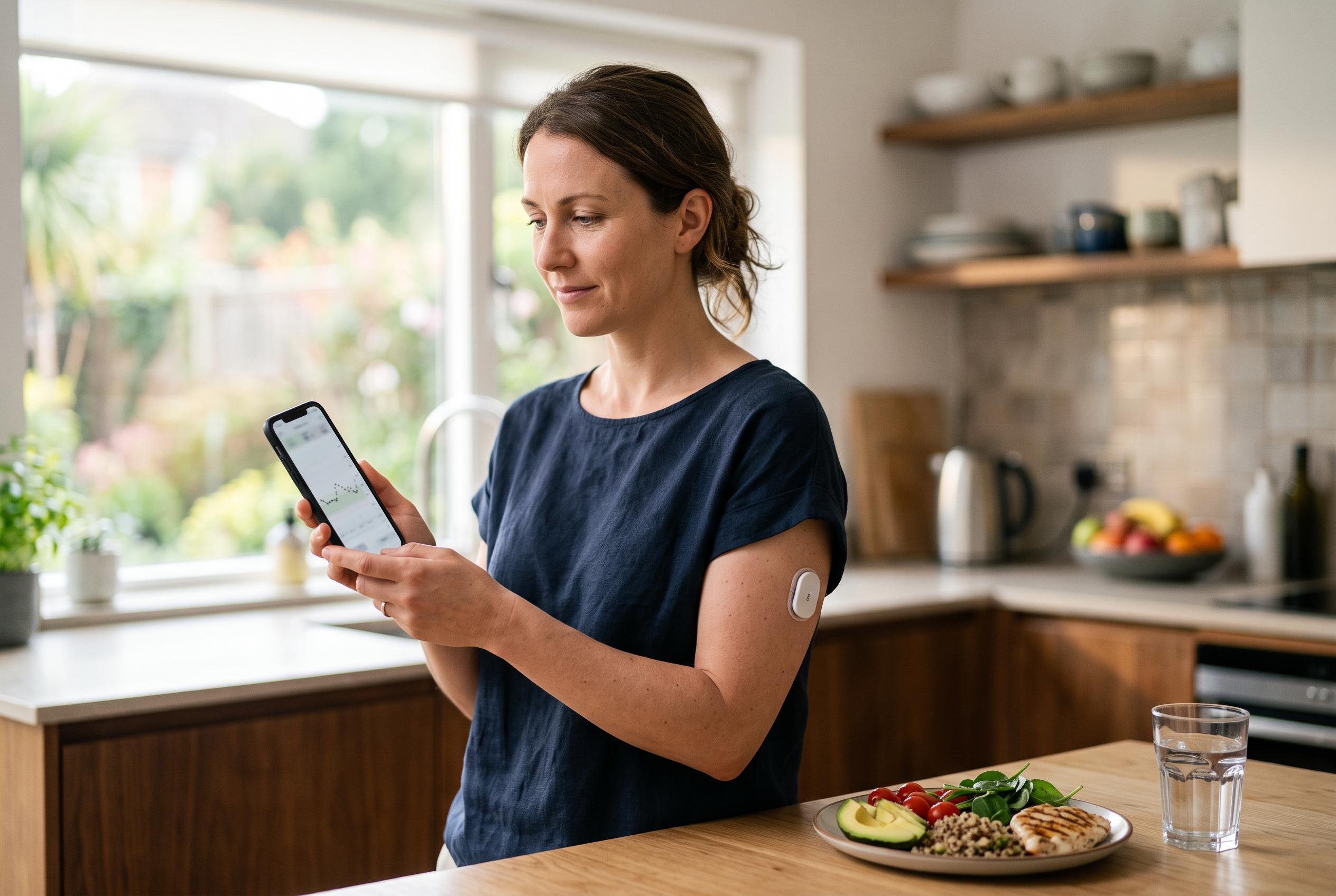

As wearable continuous glucose monitors become more prevalent, their benefits for people with diabetes are clear, though limitations remain for non-diabetics and practical use highlights the need for cautious interpretation.
A continuous glucose monitor, or CGM, has become one of the most useful tools in modern diabetes care because it turns glucose testing from isolated snapshots into a continuous stream of information. The Centres for Disease Control and Prevention says these wearable devices help people manage blood sugar more effectively by showing real-time readings, trends and alerts, often reducing the need for repeated finger-prick checks. For many people using insulin, that can mean earlier warnings of highs and lows, and a clearer picture of how food, exercise and medication affect glucose across the day.
The technology is simple in concept but more nuanced in practice. A CGM uses a small sensor worn under the skin, usually on the arm or abdomen, to measure glucose in interstitial fluid, the fluid between cells rather than blood itself. That reading is then sent to a receiver or smartphone app, which displays the current level, trend arrows and a graph of recent movement. Because it samples every few minutes, it is better at showing direction and patterns than a single finger-prick test, though official guidance from the CDC and the National Institute of Diabetes and Digestive and Kidney Diseases says occasional finger-prick checks are still needed when a reading looks unexpected or does not match symptoms.
That distinction matters, because a CGM is not a blood test and it is not a diagnostic tool. The NIDDK says it is especially helpful for people with diabetes, particularly those using insulin, because it can support day-to-day decisions and help clinicians fine-tune treatment. But for people without diabetes, the case is far less clear. Normal glucose levels rise and fall during the day, and a CGM can make ordinary swings look more meaningful than they are. It may be interesting, but current evidence does not show that wearers without diabetes gain a clear health benefit from watching their numbers all day.
There are also practical limits. The CDC and Cleveland Clinic both note that CGMs can cause skin irritation, need careful placement and maintenance, and may be less reliable when glucose is changing quickly. That is why a sudden low reading, especially one that does not fit how a person feels, should usually be checked with a finger-prick test. Some users also run into so-called compression lows, when pressure on the sensor during sleep briefly distorts the reading. These are reminders that the device is a guide, not an oracle.
For people living with diabetes, though, the case for CGM is strong. The Indian Health Service says continuous monitoring can make it easier to see how food, stress, illness, exercise and medicine interact, while the CDC says it can support better glycaemic control. The most useful question is not whether the device shows more data, but whether that data will change decisions in a sensible way. For many insulin users, the answer is yes. For everyone else, the real skill may be knowing when to ignore normal variation rather than treating every fluctuation as a warning sign.
Disclaimer: This content is for informational purposes only and is not intended to be a substitute for professional medical judgment, advice, diagnosis, or treatment.