

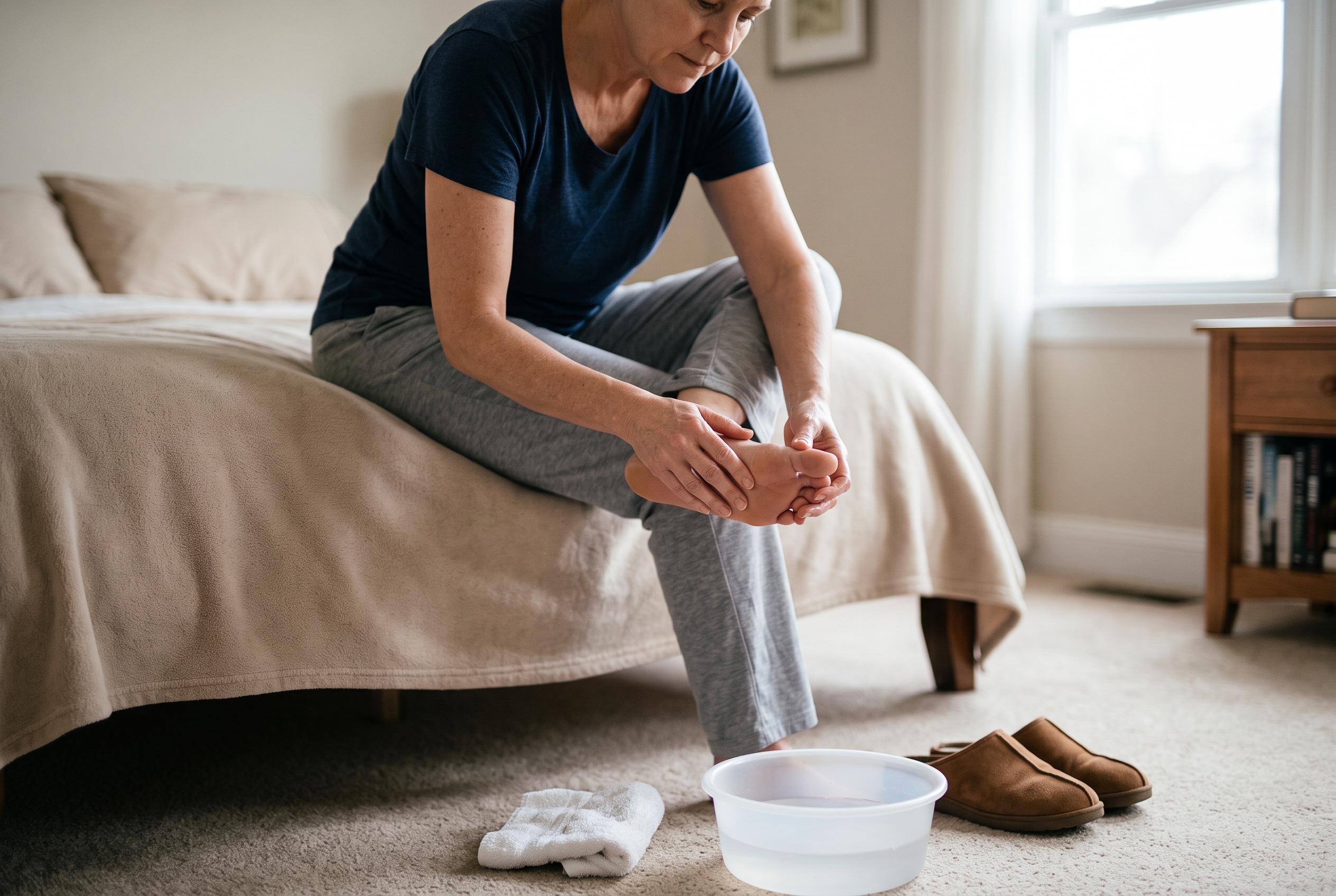

Expert recommendations highlight the importance of regular foot inspection, proper hygiene, and suitable footwear to prevent serious foot problems in individuals with nerve damage.
Peripheral neuropathy can turn routine foot care into a matter of prevention rather than response. The condition, which damages nerves and often starts in the feet and legs, can reduce the ability to feel pain, heat and pressure. The National Institute of Diabetes and Digestive and Kidney Diseases says it is especially common in people with diabetes, and poor control of blood sugar can worsen nerve damage and the risk of foot complications.
That loss of sensation is what makes foot checks so important. The Veterans Health Library advises daily inspection of both feet, including the soles and the spaces between the toes, because small cuts, blisters or pressure sores may go unnoticed until they become serious. Mayo Clinic gives similar guidance, recommending a mirror or help from another person for hard-to-see areas.
Basic washing and drying habits also matter. Mayo Clinic says feet should be kept clean and dry, with moisture carefully removed from between the toes, and moisturiser applied to prevent cracking on the tops and bottoms of the feet but not between the toes. The Veterans Health Library also recommends testing bath water with the elbow rather than the foot, because reduced sensation can make hot water dangerous.
Footwear is another key line of defence. WebMD says poorly fitting shoes can cause blisters, sores and ulcers in numb areas, while Yale Medicine notes that untreated peripheral neuropathy can increase the risk of foot ulcers, infection and even amputation. Shoes with enough depth, a roomy toe box and smooth interiors can help reduce pressure and friction, but they do not replace treatment of the underlying nerve damage.
Toenail care, calluses and warning signs need equal attention. Mayo Clinic advises trimming nails carefully and seeking regular professional foot exams, while the Veterans Health Library recommends professional nail and callus care when self-treatment could cause injury. Any wound that is not healing, spreading redness, swelling, drainage or unusual warmth should prompt medical review quickly, because neuropathy can mask pain even as infection worsens.
Disclaimer: This content is for informational purposes only and is not intended to be a substitute for professional medical judgment, advice, diagnosis, or treatment.



