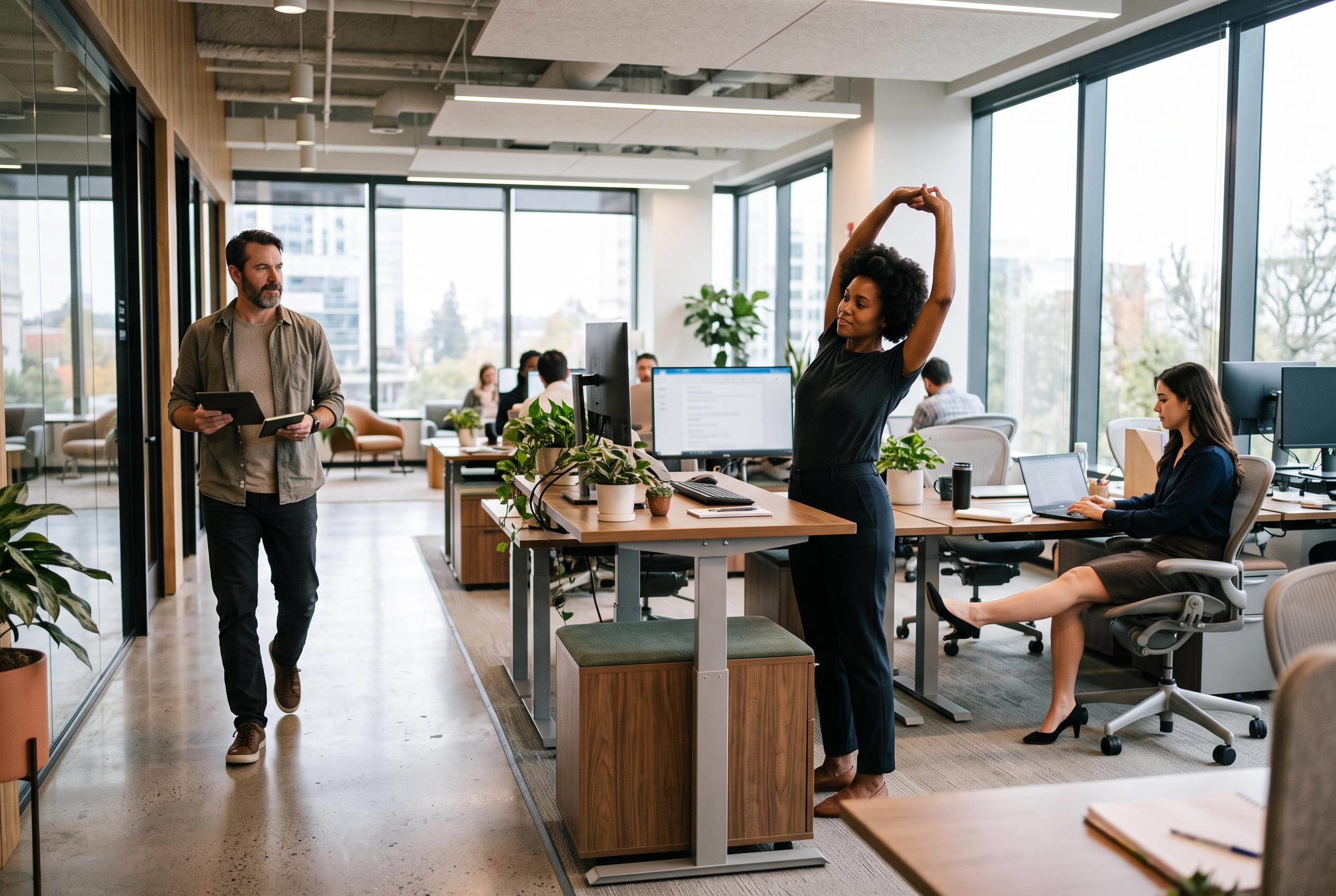

Health experts warn that long periods of sitting still pose significant health risks, but simple strategies like regular movement and light activity can counteract these effects and improve overall well-being.
Modern life makes it easy to spend most of the day seated, whether at a desk, in a car, on a sofa or at the dinner table. That is not the same as being inactive in every sense, but health experts say long stretches of sitting can still carry risks even for people who exercise regularly. According to the Mayo Clinic, prolonged sitting is linked with obesity, metabolic syndrome, heart disease and some cancers, while Harvard Health has warned that sitting for hours at a time can affect glucose handling, joint comfort and balance.
The key distinction is between exercise and sedentary behaviour. A strong workout can improve fitness, mood and strength, but it does not erase the effects of spending the rest of the day largely motionless. Research cited by Mayo Clinic suggests that around 60 to 75 minutes of moderate-intensity activity a day can help offset some of the harm associated with sitting for more than eight hours, yet the broader message from clinicians is simpler: daily movement matters, not just gym time.
One of the most useful strategies is to break up sitting rather than trying to eliminate it. Short walking pauses, standing calls, stair climbing and light mobility work all help reduce the amount of uninterrupted time spent still. Harvard Health notes that sitting can leave the large muscles in the legs underused, while Cleveland Clinic says a sedentary routine can weaken the lower back, hips and legs and contribute to stiffness, poor posture and back strain. Even brief movement breaks can help counter that pattern.
Walking remains one of the easiest tools. Public health guidance generally recommends at least 150 minutes of moderate aerobic exercise a week, plus muscle-strengthening work on two or more days. That does not need to happen in one block. A walk after meals, a short route before work, or a few minutes outside between tasks can all add up. For people with desk jobs, these small habits may be more sustainable than trying to compensate with one large session after a day of sitting.
Strength training also has a role. Mayo Clinic and Cleveland Clinic both note that prolonged sitting can contribute to muscle weakness, while regular resistance exercise helps preserve function, support the bones and improve overall metabolic health. The practical aim is not to stand all day or chase a perfect posture. It is to move often, vary positions and make it easier for the body to do what it was designed to do: walk, lift, carry and change shape throughout the day.
Disclaimer: This content is for informational purposes only and is not intended to be a substitute for professional medical judgment, advice, diagnosis, or treatment.