

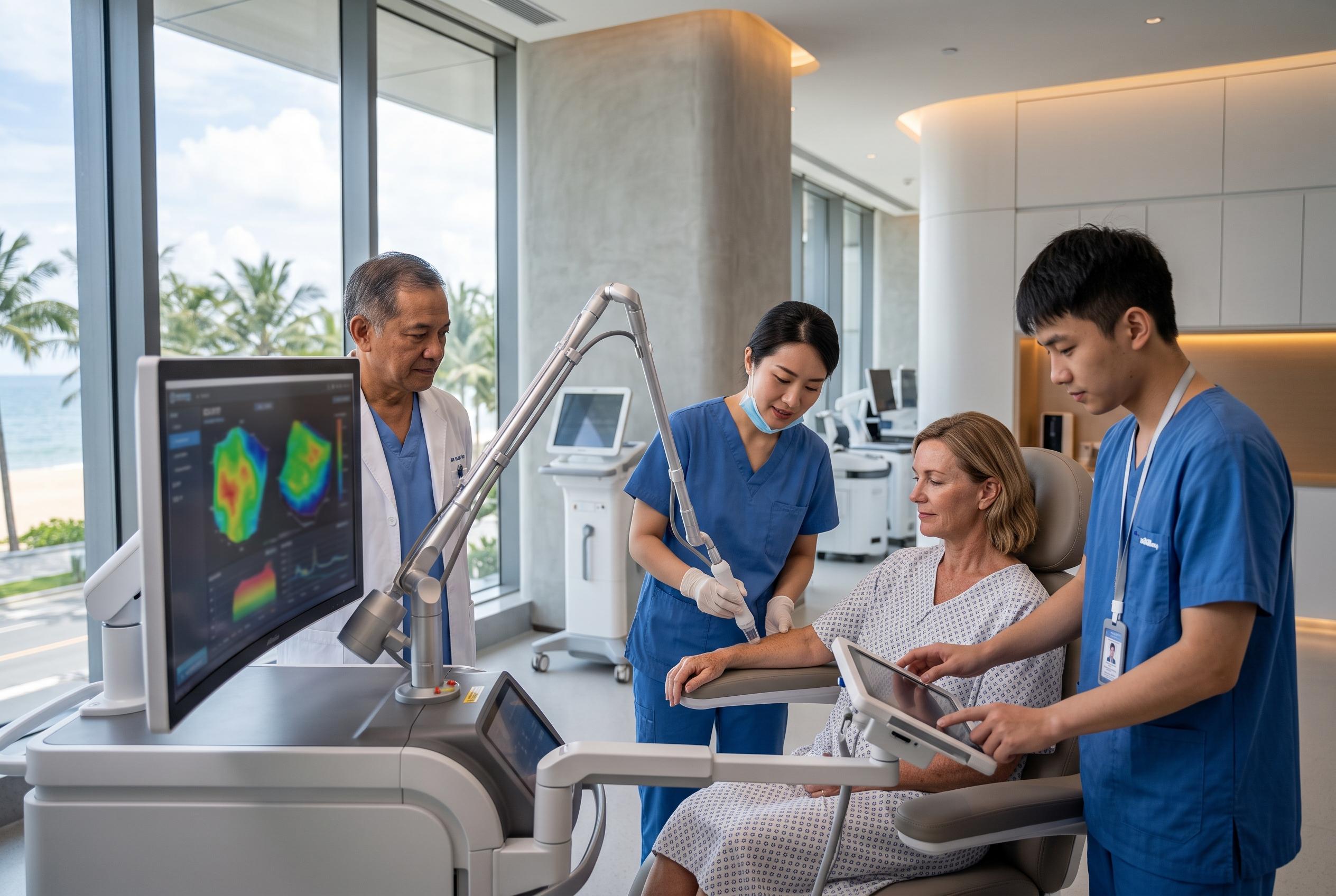

South Korean medtech firm Rokit Healthcare is leveraging Hainan’s medical tourism pilot zone and early-access policy to introduce its AI-driven skin regeneration platform, Dr. INVIVO, into China ahead of full approval, targeting over 8 million potential patients.
Rokit Healthcare has moved into Hainan’s Boao Lecheng International Medical Tourism Pilot Zone in a push to bring its AI-based skin regeneration platform into China ahead of full mainland approval. The South Korean company said it has signed a three-year non-exclusive distribution agreement with Chinese medical company Guorun and expects to begin its first patient procedures at a designated Lecheng hospital within four months, subject to local administrative approval and hospital onboarding.
The company is targeting conditions including diabetic foot ulcers, skin-cancer wound repair, burns, pressure sores, reconstructive surgery and traumatic wounds. Its core system, Dr. INVIVO, combines bioprinting hardware with patient-specific AI tools designed to support operating-room use. Rokit Healthcare said it is using Lecheng’s early-access policy, which allows innovative medical devices to be used on local patients before formal mainland approval, to build real-world data and clinical references that can later support its filing with China’s National Medical Products Administration.
Rokit Healthcare estimates the addressable Chinese market for its five main indications at about 8.13 million people, with diabetic foot accounting for the largest share at roughly 6.88 million. The company and Guorun have set an initial three-year target of selling or supplying 21 Dr. INVIVO units and 2,100 regeneration kits, although actual volumes will depend on hospital adoption and individual orders. The move comes as South Korean medtech groups increasingly pair artificial intelligence with treatment platforms: Lulu Lab and L&C Bio, for example, recently agreed a domestic exclusive deal around an AI 3D skin-diagnosis system, underscoring how diagnostics and regeneration are being tied together in a broader push for data-driven care.
Disclaimer: This content is for informational purposes only and is not intended to be a substitute for professional medical judgment, advice, diagnosis, or treatment.



