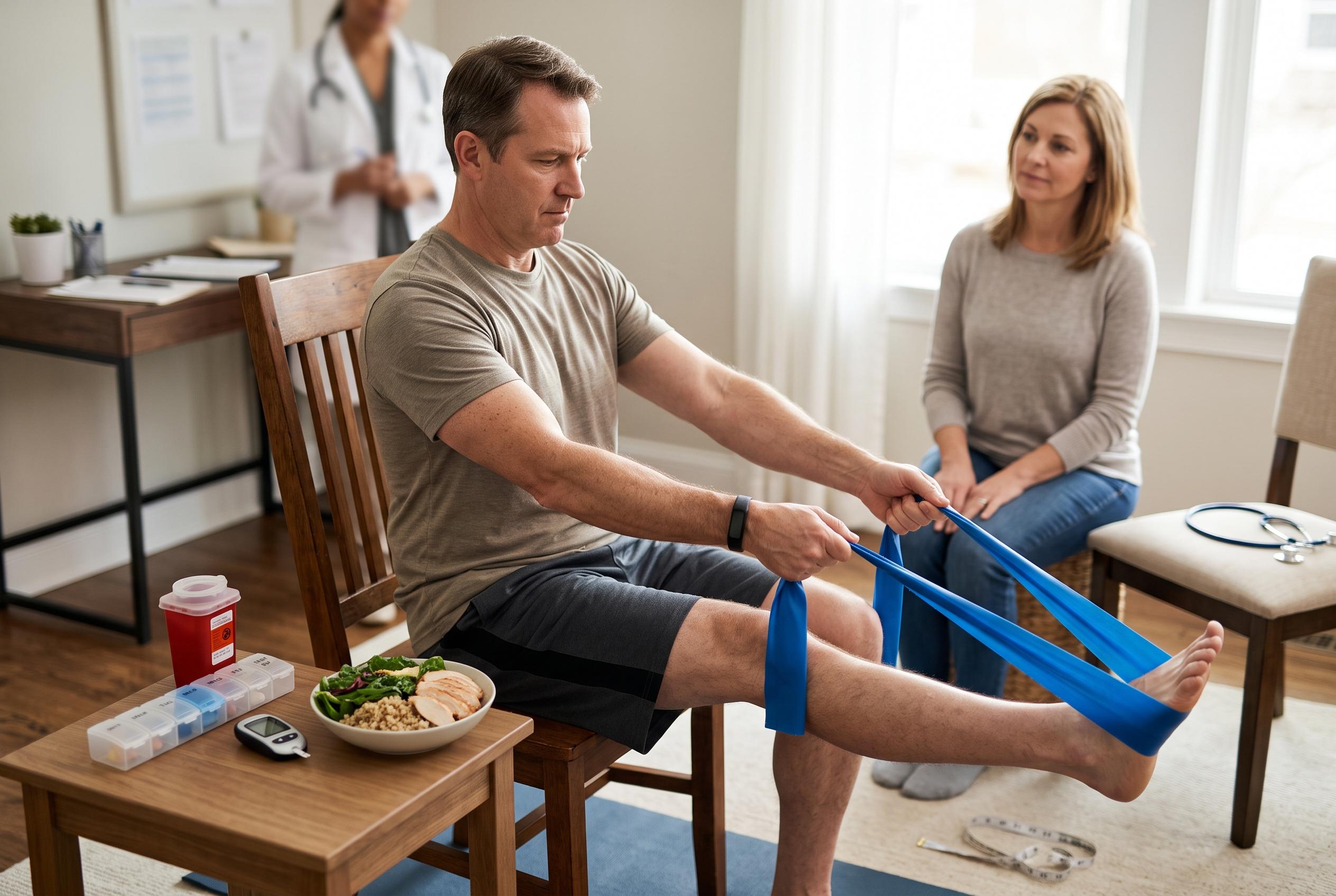

Emerging evidence urges a broader approach to obesity treatment, emphasising muscle preservation and metabolic health alongside weight reduction, as specialists challenge traditional metrics of success.
A growing body of 2026 evidence is pushing obesity specialists to judge the new generation of weight-loss medicines by more than the scale alone. A systematic review and meta-analysis published in June in the International Journal of Obesity concluded that lean mass should be monitored as a primary outcome of treatment, not an afterthought, after finding that about 30% of total weight lost on obesity-dose GLP-1 medicines can come from lean tissue. The paper reported wide variation between drugs, with lean mass accounting for 14% to 22% of total loss with liraglutide, up to 45% with semaglutide and about 26% with tirzepatide.
That concern is being sharpened by fresh data suggesting patients do not automatically become more active once they start the drugs. In research presented ahead of ENDO 2026, Sajana Maharjan of HSHS St John’s Hospital analysed NIH All of Us data linked to Fitbit records and found that adults with obesity reduced their movement after beginning GLP-1 treatment. Among 753 patients with sufficient wearable data from a wider cohort of 1,950, average daily steps fell from 5,047 to 4,487, while moderate-to-vigorous physical activity dropped from 28 minutes a day to 22. The cohort was 78.6% female, with a mean age of 52.7 years. The finding challenges the idea that weight loss by itself leads patients to move more, even though exercise is one of the main protections against frailty and muscle loss.
Researchers studying body composition say the biology behind the drugs helps explain why this matters. In a Texas Christian University briefing, Austin Graybeal said medicines such as Wegovy, Ozempic, Zepbound and Mounjaro work largely by cutting appetite, increasing fullness, slowing stomach emptying and improving blood-sugar regulation. But the food patients stop eating also contains the nutrients needed to maintain muscle. Graybeal said most of the weight lost is still fat, yet substantial or rapid loss through medicines, dieting or bariatric surgery usually includes some lean tissue. In his work, women and people who started treatment at higher body weight saw some of the largest changes, losing more fat but also more muscle in relative terms. He also warned that rapid physical change can unsettle self-image and encourage overly restrictive eating.
Clinicians who prescribe the drugs say that is why the treatment goal has to be broader than becoming smaller. In Reuters footage recorded in New York in August, Rekha Kumar of Weill Cornell said some patients lean on the medicines to become very thin, but that thinner is not necessarily healthier. “Our goal is for people to reduce body fat, ultimately gain lean muscle mass, be stronger, be more fit, reduce their risk of heart disease,” she said. Katherine Saunders, another obesity specialist at Weill Cornell, made the same point more bluntly in an Associated Press interview: “The biggest mistake people make with GLP-1 medications is thinking the prescription is the treatment.” Jody Dushay of Harvard Medical School told AP that food, movement, blood sugar, blood pressure and cholesterol are more meaningful measures of success than the number on the scale.
That broader approach is backed by increasingly practical advice. AP reported that patients on GLP-1 medicines are being urged to aim for 20 to 30 grams of protein at each meal, 150 minutes of aerobic exercise a week, 30 minutes of strength training two or three times weekly, adequate hydration, enough fibre, better sleep and lower stress. Those habits appear to matter well beyond appearance. A February study of more than 98,000 US military veterans, also cited by AP, found that GLP-1 users who stuck to six to eight healthy habits had a 43% lower risk of serious cardiovascular events than non-users who followed three or fewer.
The argument for preserving muscle becomes even more pressing when treatment stops. Joshua Neal, an obesity medicine physician at the Medical University of South Carolina, told MUSC News+ in April: “We don’t have a good off-ramp right now. These are meant to be indefinite medications.” The outlet pointed to a 2021 randomised clinical trial in JAMA showing that people who stopped semaglutide regained about two-thirds of their previous weight loss within a year, while those who stayed on treatment maintained or extended their progress. Neal said that is because the biology driving weight gain returns when the medicine is withdrawn. Significant weight loss also slows metabolic rate, and some of the lost tissue is lean muscle, which the article described as the body’s primary calorie-burner. His advice for maintenance included weekly weighing, 30 minutes of moderate-to-high-intensity exercise four to five days a week and paying as much attention to food quality as to quantity.
The public enthusiasm surrounding these medicines has made that distinction harder and more important. In the same Reuters package, Marion Nestle, professor emerita at New York University, said the drugs have had an enormous impact because nothing else has helped people with obesity as much. She also said they are especially useful for people with genuine metabolic problems. That shift in public thinking may explain why specialists are increasingly drawing a line between cosmetic thinness and measurable health benefit, particularly as women make up roughly two-thirds of users and as newer medicines deliver larger, faster changes in body size.
Taken together, the newer evidence suggests that the real test of obesity treatment is not how much weight disappears in the first year, but what remains afterwards: strength, mobility, metabolic health and the ability to sustain progress. For doctors and patients alike, success is beginning to mean losing more fat, keeping more muscle, continuing to move and avoiding the trap of treating a potent medicine as if it can replace the rest of care.
Disclaimer: This content is for informational purposes only and is not intended to be a substitute for professional medical judgment, advice, diagnosis, or treatment.