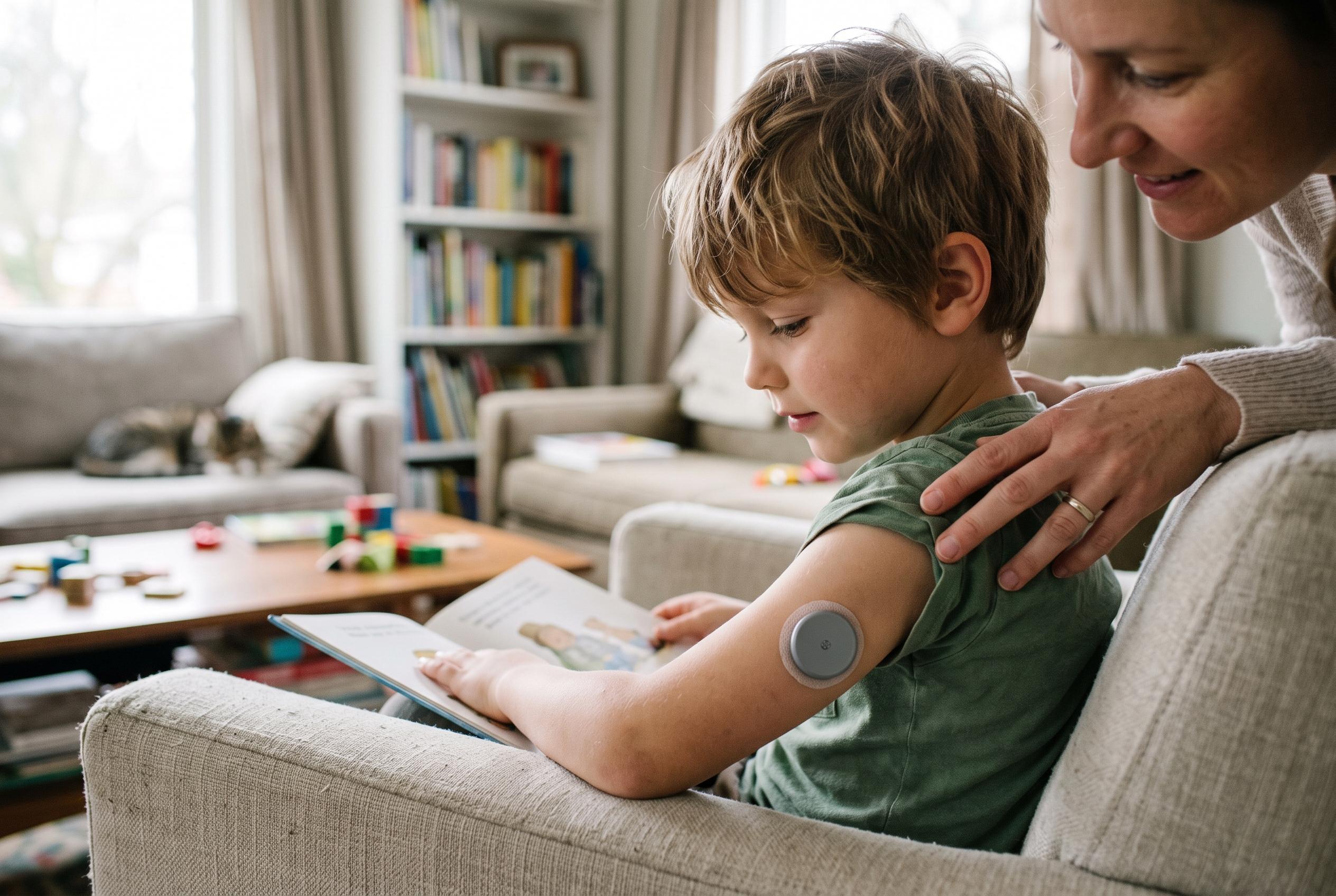

The FDA’s approval of over-the-counter continuous glucose monitoring for children signals a major turning point in diabetes care, with market leaders Dexcom and Abbott expanding consumer access and boosting growth prospects in 2026.
The blood glucose monitoring market is being reshaped less by abstract long-range forecasts than by a run of concrete developments in 2026: the US regulator has opened over-the-counter continuous glucose monitoring to children, while Dexcom and Abbott have both reported strong recent momentum in glucose-sensing businesses aimed at people beyond the traditional insulin-dependent base. Dexcom said on 30 July that second-quarter revenue rose 13% year on year to $1.308 billion and that it had lifted its 2026 sales outlook, while Abbott said on 16 July that its continuous glucose monitor sales grew 11.0% on a reported basis in the quarter. (investors.dexcom.com)
The regulatory shift came first. On 12 June, the Food and Drug Administration cleared Dexcom’s Stelo Glucose Biosensor System for people aged two and older who do not use insulin, making it the first over-the-counter continuous glucose monitor authorised for children in the US. The device had previously been cleared in March 2024 only for adults aged 18 and over. According to the FDA, Stelo provides glucose readings and trend data every 15 minutes through a smartphone app, with each sensor designed to last up to 15 days, although wear time may be shorter in paediatric users. (fda.gov)
That matters because the agency is explicitly treating these devices as part of a broader response to rising metabolic risk in younger people, not simply as a niche gadget. Michelle Tarver, director of the FDA’s Center for Devices and Radiological Health, said: “Children deserve access to the best tools available to manage their health.” The agency also said it relied on earlier clinical data alongside real-world evidence to assess expected performance in children, and its decision summary shows the latest clearance also added a “Direct to Watch” feature and expanded the displayed glucose range to 55-350 mg/dL. Stelo still is not intended for people with problematic hypoglycaemia or those on dialysis, and the FDA says children should use it with adult supervision. (fda.gov)
The commercial implications are equally important. MedTech Dive reported that Dexcom sells Stelo in two-sensor packs for about $89 a month on subscription or $99 without one, putting consumer glucose tracking within reach of people who may never have had a prescription device. The same report noted that Abbott has also entered the over-the-counter continuous glucose monitoring market, but that its sensor is not currently indicated for children. JAMA’s 26 June news item, published for a clinical readership, separately confirmed the clearance and the 15-day wear period, underlining that the move is being treated as a meaningful change in diabetes care rather than a simple retail product launch. (medtechdive.com)
Dexcom’s own summer updates suggest the company sees Stelo as more than a side project. In its July results, the company said it had begun launching a redesigned Stelo app with a more consumer-friendly interface, AI-driven insights and stronger food-logging tools. The same earnings release highlighted positive findings from the CONNECT randomised controlled trial, which Dexcom said showed clinically meaningful and statistically significant improvements in glucose control among people with type 2 diabetes who were not using insulin, compared with routine care. Jake Leach, Dexcom’s president and chief executive, said the quarter and the trial results “reinforce our confidence in the path ahead”. (investors.dexcom.com)
The over-the-counter push is already showing up in sales, even if it remains a relatively small share of Dexcom’s overall business. Fierce Biotech reported in June that Stelo contributed about $130 million of Dexcom’s $4.7 billion revenue in 2025, after first targeting adults who do not take insulin. The same report said that adult US group alone represents roughly 25 million people living with type 2 diabetes. Dexcom’s official figures later showed that full-year 2025 revenue reached $4.662 billion, while its July guidance upgrade put expected 2026 revenue at $5.18 billion to $5.25 billion. Taken together, those numbers suggest Stelo is still early in its commercial life, but no longer trivial. (sec.gov)
Abbott’s results show this is not a one-company story. In its second-quarter statement, Abbott said diabetes care helped drive growth across its medical devices unit, with continuous glucose monitor sales up 11.0% on a reported basis and 9.5% on a comparable basis. The company also said it secured CE Mark in May for Libre Duo, which it described as the world’s first dual glucose-ketone biowearable sensor, designed to give real-time readings for both measures and help detect rising ketone levels that can lead to diabetic ketoacidosis. Robert Ford, Abbott’s chairman and chief executive, said: “Our second-quarter results reflect the momentum we are building.” (abbottinvestor.com)
What emerges from these developments is a market in which growth is increasingly tied to evidence, usability and regulatory trust rather than to installed strip volumes alone. Over-the-counter sensors are moving glucose monitoring towards younger users, people with prediabetes, adults managing type 2 diabetes without insulin and even consumers using the data for lifestyle tracking. But the same expansion raises the bar on safety claims, product design and post-market oversight, because devices sold without a prescription must still be clear about who should not use them and how the data should be interpreted. That is why the 2026 market story is not simply about a projected CAGR; it is about who can turn broader access into a credible mass-market health tool. (fda.gov)
Disclaimer: This content is for informational purposes only and is not intended to be a substitute for professional medical judgment, advice, diagnosis, or treatment.