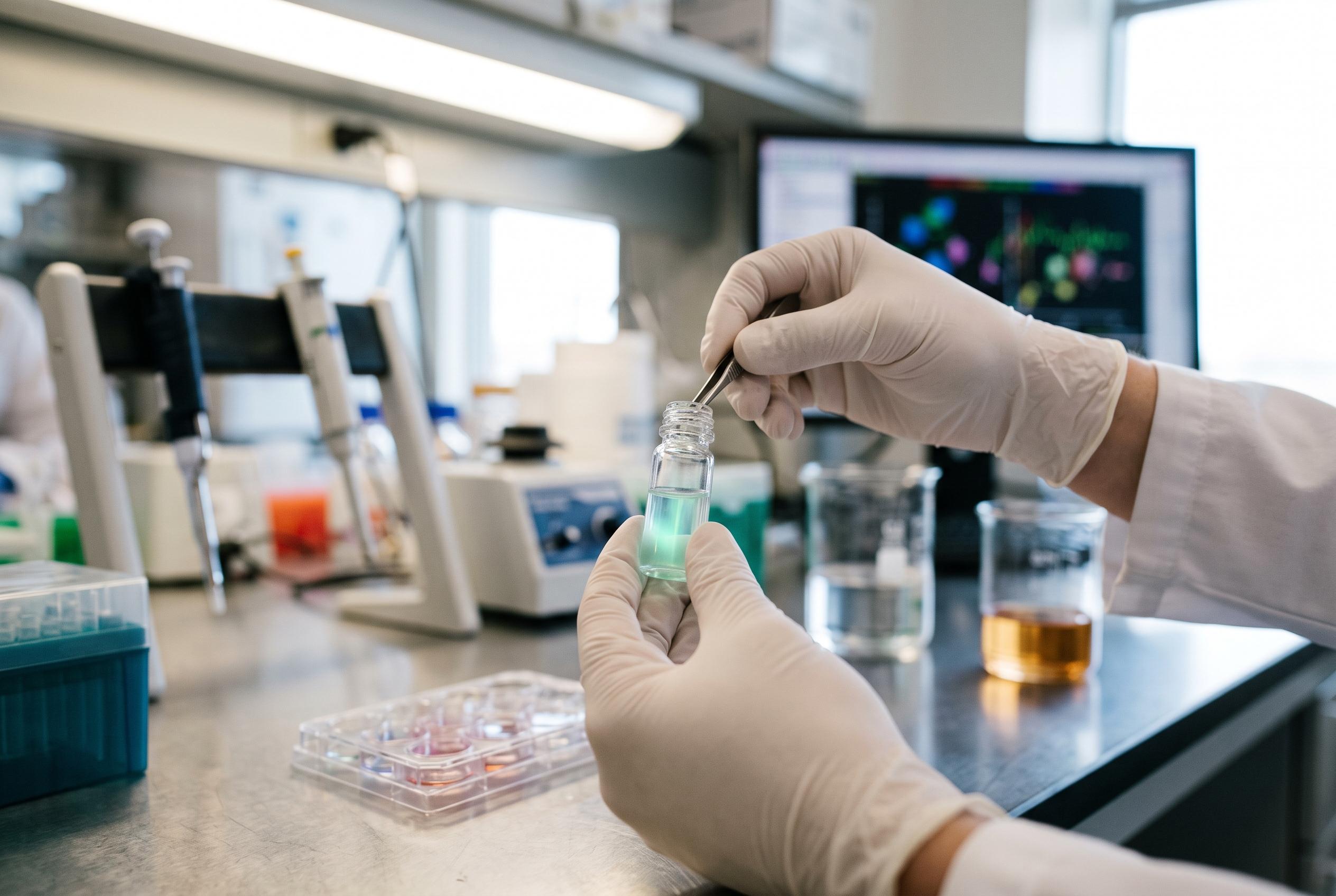

A groundbreaking study demonstrates that disabling a single gene, ALDH3B2, can convert human pancreatic duct cells into insulin-producing beta-like cells, offering hope for more durable diabetes therapies.
A single-gene intervention has pushed ordinary human pancreatic duct cells towards making insulin in laboratory experiments, offering a possible new route to rebuilding the cell population that fails in diabetes. In work now published in Science Translational Medicine, Jian Li and colleagues reported that switching off ALDH3B2 was enough to drive human duct cells into a beta-like state and, after transplantation, help diabetic mice bring blood sugar back down towards normal.
The importance of the finding lies in what it is trying to replace. Diabetes treatment can control glucose with insulin, monitors and other medicines, but those measures do not restore a healthy stock of working beta cells. The paper, identified in PubMed as “Loss-of-function of ALDH3B2 transdifferentiates human pancreatic duct cells into beta-like cells”, argues that beta-cell replacement remains central to any durable cure. Its authors say the reprogrammed cells not only turned on beta-cell marker genes but also secreted insulin when exposed to glucose, suggesting they were doing more than merely resembling beta cells on paper.
To find the switch, the team began with a genome-wide CRISPR knockout screen rather than with a shortlist of favoured genes. According to the preprint and a later secondary report, they used a modified PANC-1 pancreatic duct cell line as a discovery system, knocking out genes one by one across more than 19,000 targets and looking for cells in which the insulin programme switched on. Among eight candidates that emerged, ALDH3B2 produced the strongest rise in insulin-gene activity and the sharpest fall in the duct-cell marker KRT19.
The more important test came in primary human pancreatic duct cells. There, single-cell analysis showed insulin gene activity in 18.1% of ALDH3B2-inactivated cells, compared with 0.6% in controls. That is still far from a complete conversion, and the same experiments showed why caution is needed: about 93% of cells in both groups continued to express KRT19, indicating that most retained at least part of their original duct identity. The authors’ own sequencing data, as described in the preprint, point to a mixed population rather than a uniform batch of replacement beta cells.
Mechanistically, the work suggests the cells do not leap straight from one identity to another. The authors reported that they appear to pass through a progenitor-like pancreatic state before maturing into beta-like cells. The study also found epigenetic changes at the insulin gene itself, with DNA methylation reduced at three sites, helping leave that stretch of DNA more open to transcription. The reprogrammed cells developed insulin-containing granules as well, adding another hallmark of functional endocrine cells.
The mouse experiments gave the clearest test of whether those changes mattered biologically. In a study design described in the preprint and summarised elsewhere, researchers transplanted modified cells or control cells beneath the kidney capsule in two groups of five diabetic mice. The animals given ALDH3B2-altered cells had lower blood glucose, and human insulin could be detected in their blood after a glucose challenge. Crucially, the effect did not persist once the graft was removed: blood sugar returned to control levels on day 56, supporting the argument that the transplanted cells, rather than some unrelated change, were responsible.
This was not a bolt from the blue. The result first appeared as a bioRxiv preprint posted on 13 May 2024, and a conference abstract presented on 14 June 2024 at the American Diabetes Association meeting described ALDH3B2 as a regulator of beta-cell neogenesis from pancreatic duct cells. That abstract said loss of the gene was sufficient to induce “bona fide cell transdifferentiation”. A separate J-GLOBAL database record later catalogued the same preprint in Japanese and English, underscoring that the study had been circulating internationally well before the peer-reviewed journal version appeared.
What the paper does not show is a treatment ready for patients. The experiments relied on gene knockout in cells outside the body, and the resulting population remained heterogeneous. Even so, the authors argue ALDH3B2 is an attractive target precisely because it encodes an enzyme, which makes it, in principle, more druggable than many genetic regulators. The preprint says a broad aldehyde dehydrogenase inhibitor, DEAB, nudged human duct cells in the same direction, raising the longer-term possibility of a more selective medicine. For now, though, the advance is best seen as a proof of concept: a sign that the adult human pancreas may contain cells that can be coaxed, rather than replaced, into doing part of the job lost in diabetes.
Disclaimer: This content is for informational purposes only and is not intended to be a substitute for professional medical judgment, advice, diagnosis, or treatment.