
Emerging research and expert advice suggest combining rice with legumes, vegetables, and mindful cooking techniques can help those with blood-sugar concerns better regulate post-meal glucose levels, challenging the idea that rice must be avoided entirely.
Rice does not necessarily need to disappear from a blood-sugar-conscious diet, but several experts and small studies suggest it works better as part of a mixed meal than as a bowl on its own. Pairing it with legumes, vegetables and another protein source appears to soften the rise in glucose after eating. India Today reported in June that diabetologist Anoop Misra advises people to eat vegetables or salad first and protein next before rice, while a 2017 randomised cross-over trial found that adding black beans or chickpeas to white rice improved post-meal glycaemic response compared with rice alone. (indiatoday.in)
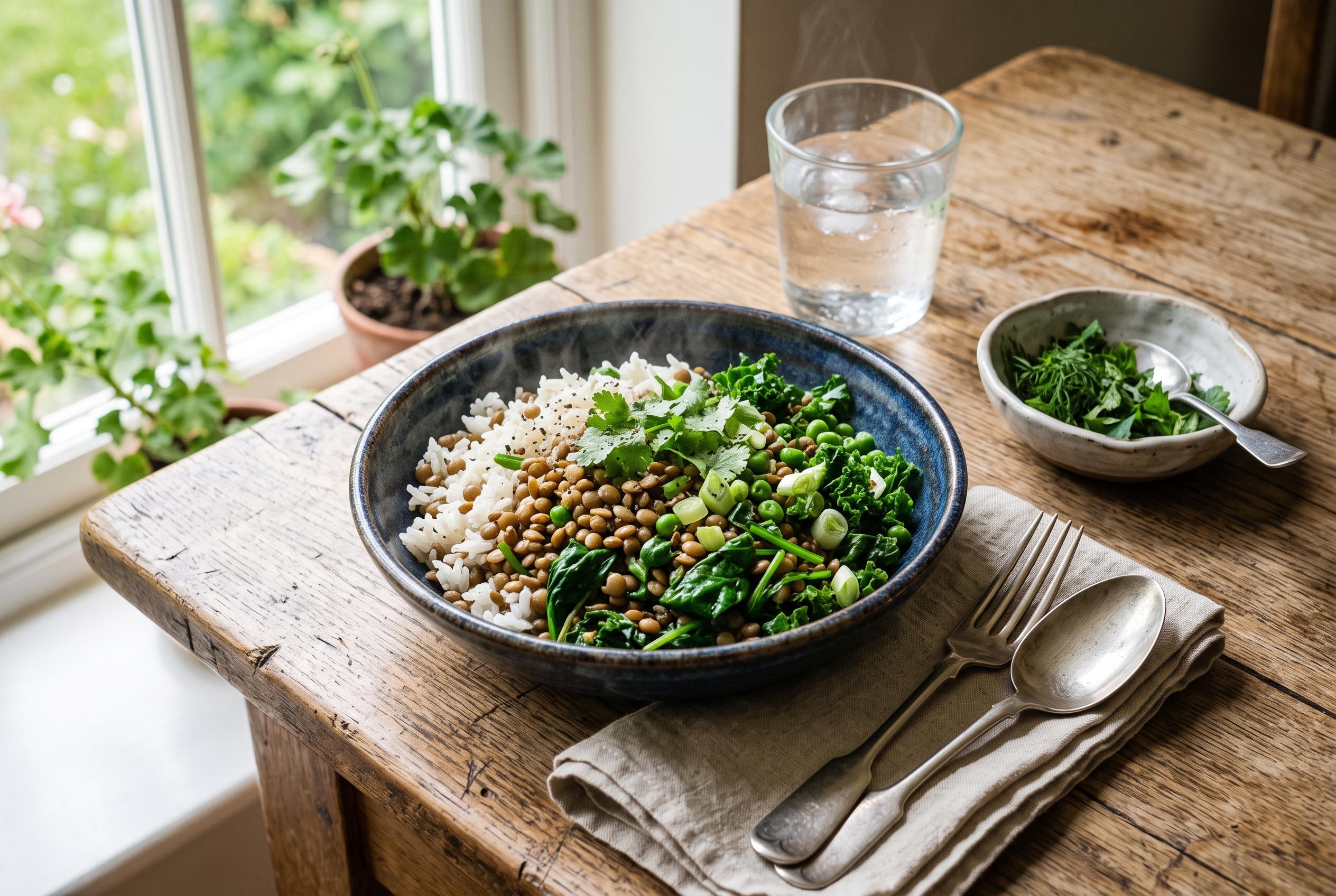
That is the thinking behind a recent social-media tip from nutritionist Deepsikha Jain, highlighted by NDTV on 24 June 2026. Jain urged viewers to add a cup of green peas to rice, saying it could contribute about 10g of fibre and 8.6g of protein to a single meal, help people feel fuller for longer and keep blood sugars “much more balanced”. NDTV said frozen peas can stand in for fresh ones and noted, citing the American Institute for Cancer Research, that most adults should aim for roughly 30g of fibre a day. (ndtv.com)
The idea is plausible, but the evidence suggests there is nothing magical about peas alone. A 1990 paper in the Journal of the American College of Nutrition tested six conventional Indian foods in 36 adults with type 2 diabetes and found that plain rice, and a rice dish containing peas, produced higher glycaemic indices than several other rice-legume or rice-dal combinations. All the foods in the trial still produced lower blood-glucose responses over two hours than a glucose drink, but the study points to a more nuanced conclusion: the full composition of the meal matters more than any single add-in. (pubmed.ncbi.nlm.nih.gov)
Later research broadly backs the wider principle. In a 2017 randomised cross-over trial, 12 healthy adult women ate white rice on one morning and bean-and-rice meals on others, with blood sampled before eating and again at 30, 60, 90 and 120 minutes. The meals containing black beans or chickpeas produced significantly lower glucose changes than rice alone at several later time points, suggesting that legumes can blunt the sharper post-meal effect associated with refined grains. (pubmed.ncbi.nlm.nih.gov)
That helps explain why familiar combinations such as dal-chawal continue to turn up in clinical nutrition advice. India Today quoted clinical nutritionist Palak Nagpal saying rice provides easily digested carbohydrate, while dal contributes plant protein, fibre, minerals and healthy fats. She said the two foods complement one another nutritionally, improving overall protein quality when eaten together and making the meal more sustaining than either part on its own. (indiatoday.in)
Nagpal also framed the benefits more broadly than glucose control. According to India Today, dal’s soluble fibre supports gut health, while well-cooked rice is easy to tolerate, making the pairing suitable for children, older adults and people recovering from illness or digestive upset. She added that the protein, fibre and fats in dal help slow glucose absorption, and said portion control still matters; even a small dollop of ghee, she noted, can add to satiety when the rest of the meal is balanced. (indiatoday.in)
Jain has also promoted another rice tactic. Hindustan Times reported in December 2025 that she recommends cooking rice and then cooling it for “eight to 10 hours”, a process she said converts some starch into resistant starch, a form that behaves more like fibre and may reduce the size of a sugar spike. The broader point in that advice was that rice itself is not inherently the problem; preparation and context change how the body responds to it. (hindustantimes.com)
Misra’s version of the same argument is simpler and more clinical: do not treat rice as a stand-alone food. India Today reported that he tells people to begin with vegetables or salad, then eat three to four tablespoons of dal, rajma or another protein source before moving on to rice, a sequence he described as a “double preload”. Taken together, the peas tip looks less like a miracle hack than part of a steadier rule of thumb: rice is likely to sit better in the diet when it arrives with legumes, vegetables and sensible portions, whether the peas come fresh from the pod or from the freezer. (indiatoday.in)
Disclaimer: This content is for informational purposes only and is not intended to be a substitute for professional medical judgment, advice, diagnosis, or treatment.