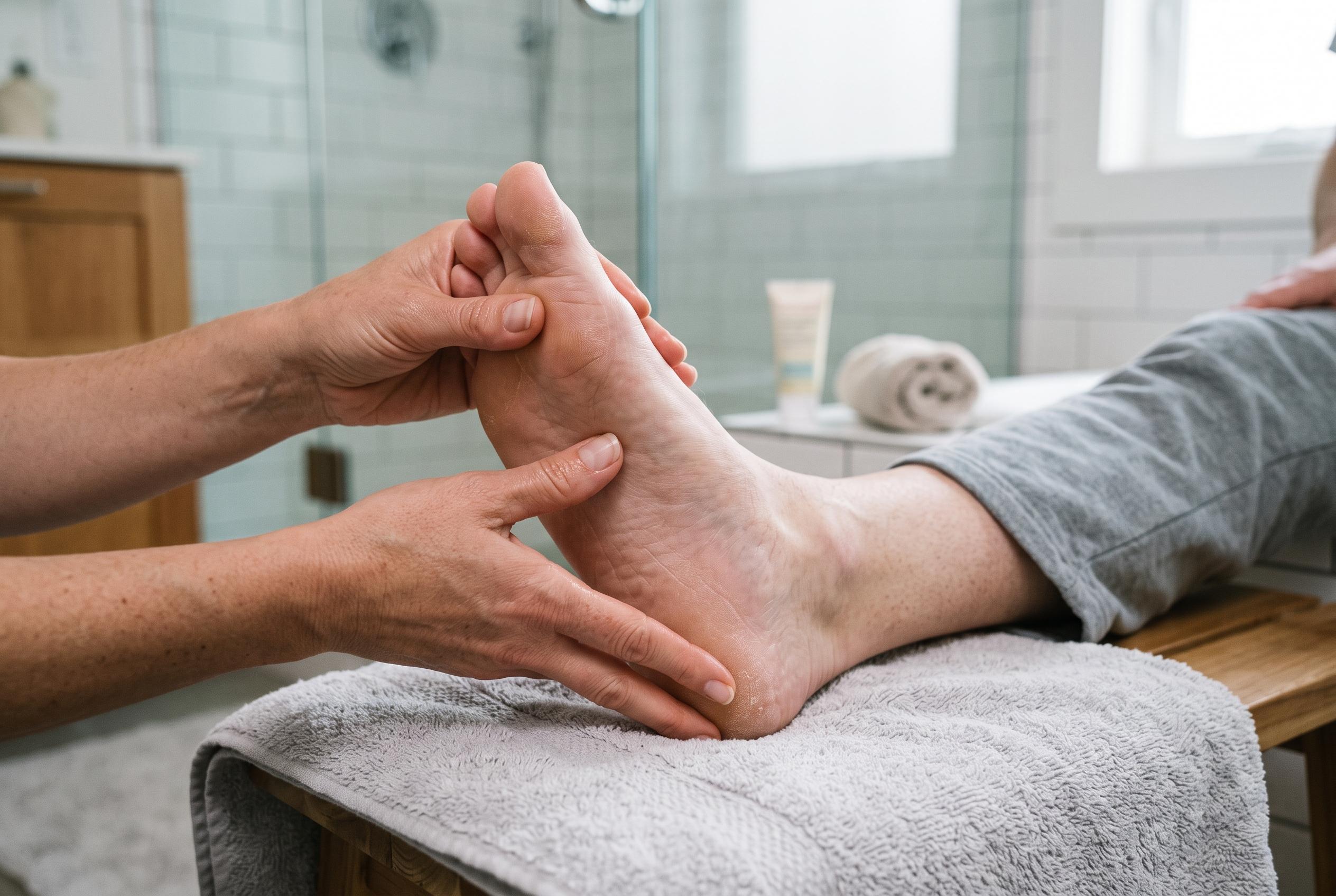

Emerging advice stresses that daily diabetic foot routines are primarily about damage limitation, with a focus on inspection, proper drying, and cautious moisture management to prevent serious complications.
The strongest point to emerge from the latest guidance is that daily diabetic foot care is not really a bathing routine at all, but a damage-limitation routine. Federal health agencies, dermatologists, orthopaedic foot surgeons and Mayo Clinic all stress that nerve damage can blunt the pain that would usually alert someone to a burn, blister or cut, while reduced blood flow can make even a small wound harder to heal. That is why the routine centres on checking, drying and spotting change early, rather than simply washing. (cdc.gov)
On the basic wash itself, the advice is notably consistent. MedlinePlus says feet should be cleaned daily with lukewarm water and mild soap, warning that stronger soaps may irritate the skin. The National Institute of Diabetes and Digestive and Kidney Diseases is more specific on temperature, saying 90 to 95F is safe and recommending that water be tested with an elbow or thermometer rather than the foot. Mayo Clinic, in an article published on 2 April 2026, gives similar advice and says soaking should be avoided because it dries the skin. (medlineplus.gov)
Where the guidance becomes more nuanced is what happens after washing. The usual recommendation is to dry thoroughly, especially between the toes, then use moisturiser on dry skin elsewhere. The CDC advises lotion on the tops and bottoms of the feet, but not between the toes because extra moisture there can encourage infection. NIDDK goes a step further, advising talcum powder or cornstarch between the toes because that skin tends to stay damp. The American Academy of Dermatology adds that trapped water in any skin fold, including the toe spaces, can lead to infection. (cdc.gov)
Inspection matters as much as washing, and some specialists want it done more than once a day. The CDC says people with diabetes should check their feet daily, even if they feel fine, and use a mirror or a family member’s help if they cannot see the soles. FootCareMD, the patient site of the American Orthopaedic Foot & Ankle Society, is more aggressive, advising examination several times a day, as often as three to five times, including between the toes and in hidden pressure areas. NIDDK says a “hot spot” can be the first sign that a blister or ulcer is beginning. (cdc.gov)
Footwear is another part of prevention that routine hygiene advice often underplays. MedlinePlus says shoes should be checked for stones, nails and rough areas before they go on, and warns that holes in socks can create damaging pressure on the toes. The CDC says never to go barefoot, even indoors, and recommends breaking in new shoes gradually. MedlinePlus also points readers towards padded or moisture-wicking socks, reflecting a broader view in the medical guidance that friction and dampness can undermine otherwise careful skin care. (medlineplus.gov)
The clearest red lines concern home treatments that seem harmless but can go wrong quickly. NIDDK says people with diabetes should not cut corns or calluses themselves or use medicated pads or liquid removers, because these can damage the skin and trigger infection. FootCareMD similarly warns against antiseptic solutions, sharp instruments and heating pads, and says even warming feet by a radiator or fireplace can cause serious burns. On nail care, the shared message is to cut straight across and seek professional help for thick, ingrown or hard-to-reach nails. (niddk.nih.gov)
There is one small point of tension in the advice. Most sources say feet should not be soaked as part of daily care, because prolonged water exposure dries or softens the skin. MedlinePlus, however, says toenails may be softened in lukewarm water before trimming. Read alongside the other guidance, that appears to be a limited nail-care suggestion rather than a licence for routine foot soaks. The broader consensus still runs firmly against soaking as an everyday practice for diabetic feet. (niddk.nih.gov)
The consequence of missing these details can be severe. The CDC says about half of all people with diabetes have some form of nerve damage, often in the feet and legs, and that early treatment greatly lowers the risk of amputation. FootCareMD warns that a blister from a tight shoe can become a “limb- or life-threatening infection”. The dermatologists’ guidance says minor cuts and scratches should be washed with soap and water and covered, while wounds that do not improve or worsen need urgent care. Mayo Clinic says any sore that does not start to heal within a few days should be discussed with a healthcare professional, and an open ulcer needs immediate attention. (cdc.gov)
Taken together, the advice is simple but stricter than many patients may expect: clean feet briefly in warm water, avoid soaking, dry every toe space with care, keep the rest of the skin supple, wear protective footwear and inspect often enough to catch change before it becomes a wound. Just as importantly, the guidance ties foot care to the wider management of diabetes itself, including keeping blood sugar in range, not smoking and having feet checked regularly by a clinician. That makes the daily routine less a cosmetic habit than an early-warning system. (cdc.gov)
Disclaimer: This content is for informational purposes only and is not intended to be a substitute for professional medical judgment, advice, diagnosis, or treatment.