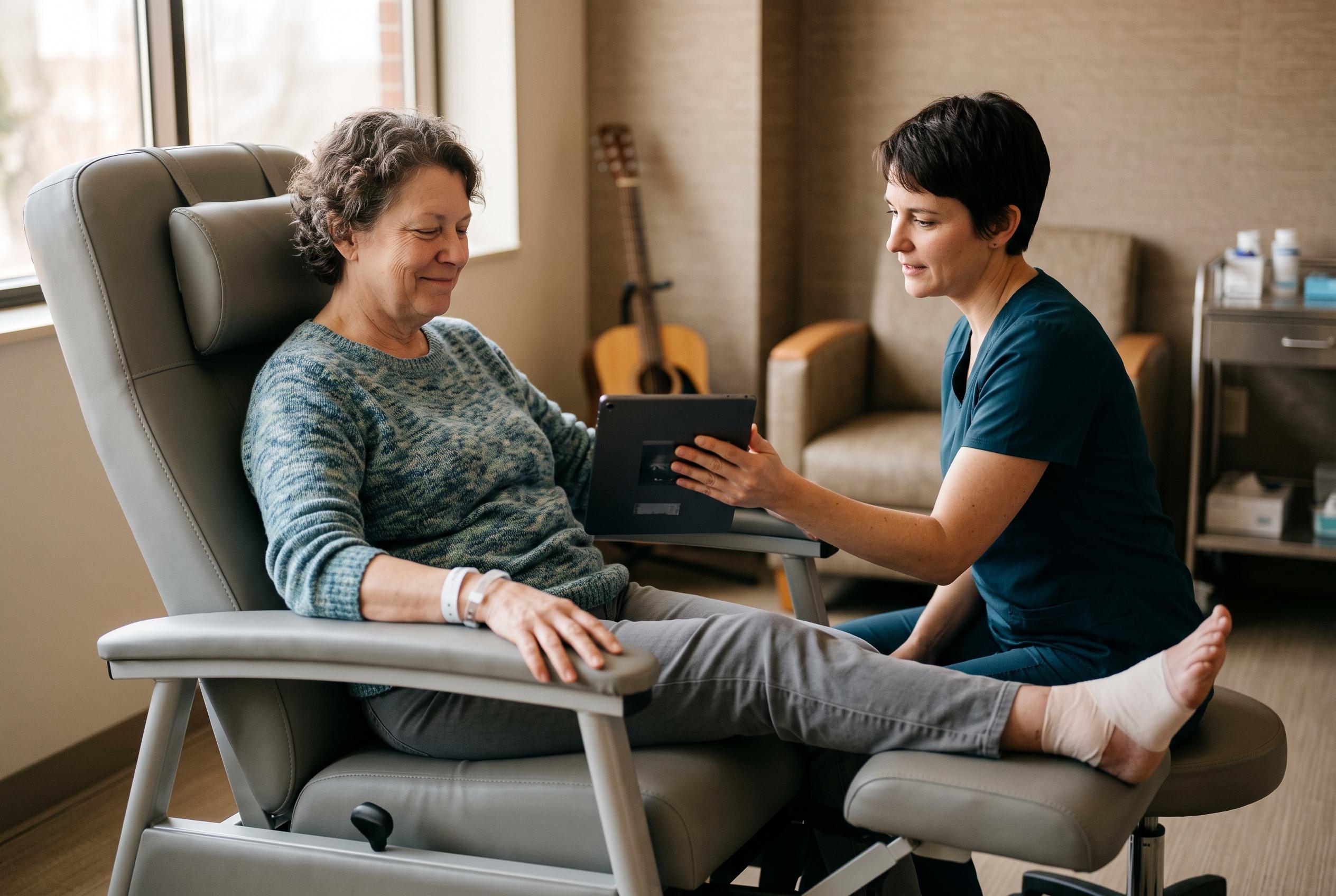

A recent study from South India indicates that music therapy could become a valuable addition to standard care for managing diabetes-related distress and physiological health, with significant benefits observed over a 21-day period.
A study from a tertiary care hospital in South India suggests that music therapy may help ease diabetes distress in people with diabetic foot ulcers, while also improving several physiological measures. The research, published on Podiatry Arena and described as a quasi-experimental pre-test and post-test trial, followed 159 patients divided into three equal groups: one listened to music it selected itself, another heard music chosen by the researchers and a third received routine care alone.
Each intervention group listened to music for 20 minutes twice a day over 21 days, alongside standard treatment. According to the study, both music-based groups recorded statistically significant improvements compared with the control group, with reductions in diabetes distress and favourable changes in bio-physiological parameters. The authors said the findings support music therapy as a useful complementary approach for people living with diabetic foot ulcers.
The results fit with earlier, smaller research in India. A pilot study in Mangalore found that music therapy was linked with lower distress in patients with diabetic foot ulcers after the same 21-day schedule. Separate research on self-selected music therapy also reported lower stress and depression in people with type 2 diabetes and foot ulcers, while a community programme found benefits for distress, sleep quality and capillary blood glucose.
Broader reviews have reached a similar, cautious conclusion. A review indexed by PubMed found that music interventions may improve exercise adherence and several health markers, including heart rate, glucose levels and stress, but it also called for longer and better controlled trials. Other work on music-assisted relaxation in diabetes education found positive effects on selected health outcomes, reinforcing the idea that music can play a supportive role, even if it is not a substitute for medical care.
Disclaimer: This content is for informational purposes only and is not intended to be a substitute for professional medical judgment, advice, diagnosis, or treatment.