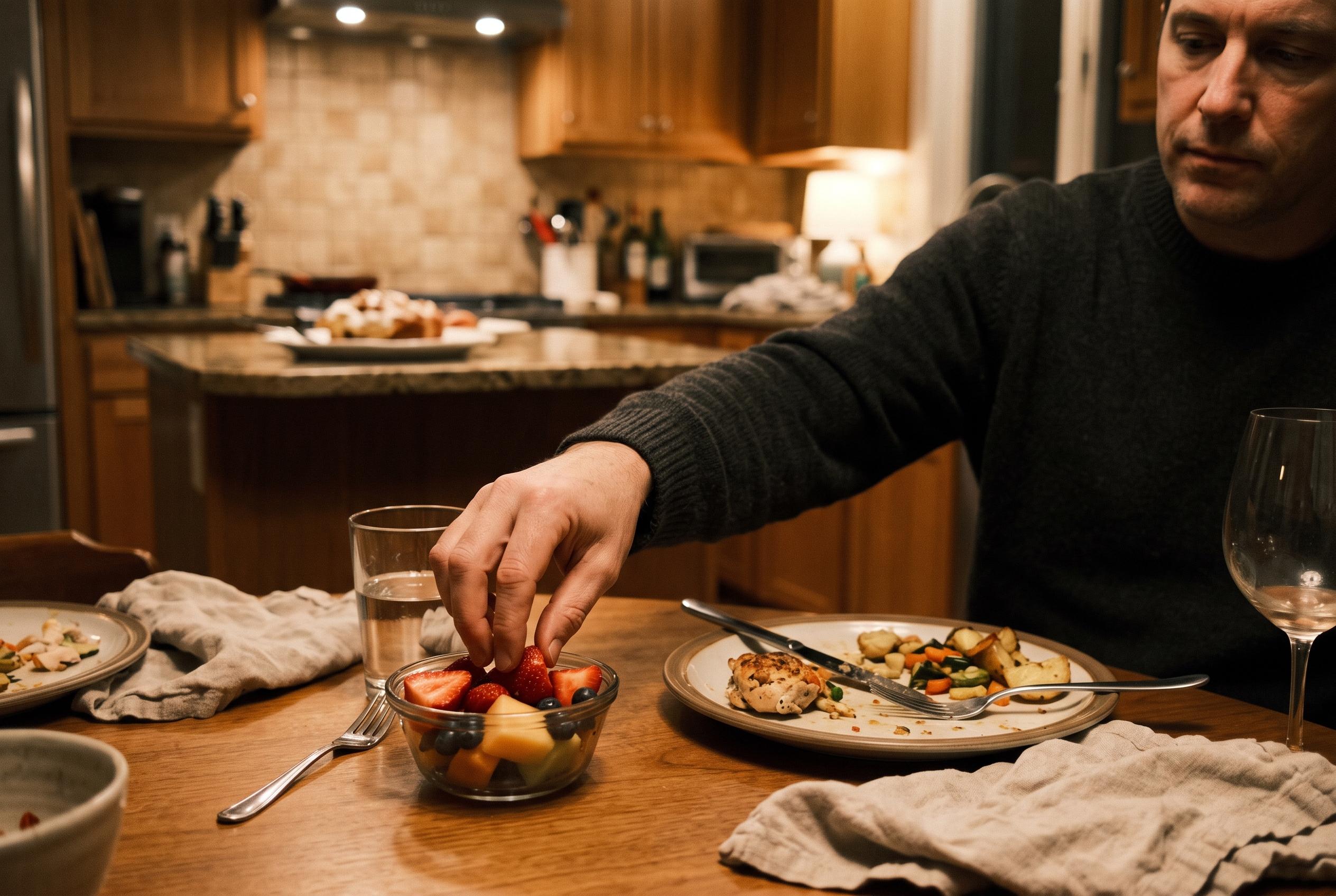

Recent research challenges the notion of weak willpower behind post-meal sweet urges, highlighting the roles of biology, habits, and environmental cues. Strategies for managing cravings include balanced meals and fruit alternatives, offering practical steps rooted in scientific findings.
A report from Alsumaria says the urge to reach for sweets after dinner is often less about weak willpower than a mix of biology, habit and environmental triggers. The article says strict avoidance of sugar can backfire, prompting the brain to treat forbidden foods as especially desirable, while food advertising and social media images can activate reward circuits and even increase saliva and digestive readiness. Research on imagined eating and food cues supports that idea: one study found that mentally simulating attractive foods increased salivation, while another showed that viewing food images can activate brain regions linked to reward and choice even when people are not hungry.
The report also points to blood sugar swings as a common driver. Meals heavy in refined carbohydrates but low in fibre, protein and healthy fats can cause a quick rise and then a sharp fall in blood sugar, which may leave people looking for another hit of sweetness. That fits with broader evidence that sugar deprivation can increase later sugar-seeking behaviour, at least in animal studies, and that repeated exposure to sweet cues can strengthen appetite and preference for similar tastes.
Another factor is sensory-specific satiety, the tendency for taste interest to drop once a meal is finished, especially for salty or rich foods, which can make a contrasting sweet flavour seem more appealing. A recent study on food cues found that exposure to sweet and sour signals can shape appetite and cravings for matching tastes, while earlier review research concluded that visual cues strongly influence how much people eat. The report says this helps explain why dessert often feels most tempting at the end of the day, when mental fatigue and the body’s internal clock can intensify snacking urges.
The practical advice is straightforward: build meals around fibre and protein to blunt blood sugar dips, allow occasional treats in modest amounts, and use fresh fruit as a regular alternative when a sweet craving strikes.
Disclaimer: This content is for informational purposes only and is not intended to be a substitute for professional medical judgment, advice, diagnosis, or treatment.