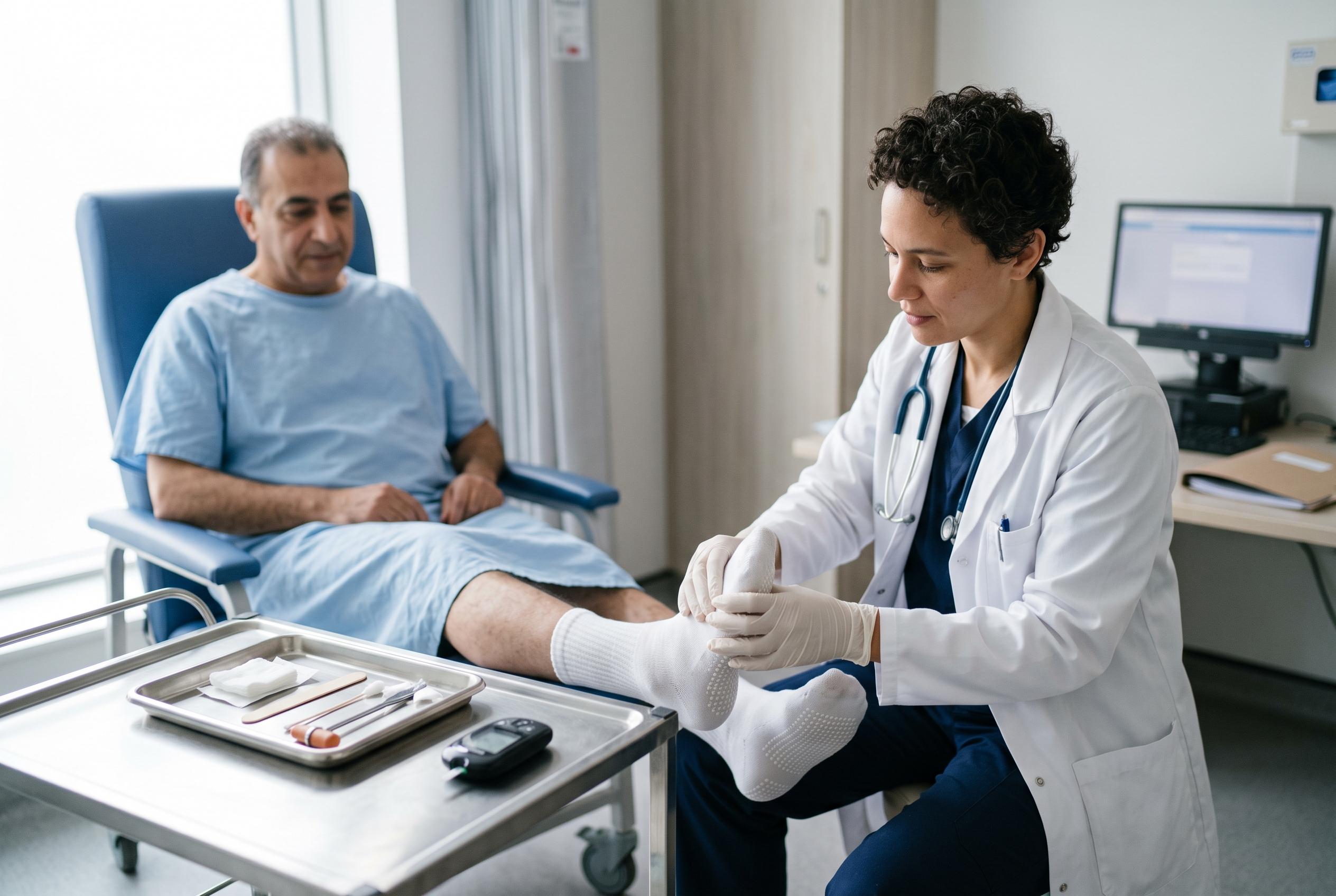

Ain Shams University Hospitals has inaugurated a dedicated ‘Qadam Saheeh’ room to enhance early detection and prevention of diabetic foot complications, integrating comprehensive services and free treatments to reduce amputations among diabetic patients.
Ain Shams University Hospitals has opened a new “Qadam Saheeh” room in its outpatient clinics, expanding a programme aimed at preventing and treating diabetic foot complications. Dr Tarek Youssef, the executive director of Ain Shams University Hospitals, and Dr Essam Fakhry Obeid, deputy executive director and director of Demerdash Hospital, inaugurated the unit on Thursday, September 3, 2026, according to local reports.
Youssef said the move reflects instructions from Dr Ali Al-Anwar, dean of the Faculty of Medicine and chair of the university hospitals board, and builds on Demerdash Hospital’s long role in caring for people with diabetes and its complications. He said the hospital group has also been a key centre for diabetes research, including work through what it describes as the first pancreatic islet cell treatment and research centre within the university hospitals network.
The initiative is designed to reduce the burden on patients by prioritising prevention, early detection and rapid treatment. According to Ain Shams University and subsequent reports, the programme provides free medical supplies and dressings, with support from the Egypt Charity Association and the National Bank of Egypt, and works with the vascular surgery department and the medical faculty to guide patients towards appropriate care.
The university said the new room is intended to become part of a broader integrated diabetes service covering endocrinology, physical medicine and rehabilitation, vascular surgery, electrophysiology, prosthetics and specialised footwear. That wider model builds on an earlier university-hospitals initiative launched in 2021 to support patients who could not afford treatment and to help prevent amputations, a problem that remains one of the most severe consequences of diabetic foot disease.
After the opening, Youssef handed out medical supplies, dressings and medicines to some of the first beneficiaries and asked hospital staff to respond to the needs raised by patients during the visit. The hospital said the programme is meant not only to provide immediate relief, but also to create a more durable system of follow-up care for people living with diabetes.
Disclaimer: This content is for informational purposes only and is not intended to be a substitute for professional medical judgment, advice, diagnosis, or treatment.