

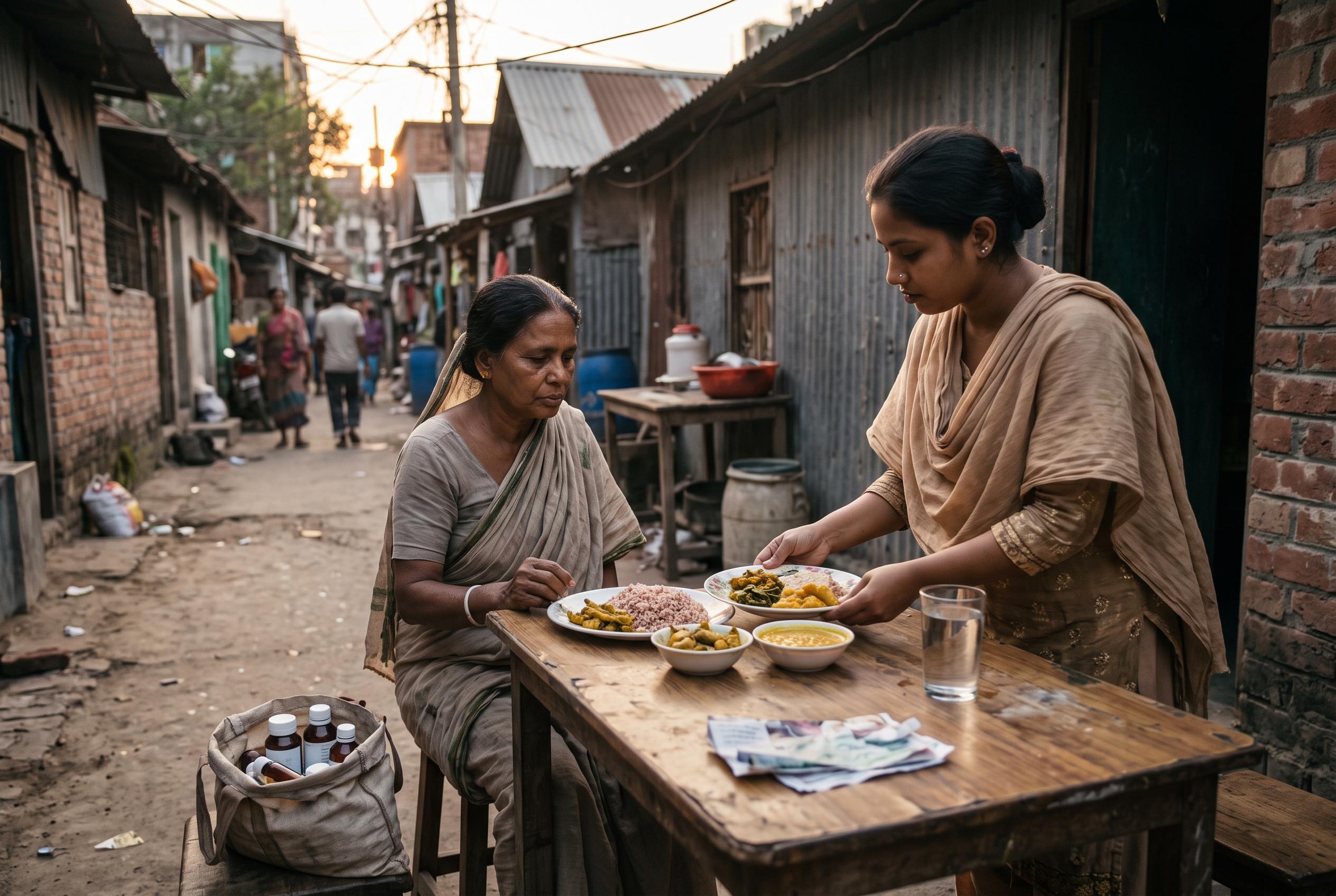

Research in Dhaka’s slums highlights a strong link between diabetes and hypertension, with cost-related barriers severely affecting health-related quality of life among older adults, calling for integrated healthcare services tailored to low-income urban communities.
A new study of older adults living in Dhaka’s urban slums has found a sharp overlap between diabetes and hypertension, alongside a marked decline in health-related quality of life and widespread financial barriers to care.
Researchers working in five slums in the Bangladeshi capital surveyed 400 adults aged 45 and older between June and August 2025, comparing 200 people with self-reported diabetes with 200 without the condition. According to the paper published in Health Science Reports, 60.5% of participants with diabetes reported hypertension, compared with 23.0% of those without diabetes. After adjustment for other factors, diabetes remained the strongest independent predictor of hypertension, with older age, higher body mass index, smoking and non-manual work also linked to higher odds.
The study also found that diabetes was associated with poorer health-related quality of life, measured using the EQ-5D-5L scale. Participants with diabetes recorded lower overall scores than those without the condition, and they were more likely to report problems with mobility, pain or discomfort, and anxiety or depression. After adjustment, diabetes was still linked to a lower quality-of-life score.
Financial strain emerged as the dominant obstacle to treatment. Among the participants with diabetes, 83.5% said cost was the main reason they struggled to access healthcare. Far fewer cited poor access, lack of awareness or cultural reasons. The authors said the findings point to a need for integrated non-communicable disease services that are designed around the realities of low-income urban communities, rather than treating diabetes, hypertension and access to care as separate problems.
The study adds to growing evidence that Bangladesh’s urban poor carry a heavy chronic disease burden. The authors noted that Dhaka’s slum population faces overcrowding, poverty, poor sanitation and limited healthcare access, all of which can make long-term disease control harder and worsen outcomes.
Disclaimer: This content is for informational purposes only and is not intended to be a substitute for professional medical judgment, advice, diagnosis, or treatment.