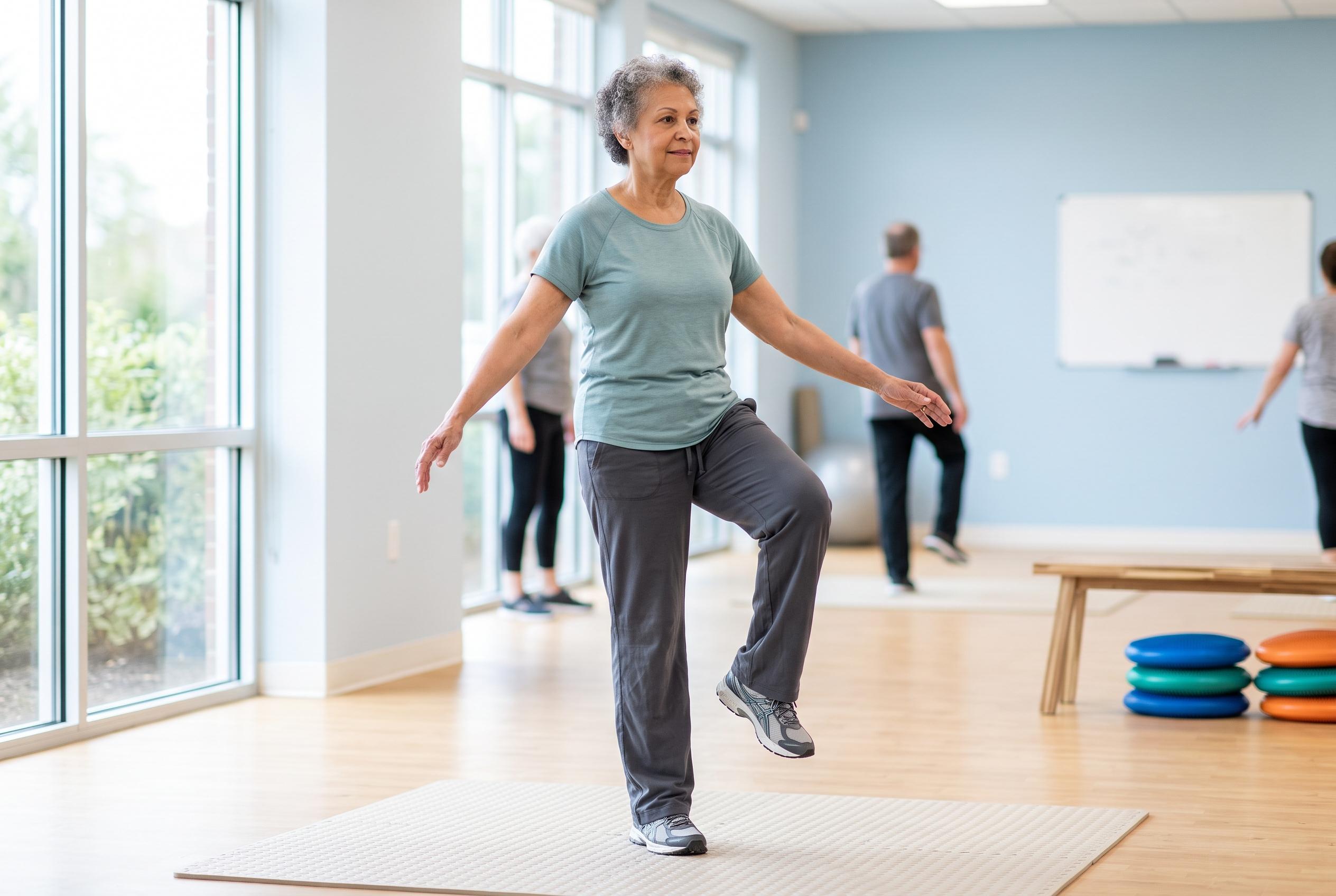

Emerging research emphasises that gentle, personalised movement routines are vital for maintaining joint health and preventing falls among older adults, challenging the notion that rest is the best cure for joint pain.
When knees ache or hips stiffen, the instinct is often to ease off and rest. Yet, according to The Conversation, prolonged inactivity can make mobility worse by allowing strength, balance and joint control to fade. That is why the question is not whether to move, but how to do so safely and in a way the body can tolerate.
A joint is a more complex structure than a simple hinge. Cartilage coats the ends of bones to reduce friction, while synovial fluid lubricates the joint and helps feed the cartilage. As people age, that system can be disrupted: cartilage may wear down, muscles can weaken and movement control can become less precise. The result is often osteoarthritis, a major cause of disability that affects more than 500 million people worldwide, according to the article. Evidence reviewed by Cochrane suggests exercise probably improves pain, function and quality of life in knee osteoarthritis, although the certainty of that evidence remains limited by study quality.
The benefit is not simply that exercise keeps people active. Stronger muscles around the hips and knees help absorb force and steady movement, easing some of the strain on joint structures. Cochrane has also found that both higher- and lower-intensity exercise programmes can help people with hip or knee osteoarthritis, while noting that the best exercise dose is still unclear. In other words, rest alone is rarely the most protective strategy.
Balance matters as much as strength. The nervous system relies on proprioception, the body’s sense of position, to keep movement coordinated and upright. Research published in 2023 and a further study in 2026 both found that training on unstable surfaces can improve postural control in older adults, suggesting that carefully designed balance work may help reduce fall risk. That point matters because a fall can set off a cycle of injury, fear and further loss of independence.
For people with sensitive joints, low-impact movement can be a practical starting point. Swimming, water aerobics, cycling, tai chi and yoga can all build fitness and control without the jarring impact of some land-based sports. The key is to begin gently, increase gradually and avoid forcing painful positions or sudden spikes in activity. Cochrane’s earlier reviews also stressed that exercise should be tailored to individual needs and preferences if people are to keep doing it. Taken together, the evidence points to a simple conclusion: ageing joints usually need intelligent movement, not complete rest.
Disclaimer: This content is for informational purposes only and is not intended to be a substitute for professional medical judgment, advice, diagnosis, or treatment.