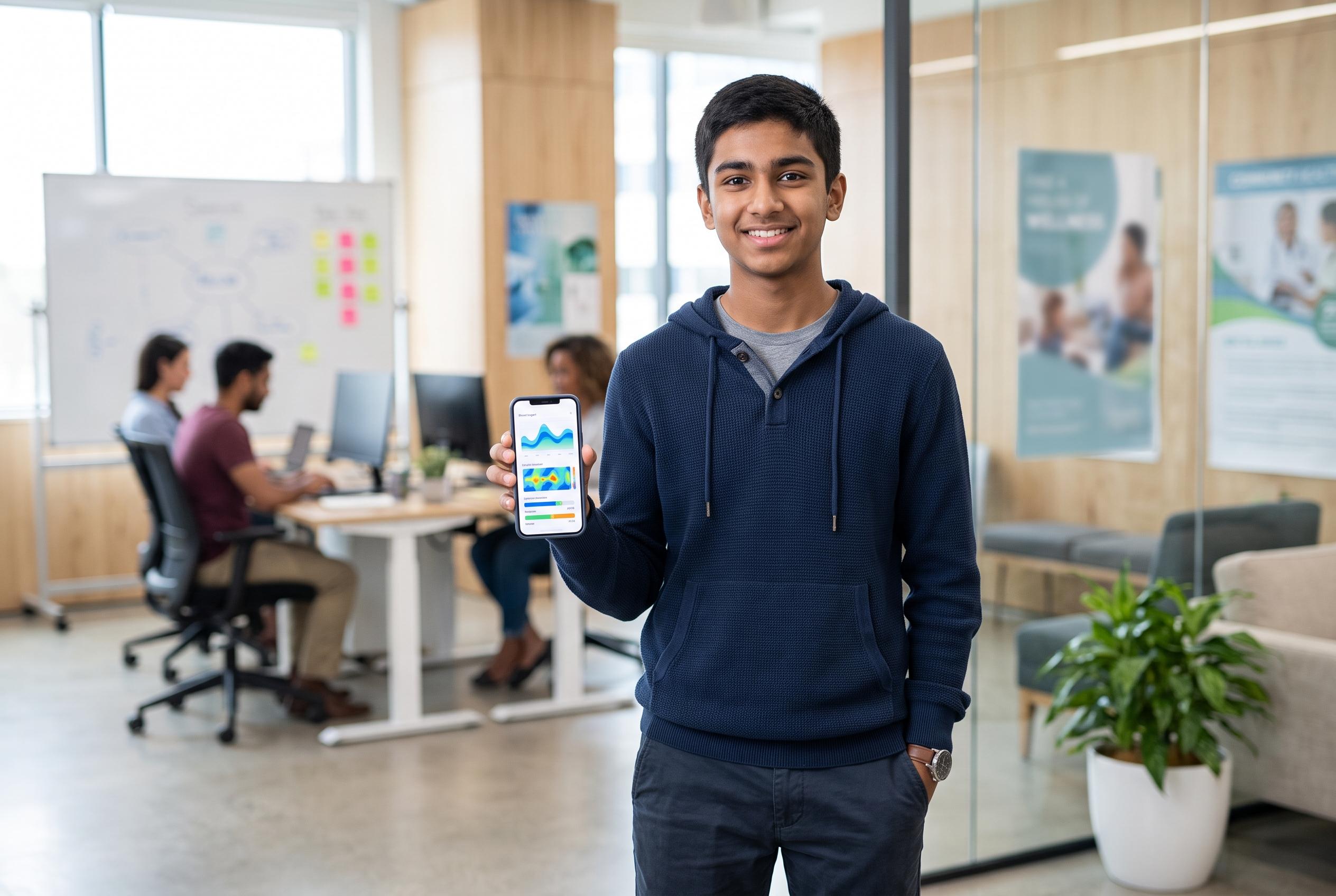

Aaron Prager, a 17-year-old from Massachusetts, has created BoostT1D, an innovative app that utilises AI to help people with type 1 diabetes monitor and analyse their blood sugar and dietary patterns, earning national recognition and awards.
Aaron Prager, a 17-year-old from Newton, Massachusetts, has built a diabetes-management app that is drawing attention for combining artificial intelligence with a very personal problem. His mobile app, BoostT1D, is designed to help people with type 1 diabetes track blood sugar trends over time and analyse the foods they eat, with the aim of making day-to-day management a little easier.
The app uses a smartphone photo to identify what a user is eating and then looks for patterns in blood glucose, insulin and carbohydrate data. Prager said it has been downloaded almost 2,000 times, while a companion website where users can share advice and encouragement has attracted about 100 sign-ups. The app stores personal data on each user’s own phone, which Prager says is meant to protect privacy.
For the more than 2 million Americans living with type 1 diabetes, technology has already transformed care in recent years. Bluetooth-enabled glucose sensors can monitor blood sugar continuously and wearable insulin pumps can deliver measured doses of insulin. Prager’s software tries to build on that toolkit by highlighting trends, such as blood sugar running high in the late afternoon, so users can bring clearer information to their doctors. Because the app does not have regulatory approval, it cannot recommend insulin changes.
His work has already won recognition. In July, BoostT1D took the grand prize in MIT Solve’s “AI for a Better World” student contest. It had earlier won the Congressional App Challenge in Massachusetts’s 4th District, represented by Jake Auchincloss, before being named a top app among district winners nationwide. Prager, who was diagnosed with type 1 diabetes before he was 2, said the idea grew out of years of frustration over the difficulty of estimating carbohydrates and other nutrients in everyday meals.
A rising senior at the British International School of Boston, Prager has been balancing app development with college-level computer science classes and applications for university. He has also been thinking about what comes next after a summer visit to Y Combinator’s Startup School in San Francisco, where Nvidia chief executive Jensen Huang urged students to study core STEM subjects rather than computer science. Prager said he is weighing software against other interests, including finance and medical technology, as he looks for a field with strong research and career options.
Disclaimer: This content is for informational purposes only and is not intended to be a substitute for professional medical judgment, advice, diagnosis, or treatment.