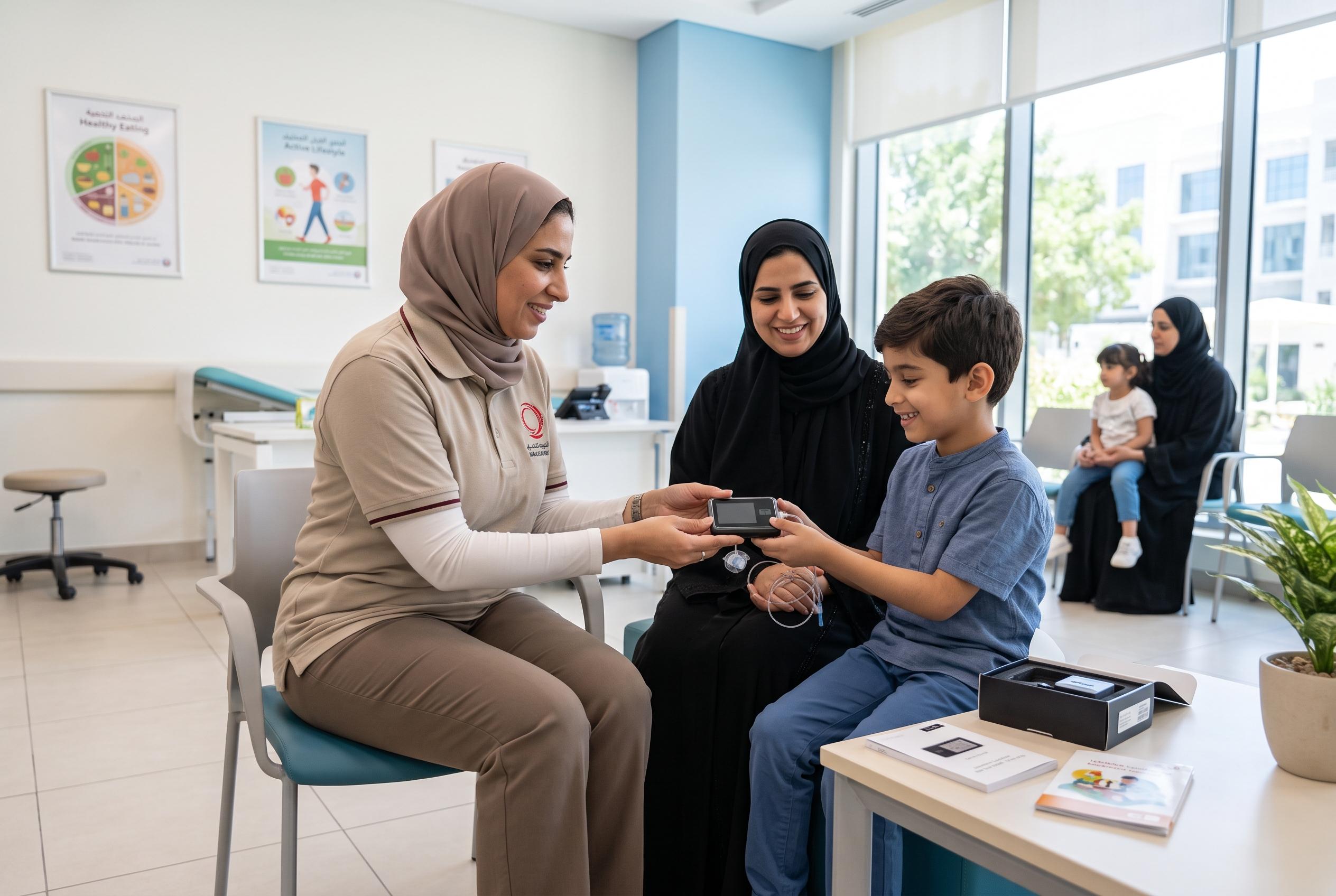

A Bahrain-backed charity has donated insulin pumps to ten children with diabetes, emphasising social solidarity and improving disease management with advanced technology.
Ten children with diabetes have received insulin pumps in a Bahrain-backed charity initiative aimed at easing the daily burden of the disease for young patients and their families. The handover took place in the presence of Sheikh Mohammed bin Abdullah Al Khalifa, president of the Supreme Council of Health and chairman of the Bahrain Diabetes Society, and Sheikh Isa bin Ali Al Khalifa, honorary president of Al Kalima Al Tayyiba Society.
Sheikh Mohammed praised the efforts of Al Kalima Al Tayyiba and the backing it receives from Sheikh Isa, saying its work has delivered tangible benefits across society through programmes for older people, people with disabilities, children, women and young people. He also highlighted the ongoing co-operation between the Bahrain Diabetes Society and Al Kalima Al Tayyiba, which helped secure the pumps for the children.
He added that the Zakat and Charity Fund at the Ministry of Justice, Islamic Affairs and Endowments had played an important humanitarian role by helping to provide insulin pumps and glucose sensors for children with diabetes. In remarks reported by Al Bilad, Sheikh Mohammed said the support reflects social solidarity and helps reduce the financial pressure on families facing continuing medical needs, while giving children better control of blood sugar levels and greater day-to-day security.
According to Medtronic Diabetes, modern insulin pumps are wearable computerised devices that deliver insulin in set amounts throughout the day and can be paired with continuous glucose monitoring. The company says some systems are suitable for children as young as 2, while other pump models are approved for older children, underscoring why such technology can be especially valuable in paediatric diabetes care. The donation ceremony was attended by officials from the Zakat and Charity Fund, the Bahrain Diabetes Society, Al Kalima Al Tayyiba and the families of the children who received the devices.
Disclaimer: This content is for informational purposes only and is not intended to be a substitute for professional medical judgment, advice, diagnosis, or treatment.